
2020 Delhi Riots: Karkardooma court convicts Tahir Hussain, others for murder of IB officer Ankit Sharma
Abstract
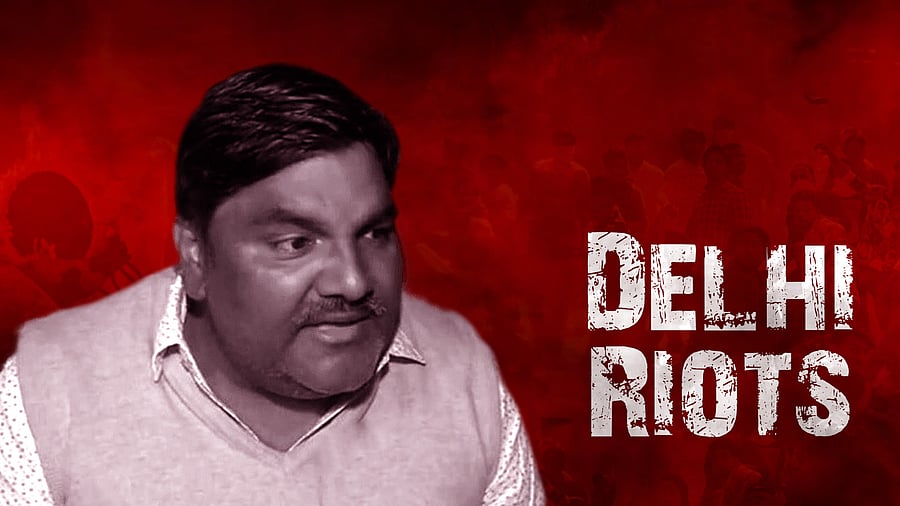
A Delhi court has convicted former Aam Aadmi Party (AAP) councillor Tahir Hussain and four others for the murder of Intelligence Bureau (IB) officer Ankit Sharma during the 2020 Delhi riots. The Karkardooma court, presided over by Session Judge Praveen Singh, found Hussain guilty of multiple serious offences under the Indian Penal Code, including murder (Section 302), kidnapping (Section 365), promoting enmity between groups (Section 153A), and various rioting charges (Sections 147, 148, 149). While acquitted of criminal conspiracy (Section 120B), the conviction underscores the principle of constructive liability for members of an unlawful assembly, a critical aspect in prosecuting large-scale communal violence.
Introduction
The Karkardooma Court in Delhi recently delivered a significant verdict, convicting former Aam Aadmi Party (AAP) councillor Tahir Hussain and four co-accused for the murder of Intelligence Bureau (IB) officer Ankit Sharma during the tumultuous 2020 Delhi riots. This judgment marks a crucial development in the ongoing legal efforts to bring accountability for the widespread violence that gripped parts of North East Delhi. The conviction, pronounced by Session Judge Praveen Singh, addresses a high-profile case that symbolises the tragic human cost of the communal unrest.
The verdict holds particular importance for legal practitioners, as it navigates complex aspects of criminal liability in the context of mob violence, specifically the interplay between direct involvement, unlawful assembly, and criminal conspiracy. The court's findings, particularly the conviction for murder and other serious offences while acquitting on the charge of criminal conspiracy, offer valuable insights into the evidentiary standards and legal principles applied in such challenging cases. This article will delve into the statutory framework, the court's application of the law, and the broader implications for prosecuting riot-related crimes in India.
Background
The 2020 Delhi riots, which erupted in February of that year, were triggered by escalating tensions between groups protesting and supporting the Citizenship (Amendment) Act (CAA). The unrest led to widespread violence, arson, and loss of life, with Intelligence Bureau officer Ankit Sharma being one of the 53 fatalities. Sharma's father, Ravinder Kumar, lodged the First Information Report (FIR) on February 26, 2020, alleging that Tahir Hussain, whose office was located near the epicentre of the violence at Chand Bagh Pulia, had mobilised individuals who engaged in stone-pelting, petrol bomb attacks, and firing from his rooftop.
The legal framework underpinning the charges in this case is primarily drawn from the Indian Penal Code, 1860 (IPC). Key sections invoked include Section 302 for murder, Section 365 for kidnapping or abducting with intent to secretly and wrongfully confine a person, and Section 153A for promoting enmity between different groups. Additionally, charges related to public order offences were pressed, namely Section 147 for rioting, Section 148 for rioting armed with a deadly weapon, and Section 149, which establishes constructive liability for every member of an unlawful assembly if an offence is committed in prosecution of the common object of that assembly. Section 188, pertaining to disobedience to an order duly promulgated by a public servant, was also applied, likely in reference to prohibitory orders in place during the riots. Notably, Tahir Hussain was also charged under Section 120B for criminal conspiracy, though he was subsequently acquitted of this particular offence.
Analysis
The Karkardooma court's conviction of Tahir Hussain, Nazir, Asim, Javed, and Anas for the murder of Ankit Sharma highlights the rigorous application of criminal law in the context of communal violence. The court found Hussain guilty under Sections 302, 365, 153A, 147, 148, 149, and 188 of the IPC. The conviction for murder under Section 302 IPC, which prescribes punishment including death or life imprisonment, was likely established through evidence demonstrating their direct or constructive involvement in the fatal assault. The post-mortem report, which revealed 51 injuries on Ankit Sharma's body from sharp-edged weapons and blunt force, would have been crucial in proving the nature and intent behind the killing.
A significant aspect of the verdict is Hussain's acquittal under Section 120B IPC, which deals with criminal conspiracy. Criminal conspiracy requires an agreement between two or more persons to commit an illegal act. The court's decision to acquit on this charge suggests that the prosecution may not have sufficiently proven a pre-planned agreement to commit the murder. However, this acquittal does not negate liability for the murder, primarily due to the conviction under Section 149 IPC. This section is pivotal in cases of mob violence, as it establishes that if an offence is committed by any member of an unlawful assembly in prosecution of the common object of that assembly, every person who was a member of that assembly at the time is guilty of that offence.
Therefore, even without proving a prior conspiracy, the court could hold Hussain and the others constructively liable for Ankit Sharma's murder by establishing their membership in an unlawful assembly whose common object included acts of violence that led to Sharma's death. The allegations that Hussain gathered "goons" in his office and directed violence from his rooftop would have been central to establishing his role within such an unlawful assembly and its common object. The conviction under Section 153A (promoting enmity) further underscores the court's finding that the actions of the accused contributed to the communal disharmony and violence.
The case highlights the challenges inherent in prosecuting riot cases, where individual acts are often subsumed within collective violence. Sections like 149 IPC are instrumental in ensuring accountability where direct evidence of individual perpetrators for every act of violence might be scarce. The court's decision to convict on multiple charges, including kidnapping (Section 365 IPC), suggests that the victim was not merely killed but also forcibly taken or confined before his death, adding another layer of gravity to the offences. The recovery of Ankit Sharma's body from a drain near Chand Bagh Pulia further corroborates the elements of kidnapping and secret confinement.
Conclusion
The conviction of Tahir Hussain and four others for the murder of IB officer Ankit Sharma is a landmark judgment in the ongoing legal proceedings related to the 2020 Delhi riots. It reinforces the principle that individuals, including those in positions of influence, will be held accountable for their actions and their role in instigating or participating in communal violence. The meticulous application of provisions like Section 149 IPC demonstrates the judiciary's commitment to addressing collective criminality in riot situations, ensuring that even in the absence of a proven criminal conspiracy, those who form part of an unlawful assembly with a violent common object cannot escape liability for the offences committed.
For legal practitioners, this case serves as a crucial precedent regarding the prosecution of riot-related offences, particularly the effective use of constructive liability under Section 149 IPC. It underscores the importance of robust evidence gathering, including forensic reports and witness testimonies, to establish the elements of unlawful assembly, common object, and the commission of specific offences. As the sentencing phase approaches and potential appeals loom, the legal community will keenly observe how this verdict shapes future jurisprudence on communal violence and accountability in India.
Citations
- 1.The Indian Penal Code, 1860, No. 45 of 1860, § 120B.
- 2.The Indian Penal Code, 1860, No. 45 of 1860, § 147.
- 3.The Indian Penal Code, 1860, No. 45 of 1860, § 148.
- 4.The Indian Penal Code, 1860, No. 45 of 1860, § 149.
- 5.The Indian Penal Code, 1860, No. 45 of 1860, § 153A.
- 6.The Indian Penal Code, 1860, No. 45 of 1860, § 188.
- 7.The Indian Penal Code, 1860, No. 45 of 1860, § 302.
- 8.The Indian Penal Code, 1860, No. 45 of 1860, § 365.
- 9.LawBeat, '2020 Delhi Riots: Court Convicts Tahir Hussain, Five Others For Murder Of IB Officer Ankit Sharma' (13 July 2026).
- 10.Lawrato.com, 'IPC Section 148 - Rioting, armed with deadly weapon' (2 June 2025).
- 11.Lawrato.com, 'IPC Section 153A - Promoting enmity between different groups on ground of religion, race, place of birth, residence, language, etc., and doing acts prejudicial to maintenance of harmony' (15 March 2026).
- 12.Lawrato.com, 'IPC Section 188 - Disobedience to order duly promulgated by public servant' (20 May 2026).
- 13.Lawrato.com, 'IPC Section 365 - Kidnapping or abducting with intent secretly and wrongfully to confine person' (5 May 2026).
- 14.Lawyered, 'IPC Section 302 in India | Law & Punishment' (n.d.).
- 15.Legistify, '302 IPC: Section 302, Punishment For Murder And Key Case Laws' (23 June 2026).
- 16.Swarajya, 'Delhi Court Convicts Former AAP Councillor Tahir Hussain in Intelligence Bureau Officer Murder Case' (13 July 2026).
- 17.The Times of India, '2020 Delhi riots: Court convicts former AAP councillor Tahir Hussain in IB officer Ankit Sharma murder case' (13 July 2026).
- 18.Bar and Bench, '2020 Delhi Riots: Karkardooma court convicts Tahir Hussain, others for murder of IB officer Ankit Sharma' (13 July 2026).
- 19.iPleaders, 'Everything you need to know about the Delhi riot case' (9 October 2020).
- 20.Wikipedia, '2020 Delhi riots' (n.d.).
- 21.Lawrato.com, 'IPC Section 147 - Punishment for rioting' (7 September 2025).
- 22.Devgan.in, 'IPC Section 188 - Disobedience to order duly promulgated by public servant' (31 October 2022).
- 23.Scribd, 'Section 153A: Promoting Enmity in IPC' (n.d.).
- 24.Lawrato.com, 'IPC Section 149 - Every member of unlawful assembly guilty of offence committed in prosecution of common object' (24 February 2026).
- 25.Lawrato.com, 'IPC Section 120B - Punishment of criminal conspiracy' (19 April 2026).
- 26.India Code, 'Section 302 in The Indian Penal Code, 1860' (n.d.).
- 27.India Code, 'Section 147 in The Indian Penal Code, 1860' (n.d.).
- 28.India Code, 'Section 153A in The Indian Penal Code, 1860' (n.d.).
- 29.India Code, 'Section 148 in The Indian Penal Code, 1860' (n.d.).
- 30.LLM Advocates, 'Section 148 of The indian penal code, 1860 – Rioting, armed with deadly weapon' (n.d.).
- 31.India Code, 'Section 149 in The Indian Penal Code, 1860' (n.d.).
- 32.India Code, 'Section 188 in The Indian Penal Code, 1860' (n.d.).
- 33.India Code, 'Section 365 in The Indian Penal Code, 1860' (n.d.).
- 34.India Code, 'Section 120B: Punishment of criminal conspiracy.' (n.d.).
- 35.NyayNeeti, 'IPC Section 120B : What's New in Criminal Conspiracy Laws?' (25 June 2026).
- 36.ILMS Academy, 'Understanding Punishments Under Section 188 IPC (BNS 223)' (28 September 2025).
- 37.Ethical Legal Consultants, '8 Myths About Section 302 of IPC That You Shouldn't Believe' (6 June 2025).
- 38.Legodesk, 'Section 147 of the IPC (Indian Penal Code) - Rioting' (27 December 2018).
- 39.iPleaders, 'Section 149 IPC' (22 June 2022).
- 40.Supreme Today AI, 'UNRAVELING THE DYNAMICS BETWEEN SECTION 149 & SECTION 34- OFFENCE AND EVIDENCE IN RECENT LEGAL PERSPECTIVES.' (n.d.).
- 41.LegalKart, 'Understanding Section 302 and 307 IPC: Everything You Need To Know with LegalKart' (4 March 2026).
- 42.Supreme Today AI, 'Supreme Court on Key Ingredients of Section 365 IPC' (n.d.).
- 43.Supreme Today AI, 'How Many Persons Are Required for Criminal Conspiracy Under Section 120B IPC?' (n.d.).
- 44.GS SCORE, 'Section 153A: Uses and Misuses' (n.d.).
- 45.Advocate In Delhi, 'What Does Section 153A of the IPC Penalize' (24 September 2024).
How does this affect your business?
Get an AI analysis of this article grounded in your jurisdictions, practice areas, and any policy documents you've uploaded to Wansom.