
Abia, Anambra commit to peaceful resolution of boundary disputes
Abstract
Abia and Anambra States have reaffirmed their commitment to the peaceful resolution of their long-standing interstate boundary dispute, with the active involvement of the National Boundary Commission (NBC). A recent joint meeting in Awka saw officials from both states, representatives of the NBC, traditional rulers, and other stakeholders agree on the provisional demarcation of 15 kilometres out of their 23-kilometre common boundary. Discussions are ongoing to resolve the remaining eight-kilometre stretch, underscoring the importance of dialogue, constitutional processes, and adherence to legal instruments for achieving lasting peace and fostering good neighbourliness between the affected communities.
Introduction
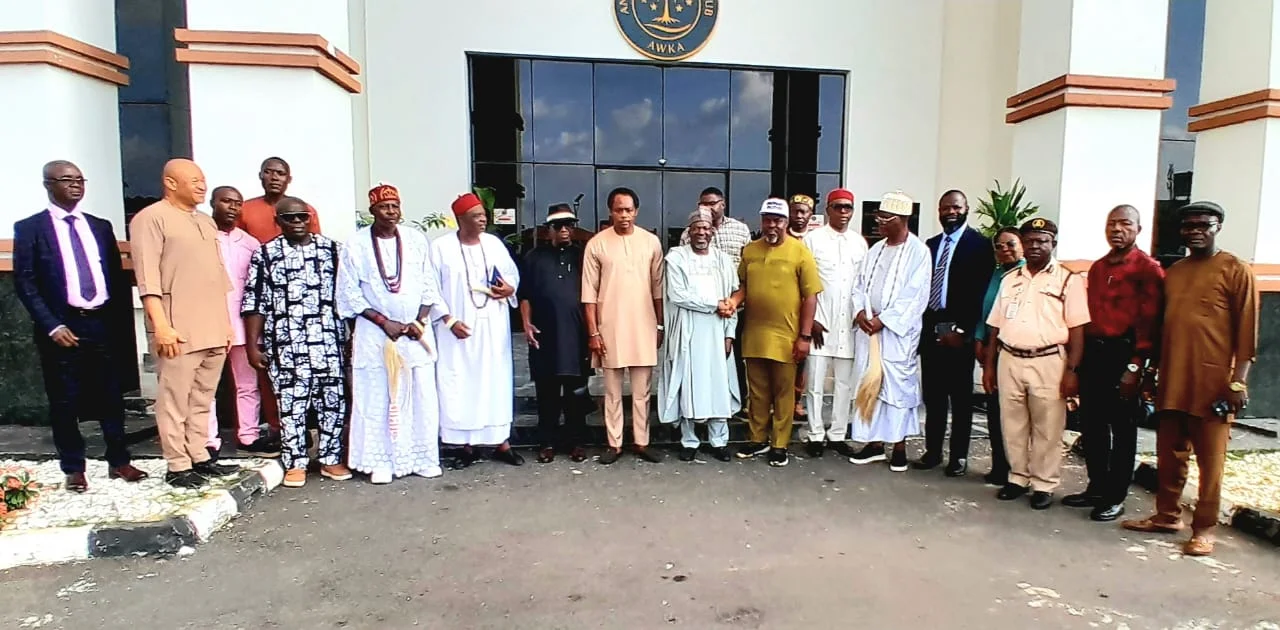
Inter-state boundary disputes remain a persistent challenge to national unity and socio-economic development in Nigeria. The recent commitment by Abia and Anambra States to peacefully resolve their decades-old boundary issues marks a significant step towards fostering stability and cooperation in the South-East region. A joint meeting of officials, held in Awka, brought together key stakeholders, including representatives from both state governments, the National Boundary Commission (NBC), and traditional rulers, to chart a path forward.
This collaborative approach is crucial, as unresolved boundary disputes often escalate into communal clashes, hindering development and disrupting livelihoods. The meeting's focus on dialogue and adherence to established legal procedures highlights the growing recognition that institutional mechanisms, coupled with political will, are indispensable for achieving sustainable resolutions. This article will delve into the legal framework governing inter-state boundary disputes in Nigeria, analyse the mechanisms employed by the NBC, and discuss the implications of this renewed commitment for legal practitioners and affected communities.
The core thesis is that while the legal and institutional framework for resolving inter-state boundary disputes in Nigeria is robust, its effectiveness hinges on the sustained political will of state governments and the active engagement of local communities and traditional institutions. The progress made between Abia and Anambra serves as a testament to the potential for peaceful resolution when these elements converge.
Background
The legal framework for managing and resolving boundary disputes in Nigeria is primarily anchored in the Constitution and specific legislation. The National Boundary Commission (Establishment) Act, 2006, which repealed the earlier National Boundary Commission Act, Cap. 238, L.F.N. 1990, established the National Boundary Commission (NBC) as a corporate body with perpetual succession. The NBC is charged with the crucial mandate of defining, delimiting, and demarcating Nigeria's international and internal boundaries, as well as amicably resolving disputes that may arise between states, local government areas, and communities within the Federation.
The Commission's composition reflects its national importance, with the Vice President of the Federation serving as its Chairman, and other members including the Attorney General of the Federation, various ministers, the National Security Adviser, the Inspector-General of Police, and the Director-General of the NBC. State Governors are also co-opted as members when issues concerning their state boundaries are under deliberation. Furthermore, the Act mandates the establishment of State Boundary Committees and Local Government Boundary Committees to coordinate boundary affairs at sub-national levels, ensuring a multi-tiered approach to dispute resolution.
Historically, many inter-state boundary disputes in Nigeria trace their origins to colonial demarcations, which often disregarded existing ethnic and cultural affiliations, leading to ambiguities and overlapping claims. These disputes are frequently exacerbated by competition over natural resources, administrative control, and historical grievances. While the NBC primarily employs mediation and technical demarcation, the Supreme Court of Nigeria holds original jurisdiction in disputes between states or between the Federation and a state, as provided by Section 232 of the 1999 Constitution of the Federal Republic of Nigeria. This dual approach, combining administrative and judicial mechanisms, forms the bedrock of boundary dispute resolution in the country.
Analysis
The ongoing boundary dispute between Abia and Anambra States, spanning over 70 years, exemplifies the complexities inherent in inter-state boundary issues in Nigeria. The recent joint meeting, facilitated by the National Boundary Commission (NBC), represents a significant breakthrough, with both states agreeing on the provisional demarcation of 15 kilometres of their 23-kilometre common boundary. This progress was achieved through a review of recommendations from a Technical Meeting of Experts and a commitment to dialogue and established legal procedures.
The NBC's operational methodology for resolving internal boundary disputes typically involves a structured process, including Joint Meetings of Officials (JMO), Joint Consultative Committees (JCC), and Joint Field Teams (JFT). These mechanisms are designed to foster dialogue, conduct technical field investigations, and gather historical records and evidence to inform demarcation decisions. The Director-General of the NBC, Surveyor Adamu Adaji, has consistently emphasized the Commission's role in providing technical, administrative, and institutional support to bring these processes to a successful conclusion.
However, the resolution process is not without its challenges. While 15 kilometres have been provisionally demarcated, discussions continue on the remaining eight-kilometre stretch. Representatives from both states have stressed the importance of resolving the outstanding corridor in line with NBC procedures, historical records, technical field evidence, and relevant Supreme Court judgments. Notably, a landmark Supreme Court judgment delivered in 1972, which defined the disputed land according to historical provincial boundaries, is a crucial reference point for the Abia-Anambra dispute. This highlights the interplay between administrative resolutions and judicial pronouncements.
Recourse to the Supreme Court is a final option when administrative efforts fail. The Court has, in various instances, exercised its original jurisdiction in inter-state boundary disputes, as seen in cases such as *Attorney-General of Cross River State v. Attorney-General of Akwa Ibom State* (2005) NWLR (Pt. 947) 1 and *Attorney-General of the Federation v. Attorney-General of Abia State & Ors* (2002) 96 LRCN 573. These cases underscore the Court's role in interpreting constitutional provisions and historical documents to determine definitive boundaries. A significant challenge, as noted by the NBC Director-General, is the occasional lack of political will by states to enforce resolutions, sometimes due to community resistance or political interests. The involvement of traditional rulers and community leaders, as seen in the Awka meeting, is therefore vital for ensuring local buy-in and the peaceful implementation of any agreed-upon demarcation.
Conclusion
The commitment by Abia and Anambra States to the peaceful resolution of their boundary dispute, under the guidance of the National Boundary Commission, is a commendable development that signals a proactive approach to regional stability. The progress made in provisionally demarcating a significant portion of their common boundary demonstrates the efficacy of dialogue and structured engagement when supported by political will and institutional expertise.
For legal practitioners, this development underscores the critical importance of a thorough understanding of the National Boundary Commission (Establishment) Act, 2006, and relevant Supreme Court precedents governing inter-state boundary disputes. Advising state governments or affected communities requires not only legal acumen but also an appreciation of the socio-historical context and the dynamics of community engagement. Practitioners should emphasize adherence to legal instruments and judicial pronouncements as the definitive basis for resolution, rather than relying on unilaterally produced maps. The ongoing discussions for the remaining eight-kilometre stretch will be a crucial test of sustained commitment, and all stakeholders must continue to prioritise peace, fairness, and the welfare of the affected communities to ensure a lasting and mutually acceptable outcome.
Citations
- 1.National Boundary Commission (Establishment) Act, 2006
- 2.Constitution of the Federal Republic of Nigeria, 1999 (as amended)
- 3.Attorney-General of Cross River State v. Attorney-General of Akwa Ibom State (2005) NWLR (Pt. 947) 1
- 4.Attorney-General of the Federation v. Attorney-General of Abia State & Ors (2002) 96 LRCN 573
- 5.Attorney-General of the Federation v. Attorney-General of Abia State (2001) 89 LRCN 2413
- 6.Attorney-General of Ondo State v. Attorney-General of Ekiti State (2001) 91 LRCN 3065
How does this affect your business?
Get an AI analysis of this article grounded in your jurisdictions, practice areas, and any policy documents you've uploaded to Wansom.