
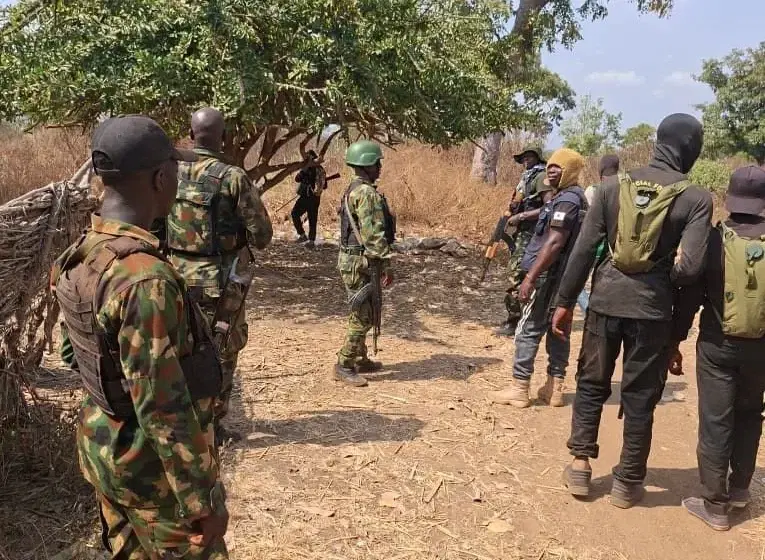
After rescue of 416 captives in Borno, 11 more kidnapped women regain freedom
Abstract
The recent rescue of 416 captives, followed by 11 more women, in Borno State from suspected Boko Haram/ISWAP terrorists underscores the persistent security challenges in Nigeria's North-East. These events highlight the complex legal landscape governing terrorism, kidnapping, and the state's constitutional obligation to protect its citizens. For legal professionals, the rescues bring to the fore critical considerations regarding the application of the Terrorism (Prevention and Prohibition) Act 2022, the rights of victims, and the intricate balance between national security operations and adherence to human rights principles. The ongoing efforts to free abducted persons necessitate a robust understanding of both domestic and international legal frameworks to ensure accountability for perpetrators and comprehensive support for survivors.
Introduction
The recent successful rescue operations in Borno State, which saw 416 residents of Ngoshe community and subsequently 11 more women regain their freedom from suspected Boko Haram/ISWAP terrorists, have brought a wave of relief amidst the protracted insurgency in Nigeria's North-East. These incidents, occurring barely 24 hours apart, serve as a stark reminder of the pervasive threat of abduction and terrorism that continues to plague communities in the region. The liberation of these captives is a testament to the ongoing efforts by Nigerian security forces, yet it simultaneously casts a spotlight on the enduring legal and humanitarian challenges posed by non-state armed groups.
Background
Nigeria's legal framework for combating terrorism and kidnapping has evolved significantly in response to the escalating activities of groups like Boko Haram and ISWAP, which have been active since 2009. At the federal level, the primary legislation is the Terrorism (Prevention and Prohibition) Act 2022, which repealed the earlier Terrorism Act of 2011 and its 2013 amendment. This comprehensive Act criminalizes various acts of terrorism, including hostage-taking and kidnapping, and establishes the National Counter Terrorism Centre to coordinate national counter-terrorism efforts. The Act also provides for the establishment of a Special Victims Trust Fund to compensate and provide restitution to victims of terrorist attacks. Beyond federal statutes, the Criminal Code Act and Penal Code Act also criminalize kidnapping and unlawful detention. Many Nigerian states have further enacted specific anti-kidnapping laws, often prescribing severe penalties, including life imprisonment or the death penalty, particularly where a victim dies in captivity. Constitutionally, the Federal Republic of Nigeria 1999 (as amended) places the security and welfare of the people as the primary purpose of government under Section 14(2)(b), and Section 33 guarantees the fundamental right to life. The conflict with Boko Haram and ISWAP is recognized as a non-international armed conflict, triggering the application of international humanitarian law (IHL) alongside domestic human rights law.
Analysis
The abductions carried out by Boko Haram and ISWAP are unequivocally classified as acts of terrorism under the Terrorism (Prevention and Prohibition) Act 2022, which imposes severe penalties, including the death penalty for certain terrorist offences such as hostage-taking and kidnapping if death results. Beyond domestic law, the systematic nature of these abductions, often involving forced marriages, sexual violence, and recruitment of child soldiers, may also constitute war crimes and crimes against humanity under international law, as noted by various reports and the International Criminal Court's preliminary examination into Nigeria. Prosecuting perpetrators of these crimes presents significant challenges, particularly given the operational complexities in conflict zones and issues related to evidence collection and witness protection. The Administration of Criminal Justice Act (ACJA) 2015, however, includes provisions for witness protection in terrorism cases, allowing for in-camera trials to safeguard sensitive information and the identities of witnesses. For the victims, the legal framework aims to uphold their fundamental human rights, including the right to life, dignity of person, and personal liberty, as enshrined in Chapter IV of the Constitution. The establishment of a Special Victims Trust Fund under the Terrorism (Prevention and Prohibition) Act 2022 is a crucial step towards providing compensation and support. However, survivors often face immense challenges, including stigmatization, re-victimization, and inadequate access to medical and psychological support, underscoring a gap between legal provisions and practical implementation. The state's responsibility to protect its citizens, as mandated by the Constitution, extends to effective counter-insurgency operations. While these operations are vital for rescue, concerns persist regarding allegations of human rights violations by security forces during such interventions, highlighting the delicate balance required to ensure security without undermining fundamental freedoms.
Conclusion
The successful rescue of captives in Borno State serves as a critical reminder of the ongoing fight against terrorism and kidnapping in Nigeria, and the imperative for a comprehensive legal and operational response. For legal practitioners, these events underscore the evolving nature of criminal law, national security legislation, and human rights jurisprudence in conflict settings. It is crucial to advise clients, whether victims or state actors, on the intricate provisions of the Terrorism (Prevention and Prohibition) Act 2022, the ACJA 2015, and relevant constitutional and international human rights instruments. Moving forward, sustained efforts are needed to strengthen the capacity for effective prosecution of terrorist acts, ensure robust victim support mechanisms, and uphold human rights standards during all counter-terrorism operations. Practitioners should remain vigilant to legislative developments and judicial interpretations that shape the landscape of justice and accountability in Nigeria's North-East, advocating for a system that not only punishes perpetrators but also prioritizes the healing and reintegration of survivors.
Citations
- 1.Terrorism (Prevention and Prohibition) Act 2022
- 2.Terrorism (Prevention) (Amendment) Act 2013
- 3.Terrorism (Prevention) Act 2011
- 4.Administration of Criminal Justice Act 2015
- 5.Constitution of the Federal Republic of Nigeria 1999 (as amended)
- 6.Criminal Code Act
- 7.Penal Code Act
- 8.Lagos State Kidnapping Prohibition Law 2017
- 9.Rivers State Kidnapping Prohibition Law 2015
- 10.Oyo State Kidnapping (Prohibition) Law 2016
- 11.Akwa Ibom State Anti-Kidnapping Law 2009
- 12.Ebonyi State Internal Security Enforcement and Related Matters Law (CAP 55) 2009
- 13.Geneva Conventions of 1949
- 14.United Nations Security Council Resolutions on countering the financing of terrorism
- 15.African Union Organization Unity Convention on the Prevention and Combating of Terrorism
- 16.1999 Protocol to the OAU Convention on the Prevention and Combating of Terrorism, 2004
How does this affect your business?
Get an AI analysis of this article grounded in your jurisdictions, practice areas, and any policy documents you've uploaded to Wansom.