
Alphonsus Eba vs Cross River State Government: Property Rights and Due Process
Abstract
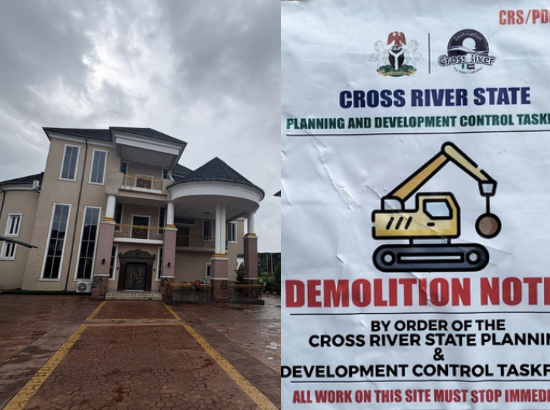
The Cross River State Government has marked the residence of the Peoples Democratic Party (PDP) deputy governorship candidate, Mr. Alphonsus Eba, and other properties for demolition, citing alleged encroachment on a Water Board pipeline right-of-way. This action has ignited a legal and political controversy, with Mr. Eba alleging political victimisation and the government insisting on adherence to urban planning regulations and public interest. The incident highlights critical legal questions surrounding property rights, due process in government-ordered demolitions, and the potential for executive powers to be perceived as politically motivated, particularly in the run-up to elections. Practitioners must be aware of the robust constitutional and statutory safeguards against arbitrary deprivation of property and the available avenues for legal challenge.
Introduction
The Cross River State Government's recent decision to mark the residence of Mr. Alphonsus Eba, the Peoples Democratic Party (PDP) deputy governorship candidate for the 2027 elections, along with other properties, for demolition has sparked considerable debate and concern. The government cites encroachment on a Water Board pipeline right-of-way as the basis for its action, with a demolition notice referenced CRS/PDCT/043 indicating that demolition would commence on or after July 6, 2026. This development follows Mr. Eba's defection from the ruling All Progressives Congress (APC) and his emergence as a prominent opposition figure, leading to allegations of political motivation behind the demolition order.
Background
The legal framework governing land use and property demolition in Nigeria is primarily anchored in the 1999 Constitution (as amended), the Land Use Act of 1978, and the Nigerian Urban and Regional Planning Act of 1992, along with various state-specific planning laws. Section 43 of the 1999 Constitution guarantees every citizen the right to acquire and own immovable property anywhere in Nigeria, while Section 44 provides protection against compulsory acquisition of property without prompt payment of compensation and access to a court for determination of interest and compensation. However, this right is not absolute and can be limited by general laws, such as those for imposing penalties for breach of law.
The Land Use Act of 1978 vests all land in a state in the Governor, to be held in trust for the people, and empowers the Governor to grant and revoke rights of occupancy for overriding public interest, including urban development and town planning purposes. The Nigerian Urban and Regional Planning Act, 1992 (now Cap. 138 LFN 2004), provides the national framework for physical and development planning, establishing Development Control Departments at federal, state, and local levels. These departments are empowered to control development, issue permits, and order demolitions for structures erected without approval or in contravention of approved plans, or those posing a threat or nuisance. Cross River State, like other states, operates under these federal laws and its own complementary legislation, with the Ministry of Lands and a recently inaugurated Building Planning and Development Control Taskforce responsible for enforcing urban planning regulations.
Analysis
While state governments possess statutory powers to order demolitions for reasons such as illegal structures, public interest, or contravention of planning laws, the exercise of such powers is strictly subject to constitutional safeguards and due process. The Nigerian Urban and Regional Planning Act, for instance, mandates the issuance of statutory notices (contravention, enforcement, and demolition notices) to give owners an opportunity to regularize or challenge the action. Crucially, demolitions without adequate notice and an opportunity to be heard violate due process and are unconstitutional.
Recent judicial pronouncements have consistently reinforced the necessity of due process. In 2025, a High Court in the Federal Capital Territory declared demolitions illegal and awarded compensation, emphasizing that demolishing homes without prior notice or a chance to respond is unconstitutional. Similarly, a Federal High Court in Kano ordered the Kano State Government to pay N30 billion in compensation for unlawful demolitions carried out without recourse to the law, describing the action as barbaric and unconstitutional. These cases underscore that even where a structure is deemed illegal, the government must follow established legal procedures, including proper notice and an opportunity for the affected party to seek redress.
Mr. Eba's claim that he was not personally served any prior notice before his property was marked for demolition, despite the building having been completed and occupied for over four years, raises significant due process concerns. The government, through the Cross River State Water Board, cited constitutional provisions, the Land Use Act, and state laws to justify the action, arguing that the structures threaten public infrastructure. However, the timing of the demolition order, coming after Mr. Eba's political defection and criticism of the government, fuels perceptions of political victimisation, a concern that courts have previously addressed by stating that environmental enforcement must not become a weapon of political vendetta.
Legal avenues for challenging such demolitions include seeking injunctions, judicial review, and fundamental rights enforcement actions. The establishment of Urban and Regional Planning Tribunals in each state under the Nigerian Urban and Regional Planning Act provides an avenue for aggrieved owners to appeal demolition orders. The judiciary has consistently shown a willingness to intervene where executive actions infringe upon property rights without due process, as demonstrated by the significant compensation awards in recent cases.
Conclusion
The Cross River State Government's decision to mark properties for demolition, including that of a prominent opposition figure, serves as a potent reminder of the delicate balance between urban planning enforcement and the protection of fundamental property rights in Nigeria. While governments are empowered to ensure orderly development and public safety, these powers are not absolute and must be exercised strictly within the confines of the law, adhering to principles of natural justice and due process. The allegations of political motivation further complicate the matter, demanding heightened scrutiny to ensure that regulatory powers are not weaponised against political opponents.
For legal practitioners, this incident underscores the critical importance of advising clients on their constitutional and statutory rights regarding property ownership and the robust legal remedies available to challenge arbitrary government actions. It highlights the need for vigilance in ensuring that statutory notices are properly served, adequate time is given for compliance or challenge, and opportunities for fair hearing are provided before any demolition is carried out. The unfolding events in Cross River State will undoubtedly be a test case for the rule of law, and the judiciary's role in upholding constitutional safeguards against executive overreach will be paramount in shaping public confidence in governance and property rights protection.
How does this affect your business?
Get an AI analysis of this article grounded in your jurisdictions, practice areas, and any policy documents you've uploaded to Wansom.