
Annabel Mtalimanja — MW Legal Update
Abstract
The Malawi Electoral Commission (MEC) has announced its full preparedness for upcoming by-elections in three constituencies and two local government wards. This readiness, confirmed by MEC Chairperson Annabel Mtalimanja, underscores the commission's commitment to upholding democratic processes through efficient electoral administration. The article delves into the robust legal framework governing elections in Malawi, highlighting the constitutional mandate of the MEC and the statutory provisions that ensure the integrity and transparency of both general and by-elections, particularly in light of recent legislative amendments and judicial pronouncements.
Introduction
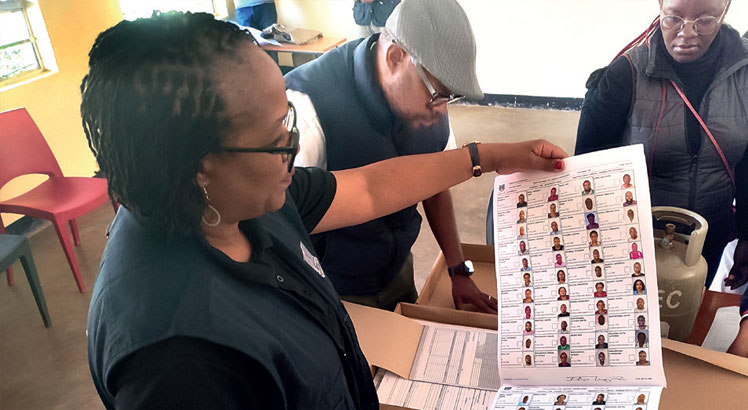
The recent announcement by the Malawi Electoral Commission (MEC) regarding its comprehensive readiness for today’s by-elections in three constituencies and two local government wards signals a critical moment for democratic governance in the nation. MEC Chairperson Annabel Mtalimanja affirmed that all logistical preparations, including the deployment of polling materials and personnel, have been meticulously completed, with no outstanding issues reported. This proactive stance by the MEC is vital for fostering public confidence in the electoral process and ensuring the seamless conduct of these crucial polls.
By-elections, while often smaller in scale than general elections, are fundamental to the continuous representation of citizens and the stability of legislative and local government bodies. They serve as a mechanism to fill vacancies that arise between general election cycles, thereby maintaining the democratic mandate of elected officials. This article will explore the intricate legal and regulatory landscape that underpins the conduct of by-elections in Malawi, examining the constitutional powers of the MEC, relevant statutory instruments, and the implications for legal practitioners involved in electoral matters.
Background
The foundation of Malawi's electoral system is firmly rooted in its Constitution, specifically Chapter VII, which establishes the Malawi Electoral Commission as an independent body responsible for the conduct of elections. Section 75 of the Constitution mandates the establishment of the MEC, comprising a Chairperson, who must be a judge nominated by the Judicial Service Commission, and at least six other members appointed in accordance with an Act of Parliament. This constitutional provision underscores the importance of an impartial and autonomous electoral body to safeguard the democratic process. The MEC's independence is further enshrined, requiring its members and employees to perform their functions free from direction or interference by any public office, government organ, political party, or candidate.
Complementing the constitutional framework are several key legislative instruments that govern the specifics of electoral operations. These include the Malawi Electoral Commission Act (Chapter 2:03), the Parliamentary and Presidential Elections Act, and the Local Government Elections Act. Notably, these acts have undergone significant amendments, with the Presidential, Parliamentary and Local Government Elections Act of 2023 consolidating previous legislation and introducing crucial reforms. By-elections are specifically provided for to fill vacancies in the National Assembly or local councils that occur otherwise than by a general dissolution. The Constitution, under Section 64, stipulates that Parliament shall make provision for holding by-elections to fill any vacancy, ideally within sixty days after the seat becomes vacant, or as expeditiously as possible thereafter if circumstances do not permit. Similarly, vacancies in local government wards necessitate by-elections under the Local Government Elections Act.
Analysis
The Malawi Electoral Commission's mandate, as outlined in the Constitution and the Electoral Commission Act, extends to a broad range of functions critical for ensuring free, fair, and credible elections. These duties encompass determining constituency boundaries impartially, reviewing existing boundaries every five years, organizing and directing voter registration, devising and distributing ballot papers, establishing polling centres, promoting public awareness, and conducting civic and voter education. The MEC is also empowered to determine electoral petitions and complaints related to the conduct of any elections, with a right of appeal to the High Court against its determinations.
For by-elections, the MEC is specifically required to open centres for the registration of new voters who will attain voting age by the polling day. Existing registered voters are expected to verify their details in the voters' roll, though voter transfers are generally not accepted during these specific polls. The campaign period for a by-election, mirroring that of a general election, is set at 60 days, concluding forty-eight hours before the opening of the poll. Transparency is further enhanced by provisions allowing political parties and independent candidates to deploy up to two representatives per polling station to monitor voting and vote counting, and at constituency tally centres for results monitoring. These representatives must be Malawian citizens and not candidates in the election.
The legal landscape for elections in Malawi has been significantly shaped by judicial intervention, most notably the nullification of the 2019 presidential election by the High Court, a decision later upheld by the Supreme Court of Appeal. This landmark ruling, which interpreted the constitutional requirement for a 'majority' to mean 50%+1 of the valid votes cast for presidential elections, prompted substantial electoral reforms. The subsequent Presidential, Parliamentary and Local Government Elections Act of 2023 incorporated these judicial recommendations, establishing a two-round system for presidential elections and consolidating various electoral procedures. While the 50%+1 rule primarily applies to presidential elections, this judicial activism underscores the judiciary's role in upholding electoral integrity and interpreting the constitutional provisions that guide the MEC's operations. The MEC's website also provides access to various court rulings, indicating the ongoing interplay between the electoral body and the judiciary in resolving disputes.
Challenges in by-elections often include voter apathy, logistical complexities in remote areas, and ensuring equitable campaign opportunities. The 2023 Act also expanded electoral offenses, reflecting a commitment to deterring malpractices. Furthermore, Section 57 of the Presidential, Parliamentary and Local Government Elections Act, 2022, restricts political parties and candidates from making commercial advertisements for their campaigns, ensuring a level playing field in media access.
Conclusion
The Malawi Electoral Commission's declared readiness for the upcoming by-elections is a testament to its ongoing efforts to ensure the continuity and integrity of democratic representation. The robust legal framework, comprising constitutional provisions and detailed statutory instruments like the Presidential, Parliamentary and Local Government Elections Act of 2023, provides a clear roadmap for the conduct of these polls. The MEC's commitment to transparency, voter education, and adherence to established procedures is paramount in fostering public trust and legitimizing electoral outcomes.
For legal practitioners, understanding the nuances of Malawi's electoral law, particularly the recent amendments and the implications of significant judicial precedents, is crucial. Advising political parties, candidates, or civil society organizations requires a thorough grasp of voter registration rules, nomination procedures, campaign regulations, and the avenues for dispute resolution. Practitioners should closely monitor MEC's electoral calendars and directives, as well as stay abreast of any further reforms or judicial interpretations that may impact future electoral processes. The continuous evolution of Malawi's electoral jurisprudence underscores the dynamic nature of its democratic journey, demanding vigilance and expertise from all legal stakeholders.
Citations
- 1.Constitution of the Republic of Malawi, 1994, Chapter VII, Sections 64, 75, 76, 77.
- 2.Malawi Electoral Commission Act, Chapter 2:03.
- 3.Parliamentary and Presidential Elections Act.
- 4.Local Government Elections Act.
- 5.Presidential, Parliamentary and Local Government Elections Act, 2023.
- 6.George Charles Zulu v Alfred Ruwan Gangata and MEC, Election Cause No. 52 of 2025 (Malawi High Court).
- 7.Dr Saulos Klaus Chilima and another v Professor Peter Mutharika and another (Chilima Case) (Malawi High Court, 2020).
- 8.Gwanda Chakuamba and others v the Attorney General, the Electoral Commission and the United Democratic Front (Malawi Supreme Court of Appeal, 2000).
How does this affect your business?
Get an AI analysis of this article grounded in your jurisdictions, practice areas, and any policy documents you've uploaded to Wansom.