
Cabinet Freezes New Government Office Space Leasing Pending Nationwide Utilisation Audit, Signalling Shift Away from Private Leasing Toward PPP-Financed Public Office Development
Abstract
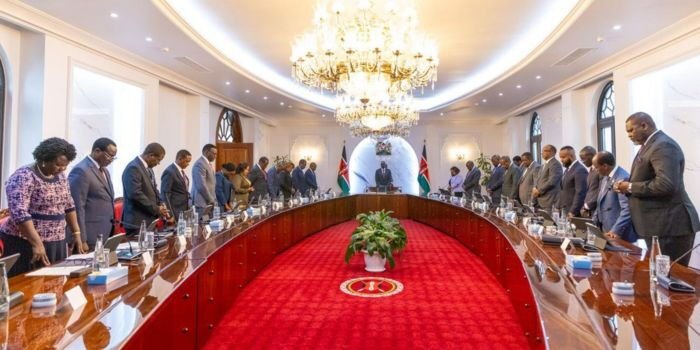
The Cabinet has halted new leasing or hiring of government office space across all Ministries, Departments, Agencies, and State Corporations pending a utilisation audit of existing public offices. The freeze follows a 2025 audit revealing rent payments for vacant offices and Ksh125 million in unpaid rent owed by named departments. Parliament had already directed the National Treasury in May 2026 to stop funding renovations or structural modifications of leased offices, and the 2026/2027 budget confirmed that funding for such adjustments would be discontinued. The Cabinet has simultaneously ordered a renovation programme for existing public offices and signalled continued exploration of PPP financing models for future government office development. For commercial landlords currently leasing to government entities, property developers with government-facing portfolios, PPP practitioners, and public sector procurement teams, this directive restructures the near-term government office market. The freeze effectively consolidates the government's position as a more constrained and scrutinised tenant, while signalling that future government office capacity may be created through PPP structures rather than conventional leasing.
Introduction
The Cabinet freeze on new government office leasing is the latest step in a sequenced set of public expenditure controls that have been building across the 2025/2026 period. A 2025 audit exposed the structural problem: government departments paying rent for vacant offices while simultaneously owing landlords unpaid rent, a combination of fiscal waste and contractual non-performance that the freeze is designed to stop from compounding further. Parliament had already acted in May 2026, directing the National Treasury to stop funding renovations of leased offices, and the 2026/2027 budget confirmed that direction. Cabinet's 30 June 2026 decision extends that logic: before new leases are signed, the government needs to know what it already has, how it is being used, and whether its existing estate can be consolidated and upgraded to meet its needs without further private leasing commitments.
The PPP signal embedded in the Cabinet statement is the forward-looking element that matters most commercially. A government that has frozen conventional leasing and is exploring private investor financing for the design, construction, and maintenance of public office facilities is positioning itself as a future PPP client rather than a conventional commercial tenant. That shift, if it translates into actual procurement, changes the profile of who in the property and finance sector needs to be tracking this policy and in what capacity.
Background
Kenya's government office leasing arrangement has historically operated through the Ministry of Public Works and the National Treasury, with individual MDAs entering lease agreements for office accommodation under allocations approved in annual budgets. The Public Procurement and Asset Disposal Act, No. 33 of 2015, governs how government entities procure leased office space, and the PFM Act, No. 18 of 2012, imposes accountability obligations on accounting officers for the prudent use of public funds, including rent expenditure. The Controller of Budget and the Auditor General have both flagged office space expenditure irregularities in recent reporting cycles, with the 2025 audit identifying specific departments, including the Ministry of Sports, State Law Office, ODPP, Commission on Revenue Allocation, and Ministry of MSMEs, as owing a combined Ksh125 million in unpaid rent.
The PPP model the government has been exploring operates under the Public Private Partnerships Act, No. 15 of 2021, which provides the framework for private sector participation in public infrastructure financing, construction, and maintenance. Under this model, private investors would design, finance, construct, and maintain government office facilities, recouping their investment through long-term availability payments or concession arrangements rather than conventional rent. This is a structurally different arrangement from leasing and requires a different procurement process, financial modelling, and risk allocation framework. The freeze on leasing does not itself initiate PPP procurement, but it creates the policy space for PPP structures to be developed as the utilisation audit concludes.
Analysis
For commercial landlords currently holding government leases, the freeze creates two distinct risk categories. First, landlords with MDAs in arrears, including the five named departments collectively owing Ksh125 million, face continued recovery risk during an audit period in which the government is focused on consolidating rather than expanding its leased footprint. A government under active cost-reduction pressure is less likely to resolve arrears through new lease negotiations and more likely to use the audit as an opportunity to exit underutilised leased premises entirely. Landlords in that position should review their lease terms now, specifically payment default provisions, break clauses, and dilapidation obligations, before the audit produces recommendations on which leases to terminate.
Second, property developers and investors who had been marketing new government-facing office developments on the assumption of continued public sector leasing demand should treat the freeze as a genuine market signal rather than a temporary administrative pause. The combination of the Parliamentary directive in May, the budget confirmation, and now a Cabinet freeze operating simultaneously with a PPP exploration signals a structural policy shift, not a procurement delay. The government's direction is away from conventional leasing as its primary office accommodation model, and developers planning new government-facing stock should be considering whether their business case needs to be reformulated around PPP partnership rather than conventional tenancy.
For PPP practitioners and financial advisers, the productive read on this development is that a utilisation audit creating a clear picture of the government's actual office estate, combined with a freeze that creates unfulfilled demand for additional capacity in some areas, is precisely the kind of structured baseline that makes PPP project preparation viable. PPP transactions for public office accommodation require clear government demand signals, identified sites, and defined performance standards, all of which a comprehensive utilisation audit could produce. Practitioners with public sector real estate PPP experience should be monitoring the audit's progress and engaging with Treasury and the State Department for Public Works as the audit findings become available, since those findings will shape the PPP pipeline.
Conclusion
The freeze is a credible policy signal, not an administrative pause, because it follows parliamentary action, a budget confirmation, and a named-department audit finding, all pointing in the same direction. Commercial landlords with government tenants should treat the audit period as an elevated lease risk environment. The PPP signal is the longer-term development to track, since the model the government is exploring for future office capacity would shift the relevant market participants from conventional property investors to project finance and infrastructure specialists.
Citations
- 1.Public Finance Management Act, No. 18 of 2012
- 2.Public Procurement and Asset Disposal Act, No. 33 of 2015
- 3.Public Private Partnerships Act, No. 15 of 2021
- 4.National Treasury, 2026/2027 Budget Summary (office renovation funding discontinuation)
- 5.Controller of Budget / Office of the Auditor General, 2025 audit findings on government office space
- 6.Cabinet directive on office space leasing freeze, 30 June 2026
- 7.Parliamentary directive to National Treasury on leased office renovations, May 2026