
China State Construction Engineering Limited to Resume Work on Mzuzu University Library Project
Abstract
The Malawian Ministry of Education, Science and Technology has announced the resolution of outstanding contractual issues for the stalled Mzuzu University (Mzuni) library project. This development follows a significant cost escalation from an initial K7 billion in 2020 to K27 billion by December 2025, with K13 billion still required for completion. The resolution, confirmed by the Mzuni Vice-Chancellor and facilitated by the Attorney General, paves the way for the contractor, China State Construction Engineering Limited, to resume work. This case highlights critical aspects of public procurement, contract management, and dispute resolution in Malawi, particularly concerning cost overruns and the legal mechanisms for addressing them in large-scale government projects.
Introduction
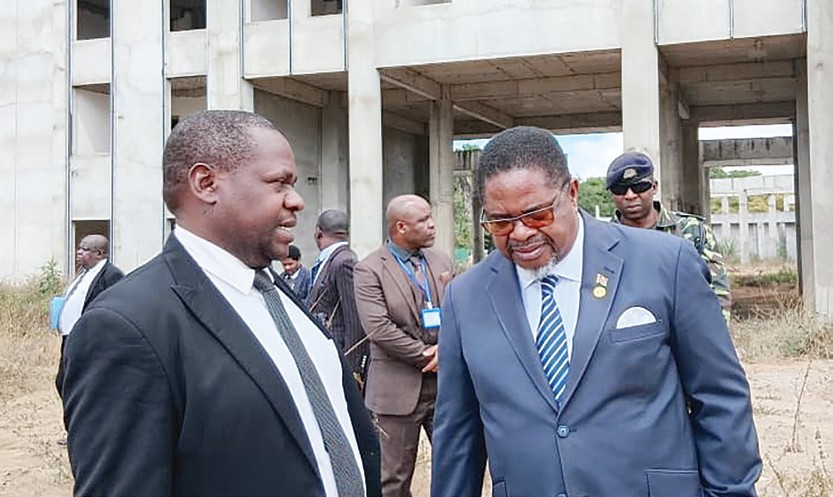
The recent announcement by Malawi's Ministry of Education, Science and Technology regarding the resolution of contractual issues for the Mzuzu University (Mzuni) library project marks a significant development in the country's public infrastructure landscape. This project, initially valued at K7 billion in 2020, saw its cost balloon to K27 billion by December 2025, underscoring persistent challenges in public sector contract management and project execution in Malawi. The Minister's statement indicates that the contractor, China State Construction Engineering Limited, is now poised to resume work, with outstanding financial issues reportedly cleared.
This development is particularly pertinent for legal practitioners, as it sheds light on the complexities of government contracts, the mechanisms for dispute resolution, and the implications of substantial cost escalations. The Mzuni library, auditorium, and association works complex project has been a subject of public scrutiny due to its delays and financial trajectory. The resolution, reportedly achieved through the Attorney General's office, offers a practical example of how the Malawian government navigates intricate contractual impasses in major public works.
This article will delve into the legal framework governing public procurement and contracts in Malawi, analyze the potential legal avenues employed to resolve the Mzuni project's contractual woes, and discuss the broader implications for legal professionals advising on government projects, particularly concerning cost variations and accountability.
Background
Public procurement in Malawi is primarily governed by the Public Procurement and Disposal of Public Assets Act (PPDPA Act) of 2017, which replaced the 2003 Act, and was further updated by the Public Procurement and Disposal of Public Assets Act No. 7 of 2025. This legislative framework aims to ensure transparency, fairness, efficiency, and accountability in the procurement and disposal of public assets. The Public Procurement and Disposal of Public Assets Authority (PPDA) is the independent body mandated to regulate, monitor, and oversee all public procurement and disposal activities in Malawi.
Government contracts, such as the Mzuni library project, are subject not only to the PPDPA Act but also to general principles of contract law, largely based on English Common Law. These contracts typically include provisions for variations, payments, delays, and dispute resolution, often through arbitration. The Attorney General serves as the principal legal adviser to the Government, responsible for drafting and vetting agreements, providing legal advice, and conducting civil litigation on behalf of government ministries and departments. The Government Contracts Unit (GCU) is also mandated to review, vet, negotiate, and approve contractual proposals before they are concluded by Ministries, Departments, and Agencies (MDAs).
The Mzuni library project commenced in 2020 with an initial budget of K7 billion, following the destruction of the previous library by fire in 2015. However, by December 2025, the project cost had escalated dramatically to K27 billion, with K14 billion already spent and an additional K13 billion required for completion. This substantial increase triggered concerns regarding project overruns and the effectiveness of contract management, prompting the Ministry of Education, Science and Technology to address the 'contractual issues' that had stalled the project.
Analysis
The resolution of the Mzuni library project's contractual woes, as confirmed by the Minister and the Mzuni Vice-Chancellor, likely involved a complex interplay of legal and administrative mechanisms. The Vice-Chancellor specifically noted that the outstanding issues were resolved "through the Attorney General." This suggests that the Attorney General's Chambers, in its capacity as the principal legal adviser to the government, played a crucial role in negotiating a settlement or advising on the legal pathways to unblock the stalled project. Such resolutions often involve renegotiation of contract terms, formal variation orders, or a settlement agreement to address claims arising from delays, cost escalations, or changes in scope.
Cost escalation in public contracts is a recurring challenge in Malawi, often attributed to factors such as inadequate project preparation, unrealistic cost estimates, weak contract management, changes in the scope of work, delayed payments, and external factors like inflation and foreign exchange volatility. The PPDPA Act and its regulations provide for contract variations, but these must typically follow due process, including justification and approval, to ensure compliance and prevent abuse. The significant jump from K7 billion to K27 billion would undoubtedly necessitate rigorous scrutiny and justification under the PPDPA Act.
The involvement of the Attorney General in resolving these issues implies a legal assessment of the contractor's claims and the government's obligations. While the Minister stated that the contractor was paid all dues and funds are available for completion, the process of reaching this point could have involved dispute resolution mechanisms such as negotiation, mediation, or even arbitration, as provided for under Malawi's Arbitration Act (Cap 6:02) and Mediation and Conciliation Act. The Public Procurement and Disposal of Public Assets Authority (PPDA) also has a mandate to monitor procurement systems and activities, and its oversight would be crucial in ensuring that the resolution aligns with procurement principles.
Furthermore, the context of recent government directives to review all public contracts signed between September 2023 and September 2025, with the involvement of the National Audit Office and the Attorney General, highlights a broader effort to scrutinize potential liabilities and ensure value for money. This indicates a heightened awareness of the need for robust contract management and accountability, especially given the prevalence of project overruns in Malawi. The resolution of the Mzuni project, therefore, serves as a test case for the effectiveness of these oversight mechanisms and the government's commitment to fiscal prudence.
Conclusion
The announced resolution of the Mzuni library project's contractual issues offers a glimmer of hope for the completion of a vital public infrastructure. For legal practitioners, this case underscores the critical importance of meticulous contract drafting, particularly in public procurement, to anticipate and mitigate risks associated with delays, cost escalations, and dispute resolution. Robust clauses addressing variation orders, force majeure, and clear dispute resolution pathways are indispensable.
Practitioners advising government entities or contractors in Malawi must remain vigilant regarding compliance with the Public Procurement and Disposal of Public Assets Act, as amended, and the directives from the Attorney General and Treasury concerning contract reviews. The emphasis on transparency, accountability, and value for money in public contracts is likely to intensify, necessitating thorough due diligence and adherence to established legal procedures for any contract variations or settlements. Future developments, including the actual resumption of work, the final cost of the project, and any further allocations in the Mid-Year Budget Review, will be closely watched as indicators of the long-term success of this resolution and its implications for public sector project delivery in Malawi.
Citations
- 1.Public Procurement and Disposal of Public Assets Act, 2017
- 2.Public Procurement and Disposal of Public Assets Act No. 7 of 2025
- 3.Arbitration Act (Chapter 6:02) of the Laws of Malawi
- 4.Mediation and Conciliation Act (Malawi)
- 5.The Nation Malawi, "Minister says Mzuni library contract woes cleared," June 30, 2026.
- 6.The Nation Malawi, "Delayed projects squeeze Malawians more," December 24, 2025.
- 7.allAfrica.com, "Malawi: Treasury Suspends Funding for Government Contracts Signed Between 2023 and 2025," June 04, 2026.
- 8.Public Procurement and Disposal of Public Assets Authority, "Home" (website content, accessed July 1, 2026).
- 9.Public Procurement and Disposal of Public Assets Authority, "Introduction" (website content, accessed July 1, 2026).
- 10.Public Procurement and Disposal of Public Assets Authority, "Directorates and Departments" (website content, accessed July 1, 2026).
- 11.Public Procurement and Disposal of Public Assets Authority, "News" (website content, accessed July 1, 2026).
- 12.Ministry of Justice, "Attorney General's Chambers" (website content, accessed July 1, 2026).
- 13.Ministry of Justice & Constitutional Affairs, "Legal departments 1. Attorney General's Chambers" (website content, accessed July 1, 2026).
- 14.Government Contracts Unit, "Home" (website content, accessed July 1, 2026).
- 15.Ralph P Hall, "Construction of the Mzuni Library and Auditorium Begins," November 23, 2020.
- 16.Ralph P Hall, "The Mzuni Library Initiative | A collaborative effort to rebuild Mzuzu University's library," (website content, accessed July 1, 2026).
- 17.Nyasa Times, "Mutharika donates K20 million for Mzuni library project," May 25, 2016.
- 18.Scribd, "Malawi Government Contract Conditions," (document, 1984).
- 19.Scribd, "Malawi's Frustrated Contracts Law Overview," (document, 2024).
- 20.Global Legal Insights, "Litigation & Dispute Resolution Laws 2025 | Malawi," August 14, 2025.
- 21.Hivos, "RECOMMENDATIONS FOR THE PUBLIC PROCUREMENT SYSTEM OF THE REPUBLIC OF MALAWI," (report, accessed July 1, 2026).
- 22.SciELO South Africa, "Relational-based resilience of a public university: a case study on losing a library by Mzuzu University in Malawi," (journal article, accessed July 1, 2026).
- 23.Malawi Nyasa Times, "PPDA outlines measures to tame malpractices, corruption in public procurement, disposal of assets," July 24, 2025.
- 24.Nation Online, "Treasury cracks the whip," June 27, 2026.
- 25.Laws.Africa, "Malawi Statutory Bodies (Control of Contracts) Act (Chapter 18:07)", (accessed July 1, 2026).
How does this affect your business?
Get an AI analysis of this article grounded in your jurisdictions, practice areas, and any policy documents you've uploaded to Wansom.