
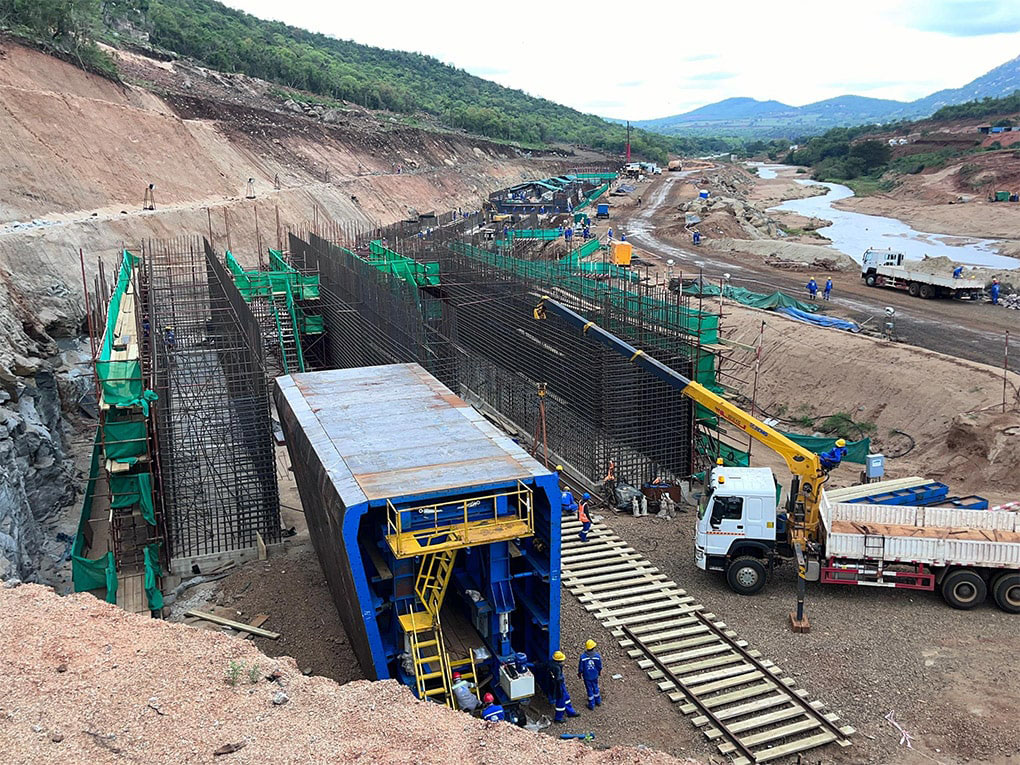
Chinese Firms Defy Beijing Recall Eswatini: Mpakeni Dam Project Continues
Summary
- A Chinese consortium building the E2.6 billion Mpakeni Dam in Eswatini has stated it will not abandon the project.
- This decision defies a travel advisory from the People's Republic of China, which warned its nationals to evacuate Eswatini.
- The Chinese government's advisory cited safety and security reasons for the recall of its citizens.
- The consortium's stance highlights a rare instance of a Chinese entity publicly contradicting a directive from its home government.
- The incident underscores the complex interplay between commercial contracts, geopolitical risks, and national government advisories in international infrastructure projects.
Chinese Consortium Defies Beijing's Recall
The consortium's decision highlights a rare instance of a Chinese entity openly challenging a directive from its home government regarding overseas operations.
A Chinese consortium responsible for the construction of the E2.6 billion Mpakeni Dam in Eswatini has publicly declared its intention to continue with the project, directly contradicting a travel advisory issued by the People's Republic of China. This advisory had specifically urged Chinese nationals to evacuate the Southern African nation, citing unspecified safety and security concerns. The consortium's decision highlights a rare instance of a Chinese entity openly challenging a directive from its home government regarding overseas operations.
The Mpakeni Dam, a significant infrastructure undertaking valued at E2.6 billion, represents a substantial investment and a critical development project for Eswatini. The consortium's commitment to seeing the project through, despite the official warning from Beijing, underscores the complex interplay between commercial interests, contractual obligations, and geopolitical pressures that can arise in international development.
The People's Republic of China's travel advisory, which called for the evacuation of its citizens from Eswatini, introduced an unexpected layer of complexity to the ongoing construction. While the specific nature of the safety and security reasons was not detailed, such warnings typically carry significant weight for nationals and businesses operating abroad. The consortium's defiance, therefore, sets a notable precedent in the context of Chinese foreign policy and its engagement in African infrastructure.
Geopolitical Tensions and Infrastructure Resilience
This development brings into sharp focus the potential geopolitical risks impacting large-scale infrastructure projects, particularly those involving significant Chinese investment in Eswatini. The People's Republic of China has been a major player in funding and executing various infrastructure initiatives across the African continent, often through state-backed enterprises and consortia. The Mpakeni Dam project is one such example of Chinese investment in Eswatini projects, contributing to the nation's development goals.
The Eswatini China travel advisory, effectively a Beijing travel warning Eswatini, introduces an element of uncertainty for foreign contractors operating in the region. The consortium's refusal to abandon the Mpakeni Dam project, despite the official recall, suggests a strong commitment to its contractual duties and perhaps a belief in the local security situation, or a strategic decision to prioritize the project's continuity over the advisory.
Such incidents underscore the inherent Eswatini infrastructure geopolitical risk that can influence the stability and progress of major construction efforts. The decision by the Mpakeni Dam Chinese consortium to proceed highlights the resilience of some foreign contractors in Eswatini security environments, even when faced with directives from their own governments, thereby adding a unique dimension to the dynamics of international development.
Implications for International Contracts and Foreign Operations
The situation surrounding the Chinese firms defying Beijing recall Eswatini has broader implications for international contracts and the operational environment for foreign contractors globally. It raises questions about the complexities of contractual obligations versus foreign government directives, especially when national security or political considerations are invoked. Companies engaged in large-scale projects in politically sensitive regions must navigate a delicate balance between fulfilling their agreements and adhering to their home country's foreign policy or security advisories.
For foreign contractors in Eswatini security contexts, this event serves as a critical case study. It emphasizes the need for robust risk assessment frameworks that account for not only local political and security dynamics but also potential interventions or advisories from their home governments. The consortium's stance could influence how future Chinese investment in Eswatini projects is perceived, both by local governments and by other international partners.
Ultimately, this scenario highlights the intricate challenges faced by multinational corporations operating in a globalized yet politically fragmented world. The decision by the Chinese consortium to continue its work on the Mpakeni Dam, despite the People's Republic of China's travel advisory, illustrates the potential for commercial imperatives to diverge from national government directives, creating a complex precedent for future international infrastructure endeavors.
Practical Implications
This development highlights potential geopolitical risks impacting large-scale infrastructure projects and the complexities of contractual obligations versus foreign government directives. Lawyers should advise clients on reviewing force majeure clauses, political risk insurance, and potential project delays or liabilities arising from such advisories.
Source
How does this affect you?
Get an AI analysis of this article grounded in your jurisdictions, practice areas, and any policy documents you've uploaded to Wansom.
Finish Reading the Full Story and the Expert Analysis.
Wansom is AI and can make mistakes.