
Court of Appeal Judges to Pick New Leader in Monday Vote
Abstract
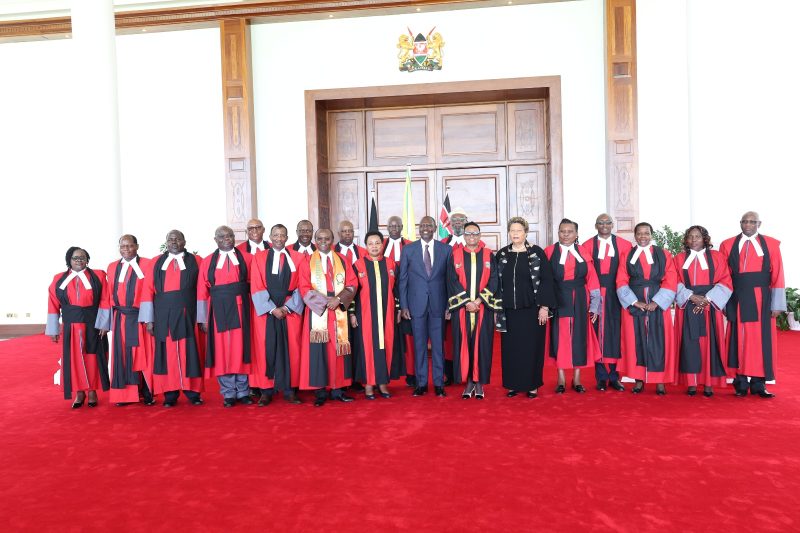
Judges of the Court of Appeal in Kenya are set to elect their new President on Monday, June 22, 2026, a critical internal process that will shape the administrative and jurisprudential direction of the country's second-highest court. Four distinguished jurists – Justice Gatembu Kairu, Justice Patrick Kiage, Lady Justice Agnes Murgor, and Lady Justice Lydia Achode – are vying for the influential position, following the expiry of Justice Daniel Musinga's term. The election, conducted by secret ballot and overseen by the Independent Electoral and Boundaries Commission (IEBC), underscores the judiciary's commitment to transparent internal governance and is keenly watched by legal professionals for its implications on appellate justice and judicial reforms.
Introduction
The Kenyan judiciary stands at a pivotal juncture as judges of the Court of Appeal prepare to elect their new President on Monday, June 22, 2026. This internal election, a constitutional mandate, follows the conclusion of Justice Daniel Musinga's tenure, which ended on May 24, 2026. The contest features four highly respected jurists: Justice Gatembu Kairu, Justice Patrick Kiage, Lady Justice Agnes Murgor, and Lady Justice Lydia Achode, each bringing a wealth of experience and a distinct judicial philosophy to the fore.
The President of the Court of Appeal holds a position of significant administrative and judicial influence, responsible for guiding bench assignments, coordinating case management, and representing the court within the broader judicial governance structure. The outcome of this election is therefore not merely an internal affair but a crucial determinant of the appellate court's efficiency, its jurisprudential trajectory, and its role in upholding the rule of law in Kenya. For legal practitioners, understanding the dynamics of this leadership transition is essential, as it will inevitably impact the landscape of appellate litigation and the administration of justice.
Background
The Court of Appeal of Kenya is established under Article 164 of the Constitution of Kenya, 2010, as a superior court mandated to hear appeals from the High Court, the Environment and Land Court, the Employment and Labour Relations Court, and any other court or tribunal as prescribed by an Act of Parliament. Article 164(1)(a) stipulates that the Court shall consist of not fewer than twelve judges, with the Judicature Act further providing for a maximum of 70 judges. A critical aspect of its structure, as enshrined in Article 164(2), is that there shall be a President of the Court of Appeal who shall be elected by the judges of the Court of Appeal from among themselves.
The election process itself is governed by the Court of Appeal Election Rules, 2013, and is notably overseen by the Independent Electoral and Boundaries Commission (IEBC) to ensure transparency and credibility. This involvement of an independent electoral body in an internal judicial election underscores the formal and structured nature of the process. The President's role extends beyond judicial pronouncements; they are instrumental in the administrative organisation and leadership of the court, including case allocation and the maintenance of the court's honour and dignity. The Judicial Service Commission (JSC), established under Article 171 of the Constitution, plays an overarching role in promoting judicial independence and accountability, and one Court of Appeal judge is elected by their peers to serve on this crucial commission.
Analysis
The election for the President of the Court of Appeal is a high-stakes internal contest with significant implications for judicial leadership and the administration of justice. The four candidates, Justice Gatembu Kairu, Justice Patrick Kiage, Lady Justice Agnes Murgor, and Lady Justice Lydia Achode, are all seasoned jurists with extensive experience. Their individual judicial philosophies and administrative approaches will undoubtedly influence the court's direction in the coming years.
Justice Gatembu Kairu, appointed to the Court of Appeal in 2012, brings a strong academic background, having lectured at the University of Nairobi, and a notable expertise in Alternative Dispute Resolution (ADR), Banking Law, and Civil Procedure. His involvement in significant appellate decisions, such as the Martha Karua election petition, highlights his engagement with critical constitutional and electoral jurisprudence. Justice Patrick Kiage, also appointed in 2012, is renowned for his incisive judgments and eloquent articulation, particularly evident in his pronouncements during the Building Bridges Initiative (BBI) appeal case. His background as a former special prosecutor and author of legal texts further underscores his deep understanding of criminal and family law.
Lady Justice Agnes Murgor, appointed in December 2012, possesses a robust commercial law background, having served as State Counsel and Legal Counsel for East African Breweries Limited. Her leadership as Chairperson of the Administration of Justice, Performance Management Committee, and her landmark ruling on gender equity in the Supreme Court, demonstrate a commitment to institutional reform and constitutional principles. While specific public details on Lady Justice Lydia Achode's notable judgments or unique contributions are less readily available from the search results, her inclusion in the race signifies her standing among her peers as a capable and respected jurist. The Judicature Act, Section 8, which generally determines precedence among judges by date of appointment, may also play a subtle role in the considerations of the judges, though the election is ultimately a choice based on leadership qualities and vision.
The election's outcome will directly impact the court's ability to manage its burgeoning caseload, foster judicial independence, and develop sound indigenous jurisprudence, as mandated by its constitutional role. The choice of leader will signal the court's priorities, whether focusing on administrative efficiency, the advancement of specific areas of law, or strengthening public confidence in the appellate system. The involvement of the IEBC in overseeing the secret ballot ensures a degree of external validation, aiming to mitigate any perceptions of internal bias or undue influence, thereby bolstering the legitimacy of the elected President.
Conclusion
The election of the President of the Court of Appeal is a momentous occasion for the Kenyan judiciary, signaling a new chapter in the leadership of its second-highest court. The chosen leader will inherit the crucial responsibility of steering the Court through complex legal challenges, enhancing its administrative efficacy, and upholding its constitutional mandate to deliver appellate justice. Practitioners should closely monitor the post-election pronouncements and administrative directives from the new President, as these will inevitably influence court procedures, case allocation, and the overall judicial environment.
The legal fraternity is encouraged to engage with the Court's evolving jurisprudence under the new leadership, anticipating potential shifts in judicial interpretation and policy. The election serves as a reminder of the judiciary's internal mechanisms for self-governance and its continuous efforts towards institutional strengthening. The trajectory of the Court of Appeal in the coming years will be a testament to the vision and leadership of its newly elected President, profoundly impacting the rule of law and the administration of justice across Kenya.
Citations
- 1.Constitution of Kenya, 2010, Article 164
- 2.Judicature Act, Cap 8, Laws of Kenya
- 3.Court of Appeal Election Rules, 2013
- 4.Judicial Service Commission (Kenya) - Wikipedia
- 5.Mandate & Functions - Judicial Service Commission
- 6.IEBC to oversee Court of Appeal president election as 4 judges face off in secret ballot showdown - People Daily
- 7.164. Court of Appeal - Kenya Law Reform Commission (KLRC)
- 8.Judicial Service Commission Jobs in Kenya - MyJobMag
- 9.Justice Steven Gatembu Kairu Background, Education, Career & Major Rulings
- 10.Overview of Kenya's Judicature Act | PDF | Service Of Process | Judge - Scribd
- 11.Court of Appeal Judges to Pick New Leader in Monday Vote - Capital FM
- 12.Article 164 of The Constitution of Kenya: Court of Appeal. - sheriaplex.com
- 13.Judicature Act - PolicyVault.Africa
- 14.Judicature Act, Kenya, WIPO Lex
- 15.The Court of Appeal - The Judiciary
- 16.Court of Appeal of Kenya - Wikipedia
- 17.4 judges cleared to vie for Court of Appeal presidency - The Star
- 18.Analysis of Kenya's Judicature Act 2023 | PDF | Common Law | Judiciaries - Scribd
- 19.Appellate Jurisdiction Act Kenya | PDF | Judgment (Law) | Appeal - Scribd
- 20.The Judicature Act - Legal Tools Database
- 21.Justice Patrick Kiage: 16 Memorable Quotes from Court of Appeal Judge during BBI Verdict
- 22.Job description page - Judicial Service Commission
- 23.Constitution of Kenya (2010) - Wikisource, the free online library
- 24.Kenya: Court of Appeal - Refworld
- 25.VACANCIES
- 26.Court of Appeal judges set to elect new president to succeed Justice Daniel Musinga
- 27.Appellate Jurisdiction Act - PolicyVault.Africa
- 28.The Constitution of Kenya, 2010 Online – Ministry of Defence
- 29.The rise and rise of Justice Kiage's career | Pulse Kenya
- 30.Hon. Lady Justice Agnes Kalekye Murgor - The Judiciary
- 31.Hon. Mr. Justice Patrick Omwenga Kiage - The Judiciary
- 32.ICL > Kenya > Constitution - Servat Unibe
- 33.Justice Agnes Murgor - Biography, Court of Appeal, Judge, Age - Kenyan Life
- 34.Justice Patrick Kiage's ruling on the BBI appeal case - YouTube
- 35.BBI RULING: Justice Patrick Kiage's judgement - YouTube
- 36.Appeal court rules on gender equity of Supreme Court - Standard Newspaper
- 37.STATE OF THE JUDICIARY AND THE ADMINISTRATION OF JUSTICE - NCAJ
- 38.Lessons from Ghana and Kenya on why presidential election petitions usually fail
- 39.COA Rules - The Judiciary
- 40.Hon. Mr. Justice Gatembu Kairu, FCIArb - The Judiciary
- 41.Philip K. Murgor is a founder and the current Managing Partner of the firm. He offers invaluable work experience spanning a period of over 30 years in the legal profession as state counsel, private practitioner and as a former Director of Public Prosecutions.
- 42.THE COURT OF APPEAL OF KENYA - Nairobi - The Judiciary
- 43.Supreme Court Decisions – Page 10 - The Judiciary
- 44.Court of Appeal Judges to Pick New Leader in Monday Vote - The Online Kenyan