
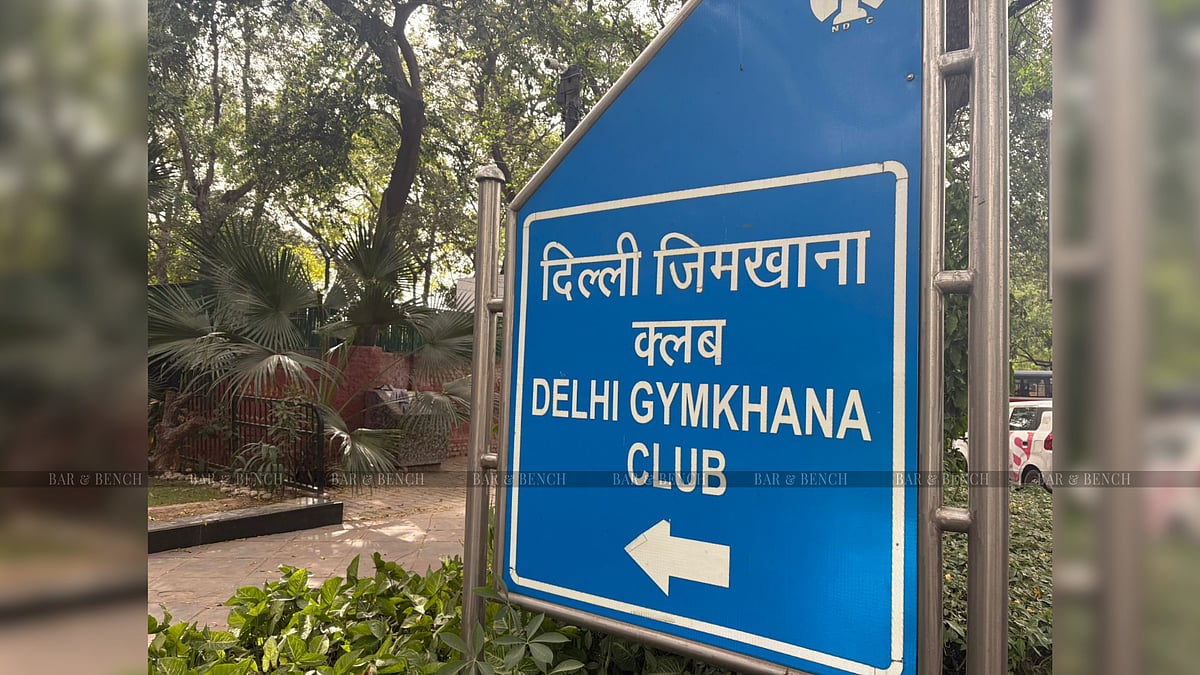
Delhi Gymkhana Club member, staff move Delhi High Court against government’s eviction move
Abstract
The Delhi Gymkhana Club is embroiled in a significant legal battle as its members and staff welfare association have approached the Delhi High Court to challenge the Central government's eviction proceedings. The government, through the Land & Development Office (L&DO), terminated the club's perpetual lease, granted in 1928, citing a 'public purpose' clause for re-entry, specifically for strengthening defence infrastructure and public security. This move follows earlier intervention by the National Company Law Tribunal (NCLT) under the Companies Act, 2013, which found the club's affairs prejudicial to public interest and led to the appointment of government-nominated directors. The current High Court applications contest the show-cause notice issued under the Public Premises (Eviction of Unauthorised Occupants) Act, 1971, arguing that the lease termination itself is still under judicial review, raising critical questions about governmental powers over leased public land and corporate governance.
Introduction
The iconic Delhi Gymkhana Club, situated on a sprawling 27.3-acre prime property in Lutyens' Delhi, finds itself at the epicentre of a protracted legal confrontation with the Central government. Recent developments have seen a club member, Vijay Khurana, and the Club’s Staff Welfare Association file applications before the Delhi High Court, challenging a show-cause notice issued by the Estate Officer of the Land & Development Office (L&DO) for their eviction. These applications are part of already pending suits that contest the government's earlier directive to vacate the premises.
This legal skirmish is not an isolated incident but rather the latest chapter in a multi-pronged offensive by the government, which previously secured control over the club's management through proceedings before the National Company Law Tribunal (NCLT). The core of the current dispute revolves around the government's invocation of a 'public purpose' clause in the club's nearly century-old perpetual lease deed to justify re-entry and eviction. The Delhi High Court's adjudication will be crucial in defining the boundaries of governmental power concerning leased public properties and the interplay between corporate governance oversight and property rights.
Background
The Delhi Gymkhana Club's association with its current premises dates back to 1928 when the land was granted to the Imperial Delhi Gymkhana Club on a perpetual lease by the government. A pivotal aspect of this lease deed is Clause 4, which explicitly permits the lessor (the Central government) to re-enter the premises if required for a 'public purpose,' whereupon the lease would cease and determine.
The government's intervention escalated in 2020 when the Ministry of Corporate Affairs initiated proceedings against the club before the National Company Law Tribunal (NCLT) under Sections 241 and 242 of the Companies Act, 2013. The Centre alleged mismanagement and conduct prejudicial to public interest, particularly concerning membership policies and financial irregularities. In April 2022, the NCLT allowed the government's petition, ordering the appointment of 15 government-nominated directors to manage the club's affairs, a decision subsequently upheld by the National Company Law Appellate Tribunal (NCLAT). The Supreme Court also had occasion to direct the NCLT to expedite the matter.
Following these corporate governance interventions, the Land & Development Office (L&DO), an attached office of the Ministry of Housing and Urban Affairs responsible for administering government properties in Delhi, issued a notice on May 22, 2026, terminating the club's perpetual lease. The L&DO directed the club to hand over possession by June 5, 2026, invoking Clause 4 and asserting that the land was critically required for 'strengthening and securing defence infrastructure and other vital public security purposes,' along with broader governance and public-interest projects. Subsequently, a show-cause notice was issued by the Estate Officer under Section 4(1) read with Section 4(2)(b)(ii) of the Public Premises (Eviction of Unauthorised Occupants) Act, 1971, deeming the club an 'unauthorised occupant' after the lease termination.
Analysis
The current legal challenge before the Delhi High Court encapsulates a complex interplay of property law, administrative law, and company law. At its heart lies the interpretation and application of Clause 4 of the 1928 perpetual lease deed, which permits government re-entry for a 'public purpose.' The government has articulated this public purpose as the need for strengthening defence infrastructure, public security, governance infrastructure, and other public-interest projects, given the club's strategic location. The petitioners, however, contend that the show-cause notice for eviction is based on 'entirely erroneous and premature assumptions,' as the validity of the lease termination itself remains sub judice before the High Court. This raises a fundamental question for judicial scrutiny: whether the government's stated 'public purpose' is genuinely established and whether the exercise of the re-entry clause is justifiable and not arbitrary.
The eviction proceedings are being conducted under the Public Premises (Eviction of Unauthorised Occupants) Act, 1971 (PPA Act). This Act provides a summary procedure for the eviction of unauthorised occupants from public premises. The government's stance is that once the lease was terminated, the club's continued occupation became 'unauthorised' under Section 2(g) of the PPA Act, thereby empowering the Estate Officer to issue a show-cause notice under Section 4. The petitioners argue that the Estate Officer has not formed an independent prima facie opinion as required by Section 4 of the PPA Act, but has merely adopted the government's conclusion regarding lease termination. This highlights the procedural fairness aspect of the PPA Act and the extent to which an Estate Officer must independently verify the grounds for eviction, especially when the underlying lease termination is contested.
The present eviction attempt is inextricably linked to the earlier NCLT proceedings. The government's initial intervention under Sections 241 and 242 of the Companies Act, 2013, was predicated on the club's affairs being conducted in a manner 'prejudicial to public interest' and constituting mismanagement. While the NCLT focused on corporate governance and the club's internal functioning, the current action targets its very right to occupy the land. This dual approach suggests a comprehensive strategy by the government to assert control over institutions operating on public land, leveraging both company law and property law statutes. The High Court's refusal to pass interim orders against the eviction directive, while simultaneously ensuring that the Estate Officer's hearing is deferred until the court has considered the matter, underscores the judiciary's commitment to due process. Furthermore, the petitioners have raised concerns about the violation of Article 300A of the Constitution, which protects property rights, arguing that proprietary interests cannot be extinguished without due process and compensation.
Conclusion
The Delhi Gymkhana Club case presents a multifaceted legal challenge with far-reaching implications for institutions operating on government-leased land across India. The Delhi High Court's forthcoming decision will be pivotal in clarifying the interpretation of 'public purpose' within perpetual lease deeds and the scope of the Public Premises (Eviction of Unauthorised Occupants) Act, 1971, particularly when the underlying lease termination is under judicial scrutiny. The interplay between the government's powers under company law to intervene in corporate governance and its authority under property law to reclaim land for public use will be a key area of judicial pronouncement.
Practising attorneys and legal professionals should closely monitor the developments in this case. The outcome will not only determine the fate of the Delhi Gymkhana Club but could also set a significant precedent for numerous other clubs, societies, and institutions that occupy land leased from the government. The case highlights the critical importance of meticulously reviewing lease agreements, understanding the broad powers vested in the L&DO and Estate Officers, and appreciating the potential for government intervention on grounds of 'public interest' under various statutes. The High Court's emphasis on due process, even while declining interim relief, signals that procedural fairness will remain a crucial battleground in such disputes.
Citations
- 1.Companies Act, 2013
- 2.Public Premises (Eviction of Unauthorised Occupants) Act, 1971
- 3.Constitution of India, Article 300A
- 4.Union of India v. Delhi Gymkhana Club Ltd. & Ors., (2022) ibclaw.in 305 NCLT
- 5.Bar and Bench, "Delhi Gymkhana Club member, staff move Delhi High Court against government’s eviction move" (July 4, 2026)
- 6.The Times of India, "High court seeks Centre's reply on Delhi Gymkhana Club eviction pleas" (July 6, 2026)
- 7.Hindustan Times, "High Court's notice to Centre on pleas by Delhi Gymkhana Club against notice for eviction" (July 6, 2026)
- 8.The New Indian Express, "Delhi HC seeks Centre's response on Gymkhana Club members' plea against eviction notice" (July 6, 2026)
- 9.Business Today, "Delhi HC issues notice to Centre on pleas filed by Gymkhana Club" (July 6, 2026)
- 10.The Indian Express, "Explained: The Delhi Gymkhana Club eviction row, and the rules governing land in the capital" (May 26, 2026)
- 11.LiveLaw, "The Last Bourbon At Gymkhana Club" (June 24, 2026)
- 12.The Week, "Delhi Gymkhana row EXPLAINED: Can Union government reclaim the land?" (May 26, 2026)
- 13.MYind.net, "Delhi Gymkhana is public property Government moves for eviction of Club" (July 1, 2026)
- 14.The Hindu, "Delhi Gymkhana Club served show-cause notice in eviction proceedings" (July 1, 2026)
- 15.Today News, "Delhi Gymkhana Club eviction row: Delhi High Court issues notice to Centre" (July 6, 2026)
- 16.YouTube, "Gymkhana Club Challenges Eviction Notice, Delhi High Court Issues Notice To Centre" (July 6, 2026)