
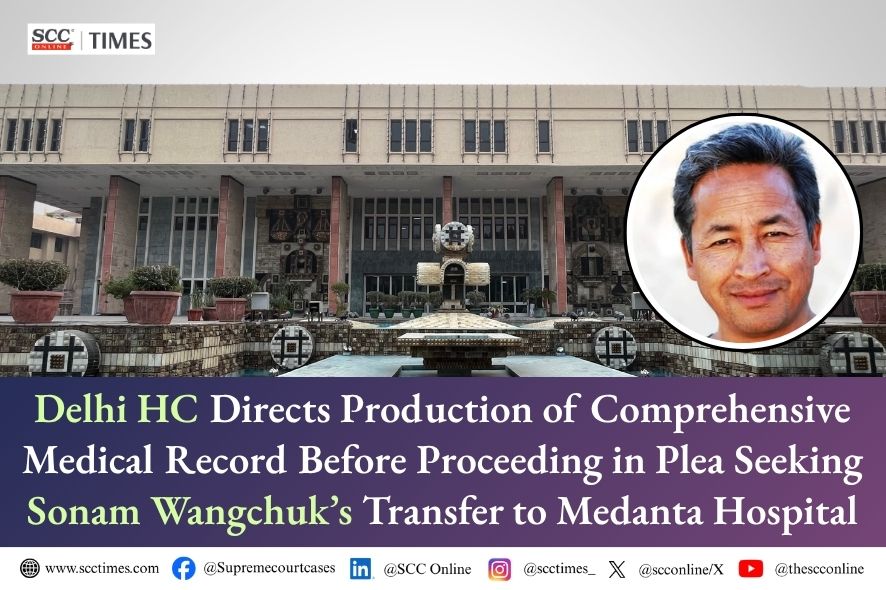
Delhi HC Directs Production of Comprehensive Medical Record Before Proceeding in Plea Seeking Sonam Wangchuk’s Transfer to Medanta Hospital
Abstract
The Delhi High Court has directed the production of a comprehensive medical record before proceeding with a plea seeking the transfer of Sonam Wangchuk from Safdarjung Hospital in New Delhi to Medanta Hospital in Gurugram, or any other medical facility of his choice. The court's decision is significant as it highlights the importance of considering the medical needs and preferences of patients in healthcare decisions. The production of a comprehensive medical record will enable the court to make an informed decision regarding Sonam Wangchuk's transfer.
Introduction
The Delhi High Court has recently directed the production of a comprehensive medical record in a plea seeking the transfer of Sonam Wangchuk from Safdarjung Hospital in New Delhi to Medanta Hospital in Gurugram, or any other medical facility of his choice. This development is significant as it underscores the importance of considering the medical needs and preferences of patients in healthcare decisions. The court's decision has sparked interest among legal professionals and healthcare experts, who are keen to understand the implications of this ruling.
Background
The Indian healthcare system has been grappling with issues related to patient care and transfer of patients from one hospital to another. In recent years, there have been several cases where patients or their families have approached courts seeking directions for the transfer of patients to different hospitals based on various grounds such as better medical facilities, proximity to family members, or personal preferences. The Delhi High Court's decision in this case is part of this ongoing debate and highlights the need for a more nuanced approach to patient care and transfer decisions.
Analysis
The production of a comprehensive medical record has also raised questions about the role of courts in healthcare decisions. While courts can provide directions for patient transfers based on medical grounds, they must also ensure that their decisions are informed by accurate and comprehensive medical information. This requires hospitals to maintain accurate records and provide timely updates to courts regarding patient care and treatment.
Conclusion
The production of a comprehensive medical record by hospitals will enable courts to make informed decisions regarding patient transfers, which is essential for ensuring that patients receive the best possible care. This development underscores the need for transparency and accountability in healthcare decisions, which are critical for maintaining public trust in the healthcare system.
How does this affect your business?
Get an AI analysis of this article grounded in your jurisdictions, practice areas, and any policy documents you've uploaded to Wansom.