
Delhi High Court allows Sonam Wangchuk to be shifted to Medanta Hospital
Abstract
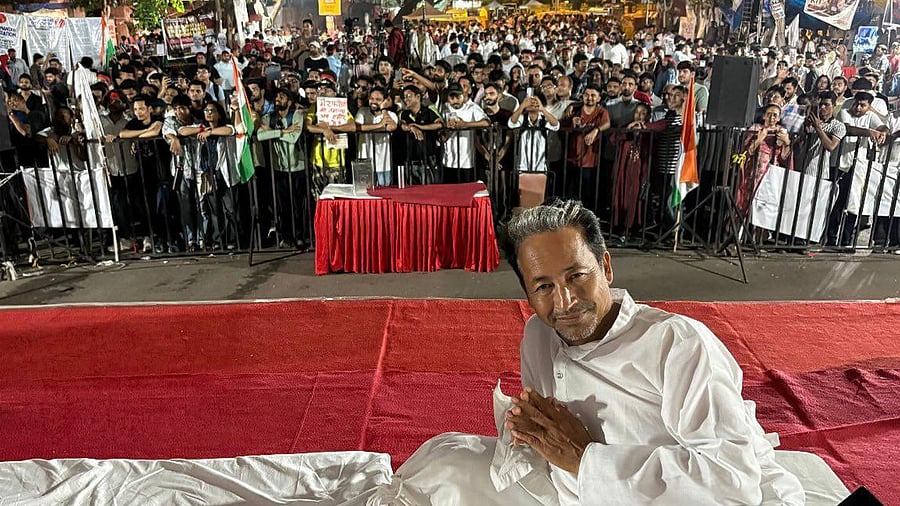
The Delhi High Court has allowed activist Sonam Wangchuk, who is on hunger strike in solidarity with a student protest, to be shifted to Medanta Hospital for treatment. The court's decision was made after considering medical reports submitted by the parties involved. The outcome of this matter has not yet been reported.
Introduction
The Delhi High Court has recently intervened in a matter involving activist Sonam Wangchuk, who is on hunger strike as part of a solidarity protest with the Cockroach Janata Party (CJP) student movement. The court's decision to allow Wangchuk to be shifted to Medanta Hospital for treatment raises important questions about the role of the judiciary in protecting individual rights and ensuring access to medical care. This development has significant implications for practitioners dealing with similar cases involving hunger strikes and medical emergencies.
Background
The Delhi High Court's decision was made by a Bench comprising Chief Justice Devendra Kumar Upadhyaya and Justice Tejas Karia. The court's order was based on the submission of medical reports, including one sworn on affidavit by the doctor treating Wangchuk at the time of protest. The Central government, represented by Additional Solicitor General (ASG) Chetan Sharma, also handed over documents to the court. The court's consideration of these reports and its ultimate decision to allow Wangchuk to be shifted to Medanta Hospital highlights the importance of medical evidence in determining the best course of action in such cases.
Analysis
The Delhi High Court's decision has significant implications for practitioners dealing with similar cases involving hunger strikes and medical emergencies. The court's willingness to consider medical reports and its ultimate decision to allow Wangchuk to be shifted to Medanta Hospital underscores the importance of access to medical care as a fundamental right. This development also raises questions about the role of the judiciary in protecting individual rights and ensuring that individuals are not forced to continue hunger strikes due to lack of access to medical care. Furthermore, the court's decision highlights the need for practitioners to carefully consider the medical evidence presented in such cases and to advocate for their clients' right to access medical care.
Conclusion
The Delhi High Court's decision to allow activist Sonam Wangchuk to be shifted to Medanta Hospital has significant implications for practitioners dealing with similar cases involving hunger strikes and medical emergencies. As this matter continues to unfold, it is essential for practitioners to remain vigilant in advocating for their clients' right to access medical care and to carefully consider the medical evidence presented in such cases.
How does this affect your business?
Get an AI analysis of this article grounded in your jurisdictions, practice areas, and any policy documents you've uploaded to Wansom.