
Delhi Police arrests two law students for using abusive language, disrupting Supreme Court proceedings
Abstract
The recent arrest of two law students by Delhi Police for disrupting Supreme Court proceedings and using abusive language highlights the critical intersection of judicial decorum, freedom of expression, and criminal liability in India. While the Supreme Court, in its immediate order, opted against initiating contempt proceedings against the primary litigant, the police registered a case under various provisions of the Indian Penal Code. This incident underscores the judiciary's inherent power to maintain its dignity and the administration of justice, alongside the state's authority to prosecute criminal acts. The article delves into the legal frameworks governing contempt of court and criminal offences related to obstructing public servants and disturbing public peace, offering insights into the distinct yet overlapping jurisdictions at play.
Introduction
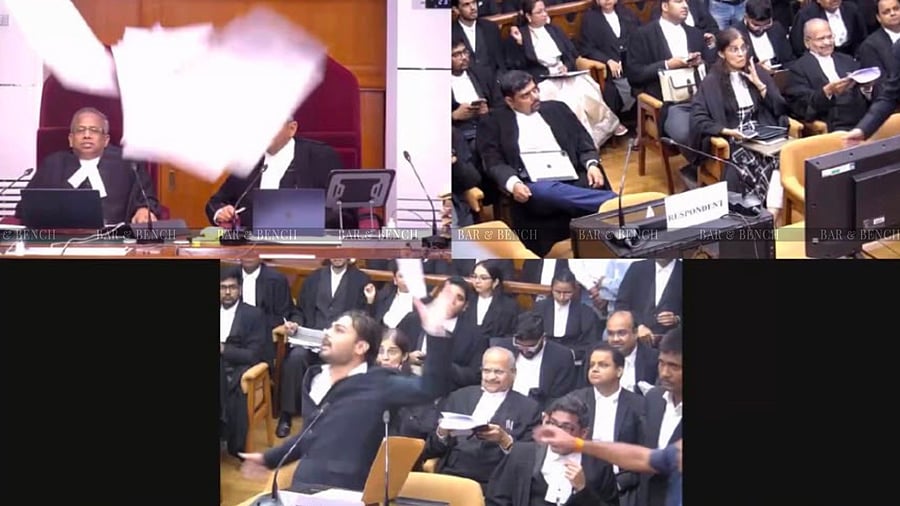
A recent incident at the Supreme Court of India saw two law students, Prabal Pratap Singh and Chander Bhan, arrested by Delhi Police following a disruptive hearing. Prabal Pratap Singh, appearing as a petitioner-in-person, allegedly hurled abuses at the judges and flung his case files, thereby obstructing court proceedings and staff. This event has ignited discussions within the legal fraternity regarding the boundaries of permissible conduct in court, the inherent powers of the judiciary, and the application of criminal law to maintain order within judicial precincts. The Supreme Court, in its order dated July 10, 2026, notably stated that it would not take action against Pratap, demonstrating a degree of judicial restraint.
However, the Delhi Police proceeded to register a case at Tilak Marg police station based on a statement from the Supreme Court's security staff, leading to the arrest of both students. This dual response—judicial forbearance from direct contempt action versus police intervention for criminal offences—presents a complex scenario. This article aims to dissect the legal ramifications of such conduct under Indian law, examining the provisions of the Contempt of Courts Act, 1971, and relevant sections of the Indian Penal Code, while also considering the Supreme Court's inherent powers and the implications for litigants and legal professionals.
Background
The Indian legal system vests significant powers in its courts to safeguard their dignity and ensure the smooth administration of justice. Central to this is the Contempt of Courts Act, 1971, which defines and limits the powers of courts in punishing contempt. The Act categorises contempt into civil and criminal. Criminal contempt, as defined under Section 2(c), includes actions that "scandalise or tend to scandalise, or lower or tend to lower the authority of, any court; or prejudice, or interfere or tend to interfere with, the due course of any judicial proceeding; or interfere or tend to interfere with, or obstruct or tends to obstruct, the administration of justice in any other manner." The Supreme Court's power to punish for contempt is also enshrined in Article 129 of the Constitution, affirming its status as a court of record with inherent authority to punish for contempt of itself.
Beyond contempt, disruptive behaviour in a courtroom can also attract charges under the Indian Penal Code (IPC). Key sections potentially applicable include Section 186, which penalises voluntarily obstructing a public servant in the discharge of their public functions, carrying a punishment of up to three months imprisonment, a fine, or both. Section 353 addresses assault or criminal force to deter a public servant from discharging their duty, with a punishment extending up to two years imprisonment, a fine, or both. Furthermore, Section 504 deals with intentional insult with intent to provoke a breach of the peace, also punishable with imprisonment up to two years, a fine, or both. It is pertinent to note that as of July 1, 2024, the Bharatiya Nyaya Sanhita (BNS) has replaced the Indian Penal Code, with corresponding provisions now governing these offences.
Analysis
The actions of Prabal Pratap Singh, as described in the news report – using abusive language, flinging case files, and obstructing staff – squarely fall within the ambit of criminal contempt under the Contempt of Courts Act, 1971. Such conduct directly tends to "scandalise or lower the authority of the court" and "interferes with... the due course of any judicial proceeding" and "obstructs... the administration of justice." The Supreme Court, under Article 129 of the Constitution, possesses inherent and expansive powers to initiate suo motu contempt proceedings, which are not limited by the Contempt of Courts Act, 1971.
However, the Supreme Court's decision not to initiate contempt action against Prabal Pratap Singh, citing his "condition," demonstrates judicial restraint and the discretionary nature of contempt powers. This does not, however, preclude other legal avenues. The Delhi Police's subsequent arrest of the students and registration of a case indicate that the actions were also viewed as criminal offences under general law. The alleged obstruction of security staff could attract Section 186 of the IPC (now Section 221 of BNS), which requires proof of voluntary obstruction and mens rea to prevent a public servant from discharging their duties. The use of abusive language and the disruption could also be considered under Section 504 of the IPC (now BNS), pertaining to intentional insult with the likelihood of provoking a breach of peace.
Furthermore, if the act of flinging files or physically resisting security staff involved any element of force or assault, Section 353 of the IPC (now BNS) could be invoked, which deals with assault or criminal force to deter a public servant. A critical procedural distinction lies in the nature of these offences: while contempt of court is a matter primarily for the judiciary, offences under IPC/BNS are investigated and prosecuted by law enforcement. It is important to note that Section 186 IPC is a non-cognizable offence, meaning police require prior permission from a Magistrate to register an FIR and investigate, and cognizance can only be taken on a written complaint by the aggrieved public servant or their superior. This procedural requirement will be a key aspect to watch in the police's prosecution of the case.
The incident underscores the delicate balance courts must strike between upholding the sanctity of judicial proceedings and ensuring that litigants, especially those appearing in person, are afforded a fair opportunity to present their case. While the Supreme Court's initial forbearance might be seen as an empathetic approach towards a litigant, the police action reinforces that egregious disruptions, particularly those involving obstruction and abusive behaviour, transcend mere courtroom impropriety and can constitute criminal acts. The fact that the individuals are law students adds another layer of concern, highlighting the importance of professional conduct and respect for judicial institutions, even for those at the nascent stages of their legal careers.
Conclusion
The arrest of the two law students following their disruptive conduct in the Supreme Court serves as a stark reminder to all legal professionals and litigants-in-person about the imperative of maintaining decorum and respect within judicial precincts. While the Supreme Court initially exercised its discretion by not initiating contempt proceedings, the subsequent police action under the criminal law framework demonstrates that such behaviour has serious consequences beyond the immediate purview of the court's contempt jurisdiction. The incident highlights the distinct roles of the judiciary in preserving its authority and the executive in enforcing general criminal statutes.
Practitioners must advise clients, particularly those appearing in person, on the strictures of courtroom conduct and the potential for criminal charges in addition to contempt of court. The transition from the Indian Penal Code to the Bharatiya Nyaya Sanhita also necessitates an understanding of the updated legal provisions governing these offences. As the legal proceedings against the students unfold, the case will likely provide further clarity on the interplay between judicial restraint, the inherent powers of the Supreme Court, and the application of criminal law in safeguarding the integrity of the justice system. It will be crucial to observe how the courts balance the right to be heard with the fundamental need for orderly and respectful judicial processes.
Citations
- 1.Contempt of Courts Act, 1971
- 2.Indian Penal Code, 1860, Section 186
- 3.Indian Penal Code, 1860, Section 353
- 4.Indian Penal Code, 1860, Section 504
- 5.Constitution of India, Article 129
- 6.Bharatiya Nyaya Sanhita, 2023, Section 221
- 7.Supreme Court Declines Contempt Action Against Litigant Who Disrupted Hearing – Bharat Press Network (July 11, 2026)
- 8.We only have sympathies: SC declines action after litigant throws papers, abuses CJI Surya Kant - The New Indian Express (July 11, 2026)
How does this affect your business?
Get an AI analysis of this article grounded in your jurisdictions, practice areas, and any policy documents you've uploaded to Wansom.