
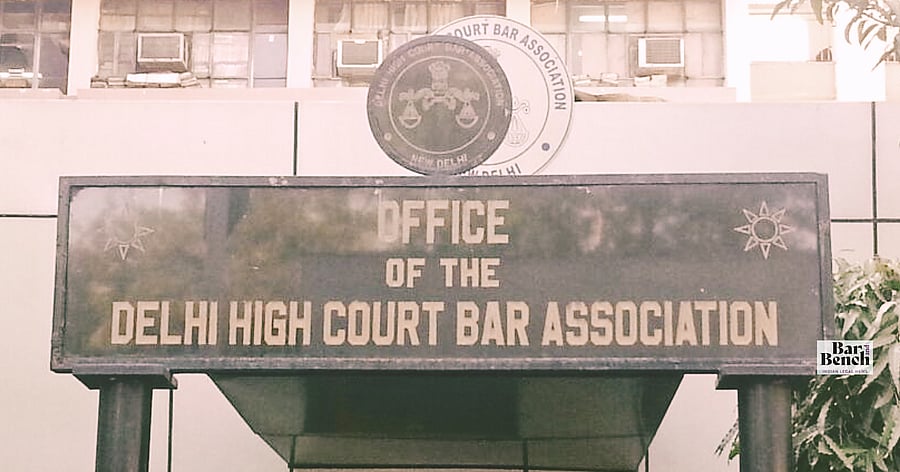
DHCBA announces work suspension after Delhi HC accepts proposal to raise district courts' pecuniary jurisdiction
Abstract
The Delhi High Court's administrative decision to recommend increasing the pecuniary jurisdiction of district courts from ₹2 crore to ₹10 crore has ignited significant debate within the legal fraternity. While proponents argue for enhanced access to justice and decongestion of the High Court, the Delhi High Court Bar Association (DHCBA) has vehemently opposed the move, citing severe adverse consequences for its members' practice and livelihood. This development, which led to a work suspension call by the DHCBA, highlights the inherent tension between judicial efficiency reforms and the economic interests of legal practitioners, necessitating a closer examination of its legal underpinnings and practical implications.
Introduction
The legal landscape in Delhi is currently experiencing a significant upheaval following the Delhi High Court's administrative decision to recommend an enhancement of the pecuniary jurisdiction of district courts. The Full Court of the Delhi High Court has proposed raising the monetary threshold for cases heard by district courts from ₹2 crore to ₹10 crore, a move that has been hailed by district court bar associations as a milestone for the district judiciary. However, this recommendation has been met with strong opposition from the Delhi High Court Bar Association (DHCBA), which promptly called for a work suspension, asserting that the change would have severe adverse consequences for its members.
This contentious development underscores a broader debate concerning judicial reform, access to justice, and the economic interests of legal professionals. The DHCBA argues that the proposed enhancement would substantially reduce the caseload on the High Court's Original Side, thereby affecting the practice, livelihood, and professional interests of a large number of its members. Conversely, the High Court's rationale stems from the need to address the increasing valuation of disputes, particularly in property matters, which currently burden the High Court with cases that could otherwise be resolved at the district level.
This article delves into the legal framework governing pecuniary jurisdiction in India, traces the history of such revisions in Delhi, and critically analyses the arguments for and against the current proposal. It further explores the potential ramifications for the justice delivery system and offers insights into the implications for legal practitioners operating within the National Capital Territory.
Background
Pecuniary jurisdiction, a fundamental concept in the Indian judicial system, refers to the monetary limits within which a court is competent to entertain and adjudicate civil suits. This classification is crucial for ensuring efficient case distribution, preventing the overburdening of higher courts, and promoting cost-effective litigation. The foundational legal provisions governing pecuniary jurisdiction are enshrined in the Code of Civil Procedure, 1908 (CPC), specifically Section 6, which stipulates that no court shall entertain suits beyond its pecuniary limits, and Section 15, which mandates that every suit be instituted in the court of the lowest grade competent to try it.
The Delhi High Court, established under the Delhi High Court Act, 1966, possesses ordinary original civil jurisdiction, a feature shared by only a few other High Courts in India, such as Bombay, Calcutta, and Madras. This means that, unlike many other High Courts that primarily function as appellate bodies, the Delhi High Court directly hears civil suits exceeding a certain monetary value. The pecuniary jurisdiction of courts in Delhi has undergone several revisions since the High Court's inception. Initially, the High Court exercised original civil jurisdiction over suits valued at more than ₹25,000 when the Delhi High Court Act came into force.
Subsequent amendments incrementally raised this threshold, with the most recent significant revision occurring in 2015. Through the Delhi High Court (Amendment) Act, 2015, Parliament increased the pecuniary jurisdiction of district courts from ₹20 lakh to ₹2 crore, consequently shifting cases valued up to ₹2 crore from the High Court to the district courts. This historical context demonstrates a recurring legislative intent to adjust jurisdictional limits to reflect changing economic realities and manage judicial workload, aiming to provide justice closer to the citizens.
Analysis
The current administrative decision by the Delhi High Court's Full Court recommends increasing the pecuniary jurisdiction of district courts from the existing ₹2 crore to ₹10 crore. This recommendation follows a report prepared by a committee of seven judges, which had initially considered a proposal to raise the limit even further, to ₹20 crore. The primary rationale articulated by the High Court for this proposed change is the significant increase in property values and general inflation in Delhi, which has rendered the ₹2 crore threshold outdated. As a result, even disputes concerning comparatively modest residential properties frequently exceed the current pecuniary limit, compelling litigants to approach the High Court for what are essentially local disputes, thereby increasing inconvenience and litigation costs.
However, this move has been met with staunch opposition from the Delhi High Court Bar Association (DHCBA). The DHCBA argues that the enhancement would have far-reaching ramifications on the justice delivery system and would substantially affect the practice, livelihood, and professional interests of a large number of its members. They claim that such an increase would result in a significant reduction of cases, potentially by as much as 70 percent, before the Original Side of the High Court. If the jurisdiction were to be raised to ₹20 crore, the DHCBA estimates that over 90% of pending original civil cases, including commercial and intellectual property rights suits, would be transferred to district courts.
This position contrasts sharply with the arguments put forth by district court bar associations, which have actively advocated for the enhancement. The Coordination Committee of All District Courts Bar Associations of Delhi views the increase as a 'historic first step' towards strengthening the district judiciary and ensuring 'justice at the doorstep' for litigants, with reduced litigation costs and potentially faster disposal of cases. They contend that district courts are fully capable of handling higher-value disputes and that the Delhi High Court should primarily focus on its constitutional and appellate functions. While the ultimate power to amend the pecuniary jurisdiction of the High Court rests with Parliament, the High Court's administrative decision to recommend such a change reflects its assessment of the evolving needs of the justice system.
Conclusion
The Delhi High Court's recommendation to increase the pecuniary jurisdiction of district courts to ₹10 crore represents a pivotal moment in the ongoing efforts to reform and streamline the justice delivery system in the National Capital Territory. This decision, while aimed at decongesting the High Court and enhancing access to justice at the grassroots level, has undeniably created a fissure within the legal community, pitting the perceived benefits of judicial efficiency against the professional interests of a segment of the bar.
For legal practitioners, particularly those whose practice is heavily concentrated on the Original Side of the Delhi High Court, this shift necessitates a strategic re-evaluation of their practice areas and client base. The potential transfer of a substantial volume of cases to district courts will require adaptation, possibly leading to a greater focus on district court practice or a shift towards more complex, higher-value litigation that remains within the High Court's enhanced jurisdiction. As this recommendation moves towards potential legislative enactment, all stakeholders will be keenly watching its implementation, the actual impact on case disposal rates, and whether the district courts are adequately resourced to handle the increased caseload. The debate underscores the delicate balance required to ensure an efficient, accessible, and equitable justice system while acknowledging the legitimate concerns of the legal profession.
Citations
- 1.Code of Civil Procedure, 1908
- 2.Delhi High Court Act, 1966
- 3.Delhi High Court (Amendment) Act, 2015
- 4.Section 6 of the Civil Procedure Code, 1908
- 5.Section 15 of the Civil Procedure Code, 1908
How does this affect your business?
Get an AI analysis of this article grounded in your jurisdictions, practice areas, and any policy documents you've uploaded to Wansom.