
DMK moves Supreme Court to restrain CM Vijay, TVK ministers from commenting on Karur stampede probe
Abstract
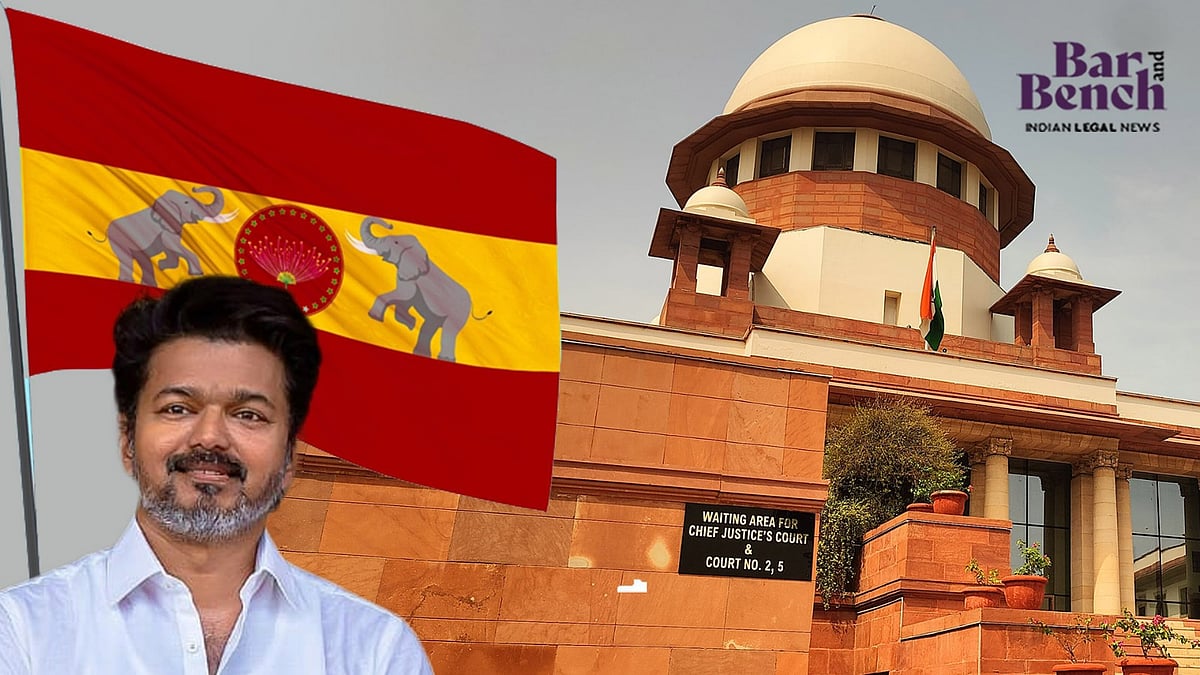
The Dravida Munnetra Kazhagam (DMK) has approached the Supreme Court of India, seeking to be impleaded in the ongoing case concerning the 2025 Karur stampede. The plea, filed by DMK organising secretary RS Bharathi, requests the Court to restrain Tamil Nadu Chief Minister C. Joseph Vijay and other ministers from the Tamilaga Vettri Kazhagam (TVK) from making public statements on the merits of the pending investigation into the stampede, which resulted in 41 deaths and 142 injuries. Furthermore, the DMK seeks judicial safeguards before the State government distributes benefits, government orders, or compassionate appointments to the victims' families, arguing that these families are also material witnesses in the Central Bureau of Investigation (CBI) probe. The application highlights concerns about potential undue influence on the investigation and witnesses, particularly given prior compensation distributions and proposed government job offers.
Introduction
The tragic Karur stampede of 2025, which claimed 41 lives and left 142 injured at a political rally, has escalated into a significant legal and political battle, now reaching the Supreme Court of India. The Dravida Munnetra Kazhagam (DMK), an opposition party, has filed an application seeking impleadment in the existing case, raising critical questions about the integrity of ongoing criminal investigations and the conduct of public functionaries. This intervention by the DMK underscores a broader concern regarding the delicate balance between freedom of speech, the state's welfare responsibilities, and the imperative of a fair and impartial justice system.
The DMK's plea specifically targets Tamil Nadu Chief Minister C. Joseph Vijay and other ministers from the ruling Tamilaga Vettri Kazhagam (TVK), requesting a judicial restraint on their public comments concerning the merits of the Karur stampede probe. Additionally, the application seeks safeguards against the distribution of government benefits, including compassionate appointments, to the victims' families, who are crucial witnesses in the Central Bureau of Investigation (CBI) investigation. This article will delve into the legal framework governing these issues, examining the principles of fair investigation, witness protection, and the limitations on public statements by high-ranking officials, as interpreted by Indian courts.
Background
The Indian criminal justice system places paramount importance on the principles of fair investigation and fair trial, which are considered fundamental rights under Article 21 of the Constitution of India. A fair investigation is crucial as it forms the bedrock of any criminal case, ensuring that truth is uncovered without bias or external influence. The Code of Criminal Procedure, 1973 (CrPC) outlines the procedural aspects of criminal investigations, emphasizing transparency, accountability, and impartiality.
In cases involving serious crimes or those with inter-state or national implications, the Central Bureau of Investigation (CBI) often takes over the probe. The CBI, established under the Delhi Special Police Establishment Act, 1946, is India's premier investigative agency, tasked with investigating complex and high-profile cases, including corruption and economic crimes. While the CBI generally requires state government consent to investigate within a state, the Supreme Court and High Courts possess the constitutional power to direct a CBI investigation without such consent, particularly to ensure a fair and just investigation. Concurrently, the state, in its welfare capacity, often provides ex gratia payments and other benefits to victims of disasters or accidents. These payments are voluntary and made as a gesture of goodwill, without legal obligation, to compensate for loss or hardship. However, the intersection of such welfare measures with ongoing criminal investigations, especially when beneficiaries are also material witnesses, raises complex legal and ethical questions.
Analysis
The DMK's application before the Supreme Court raises two distinct yet interconnected legal challenges: restraining public comments by ministers on an ongoing investigation and safeguarding the distribution of benefits to victims' families who are also witnesses. Both issues implicate the fundamental right to a fair investigation and trial, as enshrined in Article 21 of the Constitution.
Firstly, regarding the restraint on public comments, the core legal principle at play is the rule against sub judice matters and the prevention of prejudice to judicial proceedings. The Contempt of Courts Act, 1971, defines 'criminal contempt' to include any publication or act that "prejudices, or interferes or tends to interfere with, the due course of any judicial proceeding or the administration of justice in any other manner." Public statements by high-ranking government officials, particularly those who may be perceived as having a vested interest or influence over the investigation, can potentially sway public opinion, influence witnesses, or even exert pressure on the investigating agency. While Article 19(1)(a) of the Constitution guarantees freedom of speech and expression, this right is subject to reasonable restrictions, including those related to contempt of court. The Supreme Court has previously deliberated on the limitations of free speech for public functionaries, especially when their statements impact the fundamental rights of others, such as the right to a fair investigation. However, the Court has also shown reluctance to impose a blanket injunction on political speech, emphasizing that counter-speech is often the appropriate response in a democratic setup. The Court, in the present matter, explicitly stated that it would not regulate a Chief Minister's public engagements or impose an injunction on speech, noting that the Chief Minister was not an accused in the FIRs.
Secondly, the DMK's concern about the distribution of benefits and compassionate appointments to victims' families, who are also material witnesses, touches upon the integrity of evidence and the potential for undue influence. The criminal justice system relies heavily on the truthful testimony of witnesses. Any act that tends to influence, intimidate, or induce a witness to deviate from the truth can undermine the entire process. While ex gratia payments are a legitimate exercise of state welfare, the timing and manner of their distribution, especially when coupled with offers of government jobs, can be perceived as creating an obligation or inducement for witnesses. This raises questions akin to witness tampering, which, though not directly covered by specific provisions for such welfare measures, falls under the broader ambit of obstructing justice. The Supreme Court has consistently emphasized the importance of witness protection to ensure a fair trial and has even approved a Witness Protection Scheme, 2018, to safeguard witnesses from intimidation and inducement. The DMK's argument highlights the tension between the state's humanitarian duty and its obligation to ensure an unblemished criminal investigation. The Court's role here would be to ensure that welfare measures do not inadvertently compromise the impartiality of witness testimony.
Finally, the DMK's request for impleadment in a case where the investigation has already been transferred to the CBI by the Supreme Court demonstrates a political party's attempt to ensure judicial oversight and accountability in a matter of public importance. While the Supreme Court has the power to order a CBI probe to ensure an independent investigation, the DMK's intervention seeks to ensure that the spirit of that order is maintained throughout the investigation and subsequent proceedings, free from any perceived political interference or influence.
Conclusion
The DMK's plea before the Supreme Court in the Karur stampede case underscores the persistent challenges in maintaining the sanctity of criminal investigations, particularly when high-profile political figures are involved. While the Supreme Court has indicated a reluctance to curb political speech or regulate the itinerary of an elected Chief Minister, emphasizing the need for political discourse to be met with counter-speech, it remains vigilant about any actions that could prejudice a fair investigation. The Court's stance highlights the delicate balance it must strike between constitutional freedoms, the executive's welfare functions, and the judiciary's role as the guardian of justice.
For legal practitioners, this case serves as a crucial reminder of the importance of advocating for the integrity of the investigative process and witness protection. Lawyers representing victims or accused persons must remain alert to any public statements or actions by influential individuals that could potentially sway public opinion or influence witnesses, and be prepared to seek appropriate judicial intervention. While ex gratia payments are a benevolent state function, their administration in the context of pending criminal proceedings warrants careful scrutiny to prevent any perception of undue influence. The ongoing CBI probe, under the Supreme Court's oversight, will continue to be a focal point, and the ultimate resolution of the DMK's concerns will offer further clarity on the permissible boundaries of political conduct during sensitive criminal investigations in India.
Citations
- 1.Contempt of Courts Act, 1971
- 2.Code of Criminal Procedure, 1973
- 3.Constitution of India, 1950
- 4.Delhi Special Police Establishment Act, 1946
- 5.Witness Protection Scheme, 2018