
Don't drag court into this: Delhi HC on plea alleging use of excessive force by police against CJP protestors
Abstract
The Delhi High Court has cautioned litigants against dragging the court into matters related to protests by the Cockroach Janta Party (CJP) against the government in New Delhi. The warning was made in response to a petition alleging excessive use of force by the Delhi Police against CJP protestors. Chief Justice Devendra Kumar Upadhyaya urged lawyers not to involve the court in such matters, stating 'Don't drag the court into all this.' This development highlights the court's reluctance to be drawn into contentious issues surrounding police-protestor interactions.
Introduction
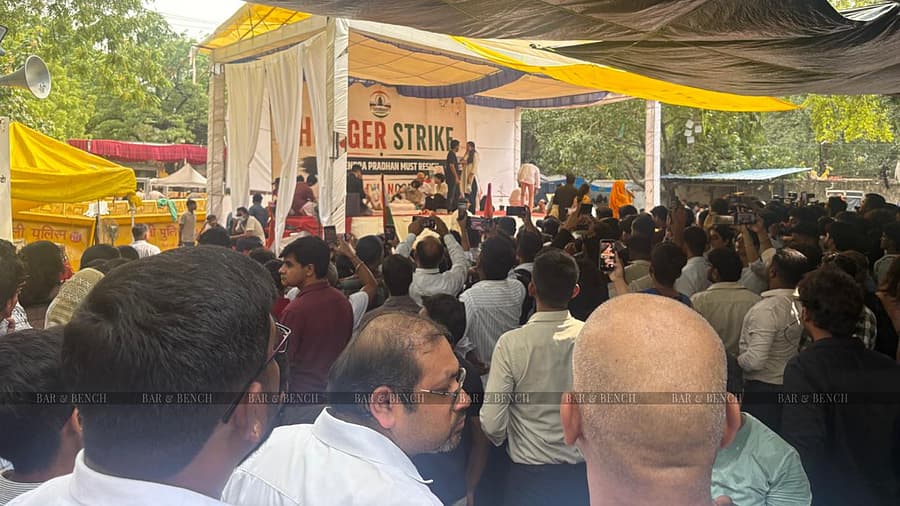
The Delhi High Court has found itself at the center of a controversy involving protests by the Cockroach Janta Party (CJP) against the government in New Delhi. The CJP, an online satirical collective, had gathered at Jantar Mantar and other parts of Central Delhi to demand accountability for repeated examination paper leaks and seek the resignation of Union Education Minister Dharmendra Pradhan. The protests turned violent when the Delhi Police intervened, leading to a lathi charge and use of tear gas that resulted in injuries to many protestors.
Background
The CJP's protests against the government have been ongoing for some time, with the collective demanding accountability for examination paper leaks and seeking the resignation of Union Education Minister Dharmendra Pradhan. The Delhi Police's response to the protests has been a subject of controversy, with allegations of excessive use of force being leveled against them. In light of these developments, a petition was filed in the Delhi High Court alleging that the police had used excessive force against the CJP protestors.
Analysis
The Delhi High Court's warning to litigants not to drag the court into matters related to CJP protests highlights the court's reluctance to be drawn into contentious issues surrounding police-protestor interactions. This development raises questions about the role of the judiciary in policing and public order matters. While the court may have been attempting to maintain its impartiality, its warning has sparked debate about whether it is appropriate for the court to intervene in such matters at all.
Conclusion
The Delhi High Court's cautionary remark serves as a reminder that the court should only be involved in matters where there are clear legal issues or grievances. Practitioners should exercise restraint when involving the court in contentious issues surrounding police-protestor interactions, and instead focus on pursuing remedies through other channels. As this matter continues to unfold, it will be interesting to see how the court navigates its role in policing and public order matters.
How does this affect your business?
Get an AI analysis of this article grounded in your jurisdictions, practice areas, and any policy documents you've uploaded to Wansom.