
DRC Delays Ruzizi III Hydropower Project, Jeopardizing Regional Cooperation and Investor Confidence
Abstract
The Ruzizi III hydropower project, a critical regional energy initiative involving Rwanda, Burundi, and the Democratic Republic of Congo (DRC), faces significant delays due to political disagreements primarily from the DRC. This $800 million public-private partnership, designed to provide 147MW of electricity, is governed by a tripartite agreement and operates under the Economic Community of the Great Lakes Countries (CEPGL) framework. The DRC's reluctance to accredit the project company as a community enterprise constitutes a potential breach of its international and regional obligations, jeopardizing regional energy security, economic development, and investor confidence. This article examines the legal implications of these delays and the available dispute resolution mechanisms.
Introduction
The Ruzizi III hydropower project stands as a cornerstone of regional energy integration and economic development for Rwanda, Burundi, and the Democratic Republic of Congo (DRC). Conceived as a public-private partnership (PPP) with an estimated cost ranging from $625 million to $800 million, this ambitious initiative aims to generate 147MW of electricity, with potential for expansion to 230MW, to be shared equally among the three participating nations.
However, the project, which has been in planning for decades, is currently mired in renewed uncertainty due to persistent delays attributed to the DRC. These delays, reportedly stemming from political disagreements, threaten to undermine the collaborative spirit and contractual commitments essential for such a multinational undertaking. The protracted stagnation not only impacts the energy security and developmental aspirations of Rwanda and Burundi but also raises critical questions regarding the enforceability of regional agreements and the stability of cross-border infrastructure investments in Africa.
This article delves into the legal framework underpinning the Ruzizi III project, analyzing the nature of the DRC's alleged breaches of its obligations under international and regional instruments. It further explores the potential avenues for dispute resolution available to the aggrieved parties and the broader implications for regional cooperation and international project finance in the Great Lakes region.
Background
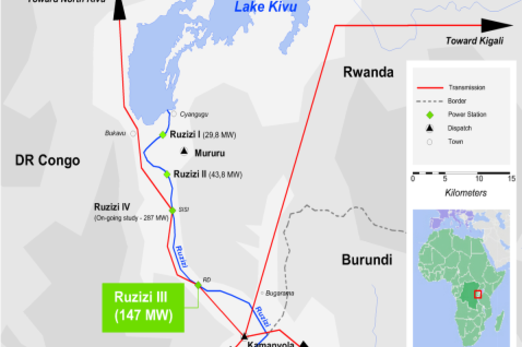
The Ruzizi III hydropower project is situated on the Ruzizi River, which forms a natural border between the DRC and Rwanda, and also between the DRC and Burundi. It is the third such development on the river, following Ruzizi I (commissioned in 1959) and Ruzizi II (commissioned in 1989), both of which are operational. The project is a collaborative effort under the auspices of the Economic Community of the Great Lakes Countries (CEPGL), an international organization established in 1976 by Burundi, the DRC, and Rwanda to promote economic integration and cooperation.
The legal foundation for Ruzizi III includes a tripartite agreement signed by the governments of Rwanda, Burundi, and the DRC on July 29, 2019. This agreement, alongside specific project agreements such as a 25-year concession agreement and Power Purchase Agreements (PPAs), outlines the respective obligations of the member states, their national utility companies (REGIDESO for Burundi, SNEL SA for DRC, and EUCL for Rwanda), and the project company, Ruzizi III Energy Limited (REL). The project is structured as a Build-Own-Operate-Transfer (BOOT) model, with private partners Industrial Promotion Services (IPS) and SN Power (now part of Norfund) involved. Financing is a blended model, drawing significant support from international development finance institutions including the African Development Bank (AfDB), World Bank, European Investment Bank (EIB), KfW, and Agence Française de Développement (AFD), among others. The Great Lakes Energy Organization (EGL), a specialized institution of the CEPGL, is tasked with coordinating the project's implementation.
Analysis
The current delays in the Ruzizi III project are primarily attributed to the Democratic Republic of Congo's failure to formally accredit Ruzizi III Energy (REL) as a community enterprise and grant it admission to the preferential regime under the Community Investment Code of the CEPGL. This administrative hurdle, reportedly rooted in strained political relations between the DRC and Rwanda, directly impedes the project's institutional progress and financial close. Such inaction by a signatory state, particularly in a multi-lateral project underpinned by specific agreements, constitutes a potential breach of its international obligations, including the principle of *pacta sunt servanda* (agreements must be kept) and the duty to cooperate in good faith under the CEPGL framework and the tripartite agreement.
The legal implications of these delays are substantial. The tripartite agreement and the project agreements establish mutual commitments among the participating states and the project company. The DRC's failure to fulfill its administrative and regulatory obligations directly impacts the project's timeline, increasing costs and delaying the provision of much-needed electricity to the region. This has a detrimental effect on the economic and developmental aspirations of Rwanda and Burundi, which are relying on Ruzizi III to significantly boost their energy capacity and reduce reliance on fossil fuels.
In terms of dispute resolution, the project agreements likely contain specific clauses for resolving commercial disputes, often favoring international arbitration under established institutions such as the International Chamber of Commerce (ICC) or the London Court of International Arbitration (LCIA). For inter-state disputes, the CEPGL framework itself may provide mechanisms for mediation or conciliation among its member states. Furthermore, principles of international water law, emphasizing equitable and reasonable utilization of shared water resources like the Ruzizi River, are relevant and could form a basis for claims of non-cooperation.
The involvement of numerous international financial institutions, including the African Development Bank and the World Bank, provides an additional layer of leverage. These institutions typically structure their financing agreements with conditions precedent and covenants related to project progress and inter-state cooperation. Their ability to withhold or delay disbursements can serve as a powerful incentive for the DRC to resolve the outstanding issues and comply with its commitments. The ongoing political nature of the disagreement, however, complicates purely legal solutions, often necessitating diplomatic intervention alongside legal recourse.
Conclusion
The Ruzizi III regional hydropower project is more than an energy infrastructure initiative; it is a symbol of regional cooperation and a vital component of the Great Lakes region's sustainable development agenda. The Democratic Republic of Congo's continued delays in fulfilling its administrative obligations, driven by political disagreements, pose a significant threat to the project's viability and the broader framework of regional integration. These delays represent a potential breach of international and regional agreements, with tangible economic and developmental consequences for Rwanda and Burundi.
For legal practitioners, this situation underscores the critical importance of robust contractual drafting in complex multi-state infrastructure projects, particularly concerning conditions precedent, dispute resolution mechanisms, and the allocation of political risk. It also highlights the necessity of understanding the interplay between international law, regional economic community frameworks, and domestic political realities. Moving forward, stakeholders will closely monitor diplomatic efforts to resolve the impasse, the potential invocation of specific dispute resolution clauses within the project agreements, and the role of international financiers in advocating for compliance to safeguard their investments and ensure the timely realization of this transformative regional asset.
Citations
- 1.Rwanda, Burundi and Democratic Republic of Congo ink a deal on Rusizi III regional hydropower plant project - Mininfra
- 2.Three accords finalised for the 147MW Ruzizi III hydropower project - Africa Energy Portal
- 3.Three accords finalized for 147-MW Ruzizi III hydropower project-between I.P.S. & Norwegian renewable energy company SN Power - Ismaili.net
- 4.Ruzizi III Hydro Power Plant project gets Rwf19bn boost from African Development Bank
- 5.Project agreements signed for Ruzizi III - African Energy
- 6.AfDB approves Ruzizi III hydropower plant project, bringing green energy to Burundi, DRC and Rwanda
- 7.Convention establishing the Economic Community of the Great Lakes Countries (CEPGL). Concluded at Gisenyi on 20 September 1976
- 8.Economic Community of the Great Lakes Countries - Wikipedia
- 9.Rwanda, Burundi And DRC Sign Deal To Kick Off Construction Of Joint $700M Power Project - Diacron Group
- 10.Rwanda, Burundi and DRC sign deal of construction of joint Power Project | IGL
- 11.Economic Community of the Great Lakes Countries - Grokipedia
- 12.Rwanda teaming up with DRC and Burundi to help improve each other's electricity access - Sun Connect News
- 13.infrastructure Projects and Dispute Resolution in Africa: What European Contractors Should Know Before Breaking Ground - lalive
- 14.Burundi – DRC - Rwanda Ruzizi III Hydroelectric Power Project - Documents & Reports
- 15.Gide, counsel on the project agreements for the Ruzizi III hydroelectric power plant
- 16.East African Infrastructure Projects and Dispute Resolution By Bernd Ehle*, Benjamin Ng'eno** & Baptiste Rigaudeau
- 17.UN Water Convention supports national, transboundary and continental water cooperation towards a climate resilient and water secure future for Africa | UNECE
- 18.Africa's shared water resources : legal and institutional aspects of the Nile, Niger, and Senegal River systems / Bonaya Adhi Godana. - HathiTrust Digital Library
- 19.Rwanda: EIB confirms commitment to Ruzizi III hydropower project
- 20.Resolving infrastructure and energy disputes in sub-Saharan Africa - DLA Piper Africa in Sénégal - GENI & KEBE Lawyers
- 21.Towards Energy-Led Integration in East Africa: Ethiopia's Pivotal Role – HORN REVIEW
- 22.Guidelines on the Right to Water in Africa - African Commission
- 23.CEPGL - Minaffet
- 24.Multinational - Ruzizi III regional hydropower plant project - MapAfrica
- 25.AEC Backs East Africa Court Ruling, Warns of Escalating Foreign Funded “Lawfare” Against African Energy Progress
- 26.Transboundary Water Law in Africa: Development, Nature, and Geography - UNM Digital Repository
- 27.Rusizi III Hydropower Project - Rwanda Climate Change Portal
- 28.Burundi/DRC/Rwanda • Ruzizi III draws international backers despite ongoing conflict
- 29.Financing hydropower in Africa
- 30.Gide advises ECGLC on hydroelectric power plant agreement - AKDN
- 31.Ruzizi III Hydropower Project (HPP) - African Infrastructure Database (AID)
- 32.Regional Economic Integration Framework Between the Government of the Democratic Republic of the Congo and the Government of the Republic of Rwanda - United States Department of State
- 33.Project No. 3.2.1 REVIVAL OF THE ECONOMIC COMMUNITY OF THE GREAT LAKES COUNTRIES AND ITS SPECIALIZED
- 34.Legal Harmonized Continental Regulatory Framework for the Energy Sector in Africa
- 35.Gide advises ECGLC on hydroelectric power plant agreement - African Law & Business
- 36.A Just Transition: Business and Human Rights in East Africa - International Alert
- 37.An Evaluation of Alternative Dispute Resolution Mechanisms in the African Region | Obiter
- 38.Rising investment disputes and evolving regional dynamics impact Western Africa arbitration - Pinsent Masons
- 39.Construction of Ruzizi III hydropower plant for the Democratic Republic of the Congo, Rwanda and Burundi - International Partnerships
- 40.Multinational - Burundi, RDC, Rwanda - Ruzizi III Hydropower plant project - Summary RAP - 08 2015 - African Development Bank Group
- 41.Ruzizi 3 Regional Hydropower Project (P510120) - Documents & Reports - World Bank
- 42.Rwanda: Over 1200 Households to Be Compensated for Ruzizi III Power Project
How does this affect your business?
Get an AI analysis of this article grounded in your jurisdictions, practice areas, and any policy documents you've uploaded to Wansom.