
EACC, DPP unveil joint strategy to strengthen corruption investigations and prosecutions
Abstract
The Ethics and Anti-Corruption Commission (EACC) and the Office of the Director of Public Prosecutions (ODPP) in Kenya have unveiled a joint strategy to bolster investigations and prosecutions of corruption and money laundering cases. This renewed commitment, formalized during a high-level strategic meeting, aims to enhance inter-agency coordination, improve the quality of evidence presented, and ultimately secure more convictions. The initiative addresses long-standing challenges in Kenya's anti-graft war, including coordination gaps and case withdrawals, by focusing on joint capacity building, collaborative case reviews, and prioritizing high-impact cases. Legal professionals can anticipate a more streamlined and effective approach to combating economic crimes, signaling a stronger resolve to uphold accountability and the rule of law.
Introduction
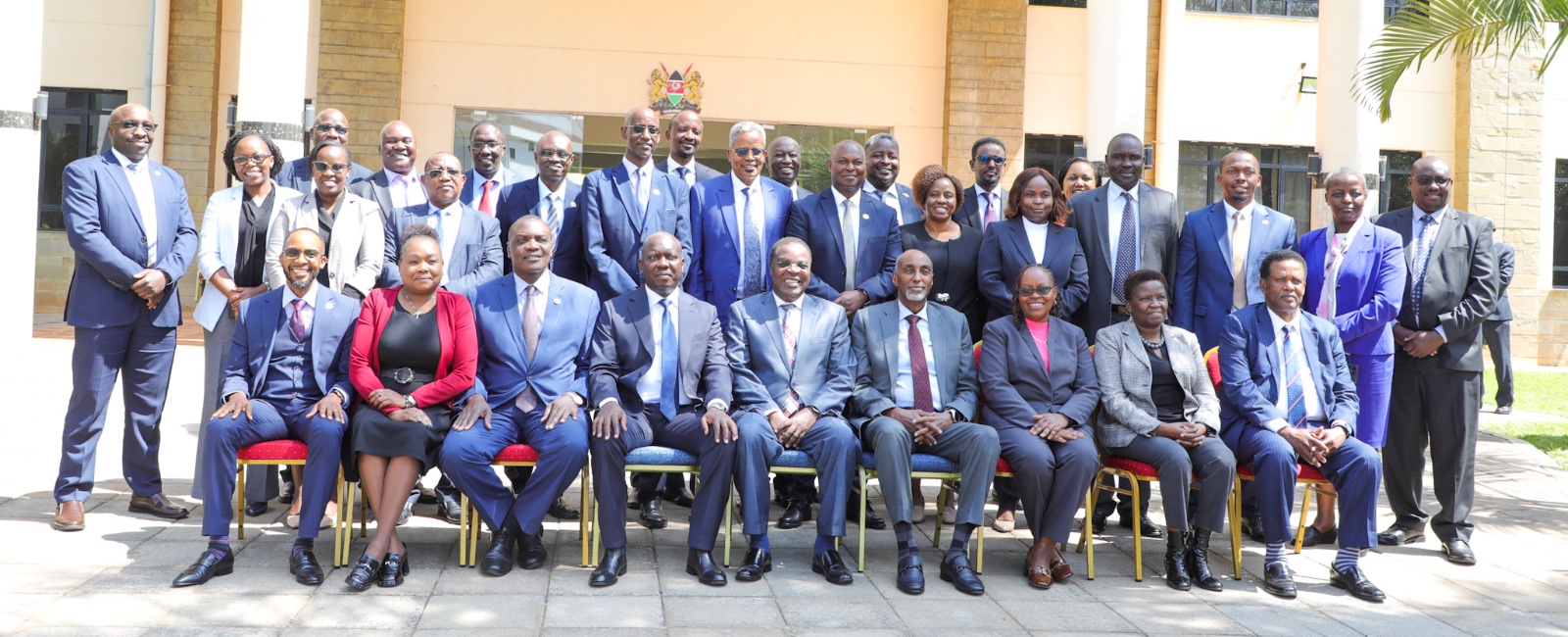
Kenya's fight against corruption and economic crimes has long been characterized by a complex interplay of institutional mandates and operational challenges. In a significant development, the Ethics and Anti-Corruption Commission (EACC) and the Office of the Director of Public Prosecutions (ODPP) have announced a joint strategy to strengthen their collaboration in investigating and prosecuting corruption and money laundering cases. This strategic alignment, forged during a high-level meeting at the Kenya School of Government, signals a renewed and concerted effort to enhance accountability and improve outcomes in the nation's anti-graft war.
The initiative comes at a crucial time, as corruption continues to be identified as a major impediment to Kenya's development, eroding public trust and undermining service delivery. The commitment by the EACC and ODPP to work more closely is not merely an administrative adjustment but a constitutional imperative, reflecting the public's expectation for tangible results rather than institutional distinctions. This article delves into the legal framework underpinning this collaboration, the historical challenges it seeks to overcome, and the potential implications for legal practitioners engaged in anti-corruption and economic crime litigation in Kenya.
Background
The mandates of the EACC and ODPP are distinct yet complementary within Kenya's criminal justice system. The EACC, established under Article 79 of the Constitution of Kenya and operationalized by the Ethics and Anti-Corruption Commission Act, 2011, is the principal agency tasked with combating and preventing corruption, economic crime, and unethical conduct through law enforcement, prevention, public education, and promoting integrity. Its functions include investigating corruption and economic crimes, investigating unethical conduct by state and public officers, and recovering corruptly acquired assets.
Conversely, the ODPP, an independent office established under Article 157 of the Constitution of Kenya and operationalized by the Office of the Director of Public Prosecutions Act, 2013, holds the exclusive mandate to institute and undertake criminal proceedings against any person before any court. This includes prosecuting cases forwarded by investigative agencies such as the EACC, the Directorate of Criminal Investigations (DCI), and others. Key legislation governing these efforts includes the Anti-Corruption and Economic Crimes Act, 2003 (ACECA), which provides for the prevention, investigation, and punishment of corruption and economic crimes, and the Proceeds of Crime and Anti-Money Laundering Act, 2009 (POCAMLA), which addresses money laundering, asset tracing, freezing, seizure, and confiscation of proceeds of crime.
Historically, the effectiveness of Kenya's anti-corruption efforts has been hampered by various challenges, including a perceived lack of coordination between investigative and prosecutorial agencies, political interference, and resource constraints. A significant critique has been the EACC's lack of prosecutorial powers, leading to instances where investigations deemed watertight by the EACC stalled or cases were withdrawn by the ODPP, raising concerns about transparency and the efficient use of investigative resources. This new joint strategy directly aims to bridge these historical gaps and foster a more seamless and effective anti-corruption framework.
Analysis
The joint strategy between the EACC and ODPP is a direct response to the persistent challenges that have plagued corruption and money laundering prosecutions in Kenya. A core aspect of the collaboration involves the introduction of joint capacity-building programmes for investigators and prosecutors. This is crucial, as a common understanding of evidentiary requirements, legal thresholds, and investigative techniques can significantly improve the quality of case files submitted for prosecution, thereby reducing the likelihood of withdrawals or acquittals on technicalities.
Furthermore, the agreement emphasizes enhanced collaboration during case review processes and a greater focus on high-impact corruption and money laundering cases. This addresses the historical issue of cases being withdrawn without adequate consultation between the investigative and prosecutorial arms, which has often led to public skepticism and a perceived waste of resources. By engaging in joint reviews, both agencies can identify and rectify weaknesses in cases early on, ensuring that only robust and prosecutable matters proceed to court. The prioritization of high-impact cases also signals a strategic shift towards tackling systemic corruption, which often involves complex financial trails and requires sophisticated investigative and prosecutorial expertise.
The recent amendments to the Anti-Corruption and Economic Crimes Act, 2003, through the Anti-Money Laundering and Combating of Terrorism Financing (AML and CFT) Laws (Amendment) Act, 2023, have expanded the definition of economic crimes to include laundering the proceeds of corruption. This legislative enhancement broadens the EACC's mandate to investigate such matters, making the enhanced collaboration with the ODPP even more critical for successful prosecutions under the expanded scope. The ODPP's role in guiding criminal investigations and its power to direct the Inspector-General of the National Police Service to investigate criminal conduct further underscores the importance of a harmonized approach to ensure that investigations align with prosecutorial strategies from inception.
While the strategy holds significant promise, its success will hinge on sustained political will, adequate resource allocation, and genuine commitment from both institutions to overcome any residual institutional rivalries. Past reports have highlighted inadequate coordination between justice sector agencies, limited finances, and a slow judicial process as persistent challenges. The Chief Justice has also unveiled an Anti-Corruption Strategic Guiding Framework for Kenya's justice sector, emphasizing inter-agency collaboration. This broader framework, coupled with the EACC-ODPP joint strategy, creates a conducive environment for a more effective anti-corruption drive, provided that the agreed measures translate into tangible improvements in conviction rates and asset recovery.
Conclusion
The joint strategy by the EACC and ODPP marks a pivotal moment in Kenya's ongoing battle against corruption and money laundering. For legal practitioners, this initiative suggests a future where corruption cases are likely to be more thoroughly investigated and prosecuted, potentially leading to higher conviction rates and more effective asset recovery. Attorneys representing clients in anti-corruption matters should anticipate a more coordinated and robust approach from the state, necessitating equally rigorous defense strategies and a keen understanding of the evolving collaborative dynamics between these key agencies.
Practitioners should closely monitor the implementation of joint capacity-building programs and the impact of enhanced case review processes on the quality and speed of prosecutions. The success of this strategy will be measured not only by the number of cases initiated but, more importantly, by successful convictions and the recovery of illicit assets, thereby restoring public confidence in the integrity of public institutions. This renewed commitment offers a glimmer of hope for a more accountable and transparent legal landscape in Kenya, urging all stakeholders to contribute to its sustained success.
Citations
- 1.Constitution of Kenya, 2010, Article 79
- 2.Constitution of Kenya, 2010, Article 157
- 3.Ethics and Anti-Corruption Commission Act, 2011 (No. 22 of 2011)
- 4.Anti-Corruption and Economic Crimes Act, 2003 (No. 3 of 2003)
- 5.Proceeds of Crime and Anti-Money Laundering Act, 2009 (No. 9 of 2009)
- 6.Office of the Director of Public Prosecutions Act, 2013 (No. 2 of 2013)
- 7.Anti-Money Laundering and Combating of Terrorism Financing (AML and CFT) Laws (Amendment) Act, 2023
- 8.KBC Kenya, 'EACC, DPP unveil joint strategy to strengthen corruption investigations and prosecutions', July 14, 2026
- 9.The Star, 'EACC, DPP pledge joint action against corruption and money laundering', July 14, 2026
- 10.Capital FM, 'EACC, ODPP Pledge Closer Collaboration in Fight Against Corruption and Money Laundering', July 14, 2026
- 11.EACC Website, 'About Us - Mandate'
- 12.ODPP Website, 'Mandate & Functions'
- 13.ODPP Website, 'Who we are'
- 14.EACC Website, 'FAQ Categories: Mandate'
- 15.EACC Website, 'What challenges does EACC face in the discharge of its mandate?'
- 16.UNCAC Coalition, 'New civil society report on Kenya: Persistent gaps in enforcement and insufficient...', December 2, 2025
- 17.DLA Piper, 'Kenya - Global bribery offenses guide', November 3, 2025
- 18.The Judiciary, 'Anti-corruption guiding framework for the justice sector unveiled to fight corruption', March 25, 2025
- 19.Citizen Digital, 'EACC blames ODPP as 18 high-profile corruption cases withdrawn', September 10, 2025
- 20.ODPP Website, 'ODPP Pledges Stronger Collaboration with LSK in Fight Against Corruption at Annual Conference', August 19, 2025
- 21.RSIS International, 'Effectiveness of Institutional Anti-Corruption Strategies on Prosecution of Corruption Cases in public sector in Kenya.', July 29, 2025
- 22.journal of cmsd, 'Clarifying the Roles of the Director of Public Prosecutions and the Director of Criminal Investigations in Kenya: A Proposal for Legal Reform'
How does this affect your business?
Get an AI analysis of this article grounded in your jurisdictions, practice areas, and any policy documents you've uploaded to Wansom.