
ECOWAS Community Court Dismisses Torkornoo's Claims Against Ghana
Abstract
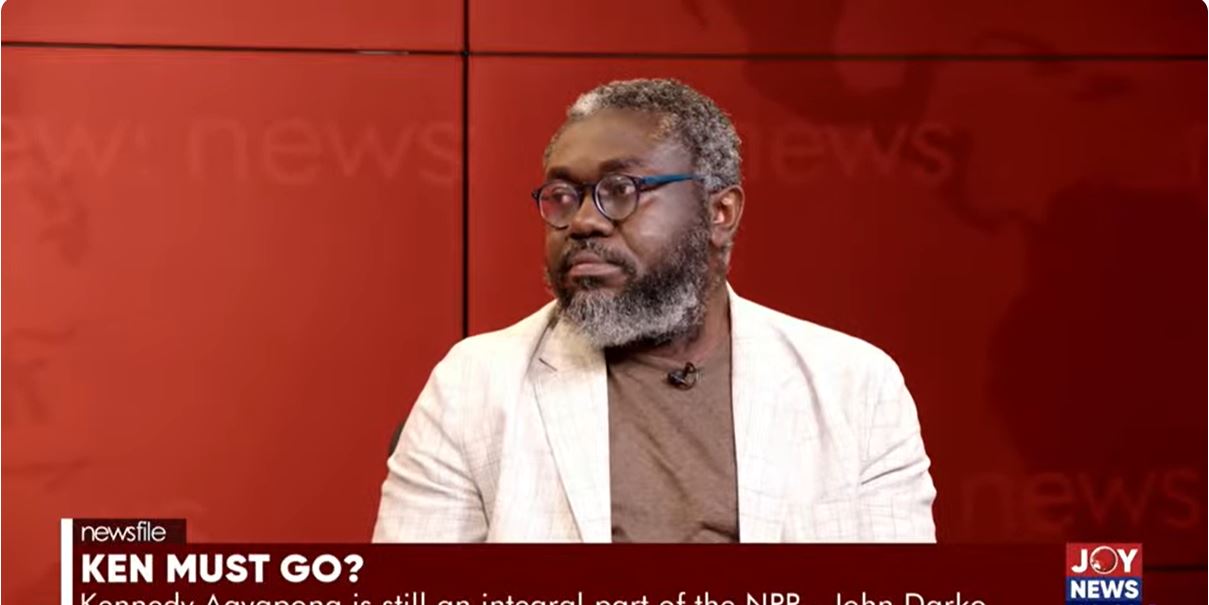
The ECOWAS Community Court of Justice recently dismissed all seven claims filed by former Chief Justice Gertrude Torkornoo against the Republic of Ghana, challenging her suspension and subsequent removal from office. The Court found no violation of her rights under the African Charter on Human and Peoples' Rights, including the right to a fair hearing, dignity, information, and work. Private legal practitioner Oliver Barker-Vormawor reflected on the ruling, asserting that "law and politics run in parallel channels." He highlighted how public perception, influenced by early communication strategies, often diverges from the court's focus on legal facts and principles, underscoring the complex interplay between legal processes and public narrative in high-profile constitutional disputes.
Introduction
The recent decision by the ECOWAS Community Court of Justice to dismiss all seven claims brought by former Chief Justice Gertrude Torkornoo against the Republic of Ghana has sent ripples through Ghana's legal and political landscape. The ruling, delivered on June 24, 2026, affirmed the Ghanaian state's actions in her removal process, rejecting allegations of human rights violations under the African Charter on Human and Peoples' Rights.
This high-profile case, involving a former head of the judiciary, underscores the intricate relationship between domestic constitutional accountability mechanisms and regional human rights jurisprudence. Private legal practitioner and activist Oliver Barker-Vormawor's insightful commentary, particularly his assertion that "law and politics run in parallel channels," offers a critical lens through which to understand the multifaceted implications of such disputes. This article delves into the ECOWAS Court's decision, the underlying legal frameworks, and Barker-Vormawor's analysis of the interplay between legal outcomes and public perception.
Background
The removal of a Justice of Ghana's Superior Courts, including the Chief Justice, is governed by Article 146 of the 1992 Constitution. This provision stipulates that a Justice can only be removed for stated misbehaviour, incompetence, or inability to perform functions due to infirmity of body or mind. The process for the Chief Justice involves a petition to the President, who, in consultation with the Council of State, appoints a committee comprising two Supreme Court Justices and three other non-legal, non-parliamentary, non-Council of State members to investigate the complaint. Proceedings are held in camera, and the Justice is entitled to a defence. The President is bound to act on the committee's recommendations.
Justice Gertrude Torkornoo was sworn in as the 15th Chief Justice of Ghana on June 12, 2023. However, she was suspended on April 22, 2025, and subsequently dismissed from office on September 1, 2025, following a process initiated under Article 146. In response, she filed an application with the ECOWAS Community Court of Justice, alleging that her suspension and removal violated her fundamental human rights, specifically those guaranteed under the African Charter on Human and Peoples' Rights. She sought various reliefs, including a declaration that her suspension was unlawful, an order for her reinstatement, and US$10 million in compensation for alleged reputational damage. The ECOWAS Court exercises jurisdiction over human rights violations within member states, providing an avenue for individuals to seek redress when domestic remedies are exhausted or ineffective.
Analysis
The ECOWAS Community Court of Justice, in its judgment in *Torkornoo v. The Republic of Ghana*, Suit No: ECW/CCJ/APP/2026, delivered on June 24, 2026, unequivocally dismissed all seven claims brought by the former Chief Justice. The Court held that Ghana had not violated any of her rights under the African Charter, including the right to a fair hearing, dignity, information, and work. Crucially, the Court found no evidence to substantiate claims of actual bias or a real likelihood of bias on the part of the five-member committee constituted under Article 146 to investigate the petitions against her. The Court underscored that a transparent constitutional accountability process, as provided by Article 146, does not inherently constitute a breach of international human rights.
Furthermore, the ECOWAS Court identified procedural gaps in Justice Torkornoo's application, noting that some claims were considered premature due to her failure to formally request full documentation related to the proceedings before initiating the case. This highlights the importance of exhausting administrative avenues and adhering to procedural requirements even when pursuing international human rights claims. The Court's decision effectively affirmed Ghana's sovereign right to manage its internal institutional accountability processes, provided they align with international human rights standards.
Oliver Barker-Vormawor's reflection that "law and politics run in parallel channels" offers a pertinent analysis of the case's broader context. He argued that while courts meticulously focus on establishing facts and applying legal principles, public discourse surrounding high-profile constitutional disputes is often shaped by political interpretations and narrative framing, independent of judicial outcomes. Barker-Vormawor specifically pointed to Justice Torkornoo's early public communication, including a press conference, as a "masterclass moment" that politicized the issue, influencing public perceptions of the fairness of her removal process, irrespective of the eventual legal findings. This commentary underscores the strategic importance of public relations in conjunction with legal strategy in cases involving prominent public figures.
Barker-Vormawor also critiqued the legal strategy employed before the ECOWAS Court, suggesting that a more focused claim, perhaps specifically on access to information, might have yielded a different procedural outcome. This observation highlights the critical role of claim framing and strategic litigation in international human rights forums, where the nuances of procedural compliance can significantly impact a case's success. The Court's acknowledgment of Torkornoo's right to certain information, coupled with the finding of premature filing, supports this perspective.
Conclusion
The ECOWAS Community Court of Justice's dismissal of Justice Gertrude Torkornoo's claims against Ghana reinforces the principle that domestic constitutional accountability mechanisms, when transparent and compliant with human rights standards, will be upheld by regional courts. For legal practitioners, this case serves as a crucial reminder of the need for meticulous adherence to procedural requirements, including the exhaustion of domestic remedies and formal requests for information, before escalating matters to international tribunals. The Court's emphasis on the absence of proven bias and the validity of Ghana's Article 146 process provides valuable guidance on the standards expected for judicial removal proceedings.
Beyond the legal technicalities, Oliver Barker-Vormawor's observation about the parallel channels of law and politics offers a vital lesson for attorneys representing high-profile clients. Managing public perception and narrative framing can be as critical as legal argumentation, as public opinion can develop independently of judicial findings and influence the broader impact of a case. Practitioners must therefore consider a holistic strategy that addresses both the legal and public dimensions of such disputes. The outcome of *Torkornoo v. The Republic of Ghana* will undoubtedly shape future engagements with regional human rights bodies concerning domestic constitutional processes, urging a careful balance between upholding national sovereignty and ensuring international human rights compliance.
Citations
- 1.1992 Constitution of Ghana, Article 146
- 2.African Charter on Human and Peoples' Rights
- 3.Torkornoo v. The Republic of Ghana, Suit No: ECW/CCJ/APP/2026, Judgment of the ECOWAS Community Court of Justice (Decided June 24, 2026)
How does this affect your business?
Get an AI analysis of this article grounded in your jurisdictions, practice areas, and any policy documents you've uploaded to Wansom.