
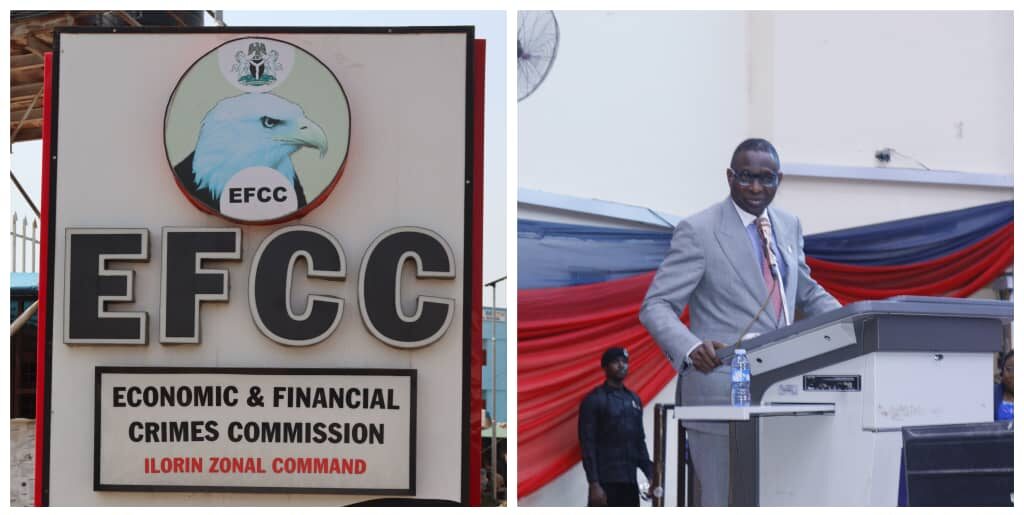
EFCC boss calls for credible 2027 elections
Abstract
The Economic and Financial Crimes Commission (EFCC) has reiterated its commitment to combating the monetisation of Nigeria's electoral process, particularly ahead of the 2027 general elections. EFCC Chairman Ola Olukoyede emphasized that vote buying, vote selling, and other forms of financial influence constitute financial crimes that undermine democratic governance and accountability. The Commission is actively tracking increasingly sophisticated methods of electoral corruption, moving beyond overt cash distribution to covert transactions and off-site arrangements. This stance signals an intensified enforcement drive by the EFCC, leveraging its mandate to investigate and prosecute financial crimes to safeguard the integrity of future elections.
Introduction
As Nigeria gears up for the 2027 general elections, the Economic and Financial Crimes Commission (EFCC) has sounded a clear warning against the pervasive monetisation of the electoral process. The EFCC Chairman, Ola Olukoyede, recently underscored the Commission's unwavering commitment to combating vote buying, vote selling, and other financial inducements that threaten the credibility of elections and the foundations of good governance. This pronouncement highlights a critical intersection between financial crime enforcement and electoral integrity, positioning the EFCC as a key player in ensuring credible polls.
The chairman's call is not merely a rhetorical statement but a declaration of intent to deploy the EFCC's statutory powers against a deeply entrenched challenge in Nigeria's democratic journey. Electoral corruption, manifesting through various financial malpractices, has historically distorted the will of the people and compromised the quality of leadership. The EFCC's proactive stance aims to disrupt these illicit financial flows, thereby fostering an environment where votes are cast based on conviction rather than pecuniary gain.
This article delves into the legal framework empowering the EFCC to tackle electoral financial crimes, examines the specific provisions of the Electoral Act, 2022, that criminalize such acts, and discusses the inherent challenges in enforcement. It further explores the implications of the EFCC's intensified efforts for political actors, voters, and the broader democratic landscape in Nigeria, offering insights into what practitioners should anticipate in the lead-up to the 2027 elections.
Background
The Economic and Financial Crimes Commission (EFCC) was established in 2003 by the Economic and Financial Crimes Commission (Establishment) Act, 2004. Its primary mandate is to prevent, investigate, prosecute, and penalize economic and financial crimes, including money laundering and advance fee fraud. Sections 6 and 7 of the EFCC Act grant the Commission broad powers to investigate all financial crimes and enforce various laws related to economic and financial crimes. This broad mandate provides the legal basis for the EFCC's intervention in electoral matters where financial malpractices are involved.
Electoral offenses, particularly vote buying and selling, are explicitly criminalized under the Electoral Act, 2022. Section 22 of the Act, for instance, makes it an offense for any person to be in unlawful possession of, sell, attempt to sell, buy, or offer to buy any voter's card, with prescribed penalties including fines and imprisonment. While the Independent National Electoral Commission (INEC) is primarily responsible for conducting elections, the Electoral Act, 2022, alongside other criminal statutes, provides a framework for the prosecution of electoral offenders by relevant law enforcement agencies, including the EFCC and the police. Historically, vote buying has been a persistent challenge in Nigerian elections, often undermining the legitimacy of electoral outcomes and the integrity of the democratic process.
Analysis
The EFCC's assertion of its role in combating electoral financial crimes is firmly rooted in its enabling statute and the Electoral Act, 2022. The Commission views electoral corruption, such as vote buying and selling, not merely as an electoral infraction but as a financial crime that falls squarely within its purview. This perspective is critical, as it allows the EFCC to leverage its specialized investigative capabilities, particularly in tracing illicit financial flows and prosecuting money laundering activities often associated with vote inducement. Section 7(1)(a) of the EFCC Act empowers the Commission to investigate whether any person or corporate body has committed an offense under the Act or other laws relating to economic and financial crimes, which can extend to the financial aspects of electoral fraud.
The Electoral Act, 2022, provides specific prohibitions against various forms of vote trading. Beyond Section 22, which addresses the unlawful handling of voters' cards, other provisions implicitly or explicitly target financial inducements. For instance, the Act's general provisions against bribery and undue influence during elections can be interpreted broadly to cover vote buying. The EFCC chairman has highlighted that electoral corruption has evolved beyond overt cash distribution at polling units, with perpetrators now employing sophisticated, covert methods, indirect transactions, and off-site arrangements to influence voters. This necessitates a more advanced investigative approach, which the EFCC, with its financial intelligence capabilities, is better positioned to undertake compared to traditional law enforcement.
Despite the clear legal framework, the enforcement of laws against vote buying faces significant challenges. One major hurdle is the difficulty in gathering sufficient evidence to secure convictions, especially with the increasing sophistication of these schemes. The covert nature of transactions and the involvement of multiple actors make direct proof of inducement arduous. Furthermore, the pervasive issue of poverty in Nigeria often makes voters susceptible to financial offers, complicating efforts to deter the practice. The effectiveness of prosecution also depends on the willingness of security agents to arrest both buyers and sellers, an area where inconsistencies have been observed.
Judicial pronouncements have also underscored the importance of tackling electoral malpractices. A Federal High Court in Abuja recently ordered INEC to prosecute state governors and others for electoral violence, bribery, and vote buying in the 2023 general elections, following a suit by the Socio-Economic Rights and Accountability Project (SERAP). While this ruling primarily directs INEC, it reinforces the judicial recognition of vote buying as a serious offense undermining democracy and emphasizes the need for accountability. The EFCC's proactive engagement, including securing arrests, prosecutions, and convictions in recent years, demonstrates its commitment to this cause.
However, the division of labor between the EFCC, INEC, and other security agencies in prosecuting electoral offenses can sometimes lead to coordination challenges. While the EFCC focuses on the financial crime aspect, INEC is statutorily empowered to prosecute electoral offenses. Effective collaboration and clear delineation of roles are crucial for a comprehensive approach. The call for stronger collaboration among critical stakeholders, including law enforcement, civil society, and the media, is therefore essential to create a robust front against electoral corruption.
Conclusion
The EFCC's renewed commitment to combating the monetisation of the electoral process is a significant development for Nigeria's democratic future. For legal practitioners, this signals an increased likelihood of investigations and prosecutions related to financial inducements in elections, requiring heightened vigilance for political actors and their agents. Lawyers involved in election campaigns must advise clients on the severe implications of vote buying and selling, which are now firmly categorized as financial crimes attracting the full force of EFCC's investigative and prosecutorial powers.
Looking ahead to the 2027 elections, practitioners should anticipate a more aggressive stance from the EFCC, employing sophisticated techniques to detect and prosecute covert vote-buying schemes. The emphasis on electoral corruption as a financial crime means that the focus will extend beyond the immediate act of inducement to include money laundering and other related offenses. This development underscores the imperative for all stakeholders to uphold the integrity of the electoral process, as the fight against financial influence in elections is crucial for fostering genuine democratic governance and accountability in Nigeria.
Citations
- 1.Economic and Financial Crimes Commission (Establishment) Act, 2004
- 2.Electoral Act, 2022
- 3.Businessday NG. (June 10, 2026). EFCC raises alarm over sophisticated vote-buying schemes ahead of 2027 elections.
- 4.Punch Newspapers. (June 12, 2026). 2027: Reject vote-buying, EFCC chair tells Nigerians.
- 5.JURIST - News. (July 22, 2024). Nigeria court orders electoral commission to hold governors accountable for election violence.
- 6.ACCORD. (December 13, 2018). Practice and Perils of Vote Buying in Nigeria's Recent Elections.
- 7.ActionAid Nigeria. The Electoral Act 2022.
- 8.M. A. Banire & Associates. ELECTORAL OFFENCES AND PUNISHMENTS.
- 9.Businessday NG. (June 10, 2022). The EFCC's role in financial crimes during elections.
- 10.Wikipedia. Economic and Financial Crimes Commission.
- 11.IDOSR JOURNALS. The Effects of Vote Buying on the Electoral Process in Nigeria.
- 12.The Guardian Nigeria News. (June 12, 2026). EFCC cracks down on electoral corruption, warns Nigerians on vote selling.
- 13.INEC. electoral offences and penalties.
- 14.International Journal of Law. (November 15, 2016). The economic and financial crimes commission and its role in curbing corruption in Nigeria: Evaluating the success story so far.
- 15.Emerald Publishing. (April 01, 2006). In the shadows of the EFCC: is the ICPC still relevant?
- 16.American Research Journal of Contemporary Issues. (January 03, 2024). VOTE BUYING IN NIGERIA AND ITS EFFECT ON ELECTING CREDIBLE CANDIDATES.
- 17.INEC. (May 20, 2026). INEC reads riot act to vote buyers.
- 18.SciSpace. (October 2011). THE ROLE OF EFCC IN COMBARTING POLITICAL CORRUPTION.
- 19.Zenodo. (December 15, 2025). Criminal Laws and Electoral Offenses in Nigeria.
How does this affect your business?
Get an AI analysis of this article grounded in your jurisdictions, practice areas, and any policy documents you've uploaded to Wansom.