
‘Electoral Commission appointments must come from parliament’ – Kofi Bentil
Abstract
A prominent legal voice in Ghana, Kofi Bentil, Senior Vice-President of IMANI Africa, has reignited calls for a fundamental shift in the appointment process of the Electoral Commission (EC) leadership. Bentil advocates for parliamentary vetting and approval of EC commissioners, moving away from the current system where the President, acting on the advice of the Council of State, makes these crucial appointments. This proposed reform aims to bolster the EC's independence, enhance public confidence in its neutrality, and mitigate the perception of political influence, which he argues is inherent in the existing framework. The debate underscores broader concerns about the integrity of Ghana's electoral democracy and the need for robust institutional safeguards.
Introduction
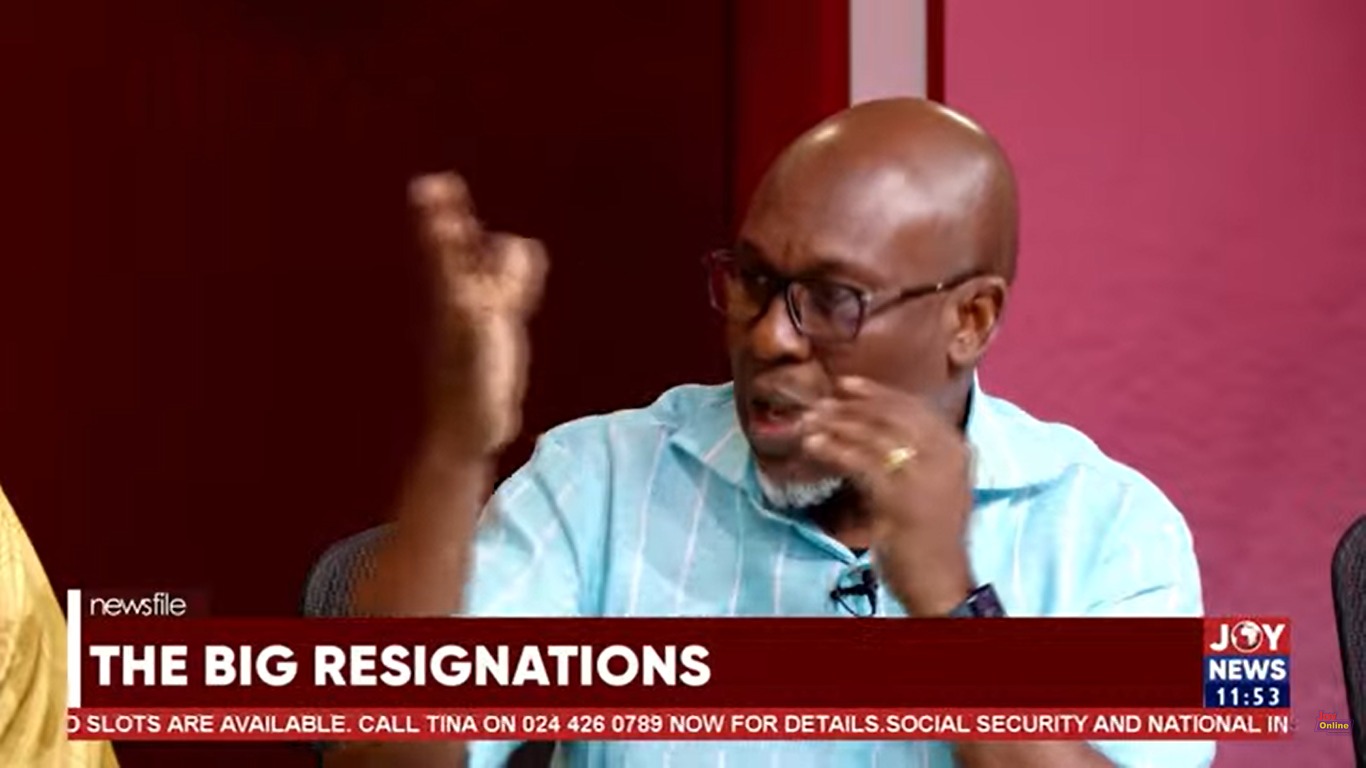
The integrity and perceived impartiality of a nation's electoral body are cornerstones of a thriving democracy. In Ghana, the appointment process for the leadership of the Electoral Commission (EC) has long been a subject of intense public and legal scrutiny. Recently, Kofi Bentil, a distinguished lawyer and Senior Vice-President of IMANI Africa, voiced a compelling argument for a significant overhaul of this process, advocating for parliamentary involvement in the appointment of EC commissioners. His call, made during a discussion on JoyNews' Newsfile programme, emphasizes the need to transition from presidential appointments to a system of parliamentary vetting and approval, a move he believes is critical for safeguarding the EC's neutrality and restoring public trust.
Bentil's intervention comes amidst ongoing debates about electoral reforms and the perennial challenges of ensuring the EC operates without real or perceived executive influence. The current constitutional framework, which vests the appointment power in the President, has been criticized for potentially politicizing the institution and undermining its independence. This article will delve into the existing legal provisions governing EC appointments in Ghana, analyze the arguments for and against a parliamentary-led process, and explore the potential implications of such a reform for the nation's democratic future.
Background
The legal framework for the establishment and appointment of the Electoral Commission in Ghana is primarily enshrined in Chapter Seven of the 1992 Constitution. Article 43(1) establishes the EC, comprising a Chairman, two Deputy Chairmen, and four other members. Crucially, Article 43(2) stipulates that "The members of the Commission shall be appointed by the President under article 70 of this Constitution." Article 70(2) further clarifies that the President makes these appointments "acting on the advice of the Council of State."
To be eligible for appointment, a person must be qualified to be elected as a Member of Parliament, as per Article 44(1) of the Constitution. The Chairman of the EC enjoys terms and conditions of service equivalent to a Justice of the Court of Appeal, while the Deputy Chairmen are accorded similar terms as a Justice of the High Court. Article 46 explicitly guarantees the independence of the EC, stating that in the performance of its functions, it "shall not be subject to the direction or control of any person or authority," except as provided by the Constitution or any other law not inconsistent with it. This constitutional architecture aims to insulate the EC from undue influence, yet the presidential appointment mechanism, even with the Council of State's advisory role, remains a contentious point in the pursuit of true institutional autonomy.
Analysis
The current presidential appointment model, though constitutionally sanctioned, has consistently drawn criticism for its inherent potential for executive influence. Kofi Bentil's argument is rooted in the belief that direct presidential appointments, even with the Council of State's advice, inevitably imbue the EC leadership with a perceived political affiliation, thereby eroding public trust. He contends that subjecting nominees to open parliamentary vetting and approval would introduce a layer of transparency and consensus-building, fostering greater legitimacy and public confidence in the impartiality of the commissioners.
While Article 70(2) states the President acts on the "advice" of the Council of State, the legal weight of this advice – whether it is binding or merely consultative – has been a subject of academic and political debate. However, the prevailing understanding and practice suggest that the President is generally expected to act in accordance with such advice, though the process itself is not public, leading to opacity. The absence of direct parliamentary scrutiny means that the public has limited insight into the qualifications, temperament, and potential biases of nominees before their appointment. This contrasts with other key public offices where parliamentary approval is a prerequisite, offering a more robust check on executive power.
Indeed, the call for parliamentary approval is not new. Former Chairman of the Legal and Constitutional Committee of Parliament, Alhaji Inusah A.B. Fuseini, has previously advocated for amending Article 43 to require prior parliamentary approval by a two-thirds majority for EC appointments, explicitly citing a "trust deficit" arising from the current system. Furthermore, the Electoral Commission itself, in its list of proposed electoral reforms, has included the item: "Appointments of members of EC should be with the prior approval of parliament." This indicates a recognition, even within the institution, that the current process could benefit from enhanced legitimacy through parliamentary oversight. While the Supreme Court of Ghana has adjudicated numerous electoral disputes, including significant presidential election petitions in 2012 and 2020, these cases have primarily focused on the EC's functions, electoral irregularities, and statutory interpretations rather than directly challenging the constitutionality of the appointment process itself. Therefore, a direct judicial pronouncement on the efficacy or constitutionality of the 'advice' of the Council of State in this context is yet to fully materialize, leaving the debate largely in the political and reformist spheres.
Conclusion
Kofi Bentil's advocacy for parliamentary appointments to the Electoral Commission underscores a critical juncture in Ghana's democratic evolution. The current system, while constitutionally defined, faces persistent questions regarding its capacity to foster an EC perceived as truly independent and above partisan influence. Transitioning to a model that incorporates parliamentary vetting and approval could significantly enhance the transparency, legitimacy, and public trust in the electoral body, aligning Ghana with best practices in many mature democracies where such critical appointments undergo rigorous legislative scrutiny.
For legal practitioners, this debate highlights the ongoing need for constitutional reforms that strengthen democratic institutions. Any future amendments to Articles 43, 44, or 70 would necessitate careful legal drafting to ensure clarity, prevent unintended consequences, and uphold the delicate balance of powers. Legal professionals should closely monitor legislative proposals and public discourse surrounding these reforms, as changes to the EC's appointment process could profoundly impact electoral litigation, the interpretation of electoral laws, and the overall stability of Ghana's democratic governance. The call for reform is a potent reminder that constitutional provisions, while foundational, must continually be evaluated and adapted to meet the evolving demands of a dynamic democratic society.
Citations
- 1.1992 Constitution of Ghana, Article 43
- 2.1992 Constitution of Ghana, Article 44
- 3.1992 Constitution of Ghana, Article 46
- 4.1992 Constitution of Ghana, Article 70
- 5.MyJoyOnline Ghana, 'Electoral Commission appointments must come from parliament' – Kofi Bentil (June 21, 2026)
- 6.MyJoyOnline Ghana, 'There is 'zero chance' Mahama will appoint a politically neutral EC deputy chairperson — Kofi Bentil (June 20, 2026)
- 7.Adomonline.com, 'There is 'zero chance' Mahama will appoint a politically neutral EC deputy chairperson — Kofi Bentil (June 20, 2026)
- 8.Laws Ghana, Article 44 - Qualifications, Terms And Conditions Of Service Of Members Of Electoral Commission
- 9.The Judicial Service of Ghana, ELECTORAL COMMISSION
- 10.Electoral Commission of Ghana, Mode of appointment
- 11.MyJoyOnline Ghana, 'Let's introduce term limits for electoral commissioners, deputies - Inusah Fuseini (April 03, 2023)
- 12.Laws Ghana, Is The Chairperson Of The Electoral Commission (EC) Above The Laws Of Ghana? (December 14, 2017)
- 13.Cyrilla: Global Digital Rights Law, Ghana Constitution (rev. 1996)
- 14.African Journal of International and Comparative Law, A Review of the Electoral Process under Ghana's Fourth Republic (August 04, 2020)
- 15.Electoral Commission of Ghana, Election Reforms
- 16.PULP, electoral justice under ghana's fourth republic
- 17.Wikipedia, Legal challenge of the 2012 Ghanaian Presidential Election