
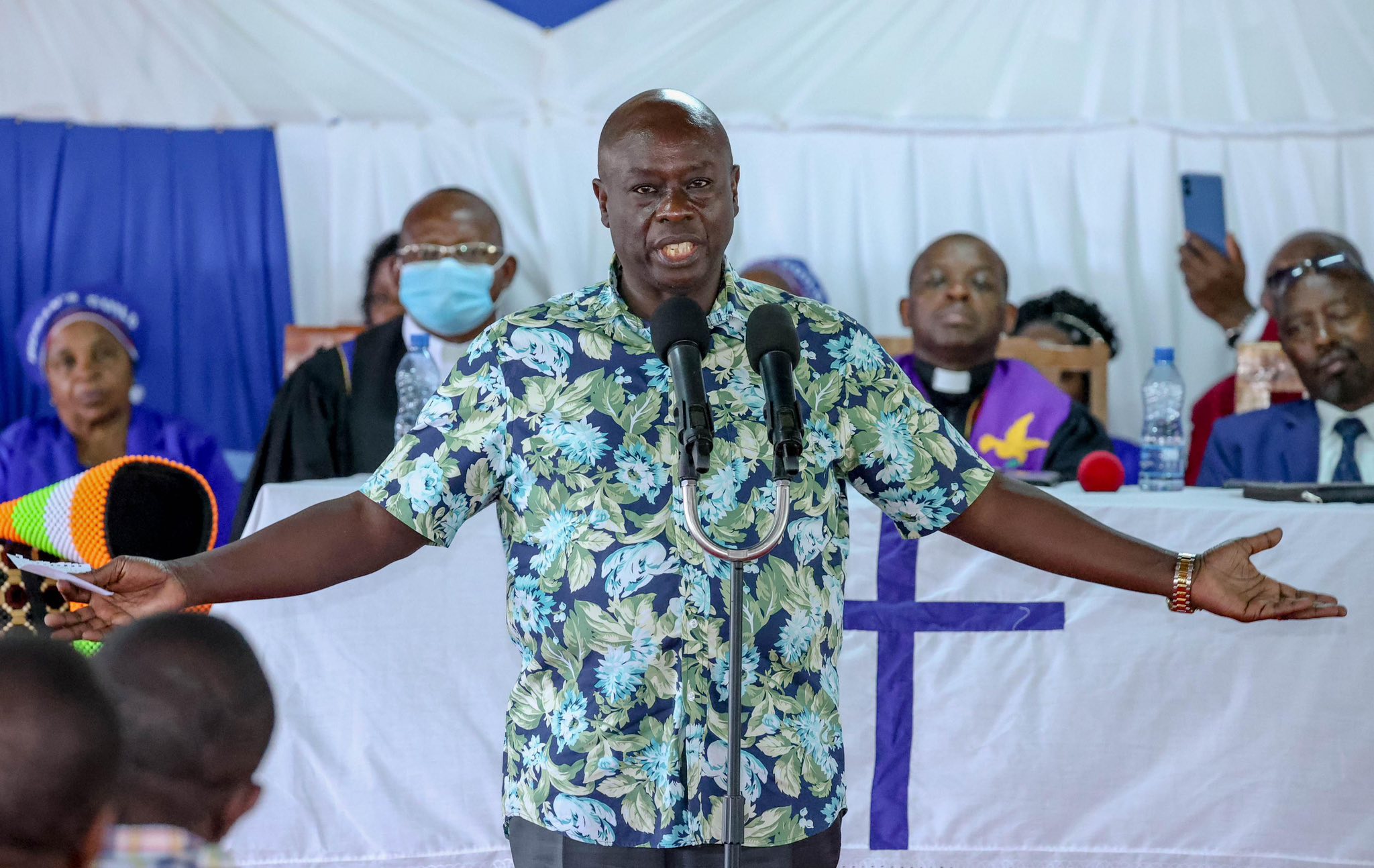
Ex-DP Gachagua vows to appeal if court upholds his impeachment
Abstract
The potential impeachment of a Deputy President in Kenya triggers a complex interplay between the legislative and judicial arms of government, underscoring the robust constitutional safeguards enshrined in the 2010 Constitution. While the power to remove a Deputy President rests primarily with Parliament through a defined impeachment process, the High Court retains a critical supervisory jurisdiction to review these proceedings for constitutional and procedural regularity. Any High Court decision is subject to further appeal to the Court of Appeal and ultimately the Supreme Court, particularly on matters involving the interpretation or application of the Constitution. This article explores the legal framework governing such a process, highlighting the judiciary's role in upholding the rule of law and ensuring due process even in high-stakes political disputes.
Introduction
The recent statement by a former Deputy President, vowing to appeal if the High Court upholds his impeachment, brings into sharp focus the intricate legal architecture governing the removal of high-ranking state officers in Kenya. This hypothetical scenario, though rooted in political discourse, illuminates the critical role of the judiciary as the ultimate arbiter in disputes that challenge the constitutional validity of legislative actions. The prospect of a Deputy President's impeachment and subsequent judicial challenge is not merely a political event but a profound constitutional moment that tests the resilience of Kenya's governance framework.
Kenya's 2010 Constitution established a robust system of checks and balances, ensuring that no single arm of government can act with unfettered power. The impeachment process for a Deputy President, while initiated and conducted by Parliament, is subject to judicial scrutiny, reflecting the judiciary's mandate to interpret and apply the Constitution. This article delves into the constitutional and statutory provisions that govern the removal of a Deputy President, examines the scope of judicial review by the High Court, and outlines the appellate avenues available, providing practitioners with a comprehensive understanding of the legal landscape surrounding such a high-profile constitutional challenge.
Background
The removal of a Deputy President from office in Kenya is governed by Article 150 of the Constitution of Kenya, 2010, which incorporates, with necessary modifications, the procedures for the removal of the President outlined in Articles 144 and 145. The grounds for removal are explicitly defined: gross violation of a provision of the Constitution or any other law, serious reasons for believing the Deputy President has committed a crime under national or international law, or gross misconduct.
The impeachment process begins in the National Assembly, where a member, supported by at least one-third of all members, may move a motion for impeachment. If this motion is supported by at least two-thirds of all members of the National Assembly, the Speaker then informs the Speaker of the Senate. The Senate then convenes to hear the charges, and may appoint an 11-member special committee to investigate the matter and report its findings within ten days. Crucially, the Deputy President has the right to appear and be represented before this special committee and the full Senate during its investigations. Should at least two-thirds of all Senators vote to uphold any impeachment charge, the Deputy President ceases to hold office. This elaborate parliamentary procedure is designed to ensure due process and prevent arbitrary removal.
Analysis
Following a parliamentary impeachment, the High Court of Kenya plays a pivotal role in reviewing the legality and constitutionality of the process. Article 165(3)(d) of the Constitution grants the High Court unlimited original jurisdiction in criminal and civil matters, including the interpretation of the Constitution and hearing cases concerning the violation of the Bill of Rights. Kenyan courts have consistently held that they possess supervisory jurisdiction over impeachment proceedings, with the constitutional mandate to hear and determine any issues arising from such processes.
While the High Court acknowledges that impeachment is primarily a legislative function and generally refrains from substituting Parliament's judgment on the merits of the charges, its jurisdiction extends to scrutinizing the procedural fairness and constitutional regularity of the process. This means that while the court may not second-guess the political wisdom of an impeachment, it will rigorously examine whether constitutional limits were observed, and whether the impeached officer's rights, particularly the right to a fair hearing and fair administrative action under Articles 47 and 50 of the Constitution, were upheld.
Indeed, in a recent hypothetical case concerning the impeachment of former Deputy President Rigathi Gachagua, the High Court upheld the impeachment as constitutionally valid but found that his right to a fair hearing had been violated, awarding him compensation. This illustrates the judiciary's nuanced approach: respecting the separation of powers by not overturning the legislative decision on its merits, yet actively intervening to remedy constitutional breaches. The scope of judicial review in Kenya has expanded beyond mere procedural propriety to include aspects of merit review, especially when constitutional rights are invoked.
Should the High Court uphold an impeachment, the aggrieved Deputy President has clear appellate avenues. Appeals from the High Court lie to the Court of Appeal, as established under Article 164(3) of the Constitution. Further appeals can be lodged with the Supreme Court, the highest court in Kenya, under Article 163(3)(b). Appeals to the Supreme Court are permissible as of right in cases involving the interpretation or application of the Constitution, or upon certification by either the Court of Appeal or the Supreme Court that the matter involves a question of general public importance. This multi-tiered judicial review and appeal mechanism ensures that constitutional questions arising from such a significant political act receive thorough and authoritative adjudication.
Conclusion
The constitutional framework for the removal of a Deputy President in Kenya, coupled with the robust judicial review mechanisms, provides a critical safeguard against potential abuses of power and ensures adherence to the rule of law. For legal practitioners, navigating such a high-stakes constitutional dispute requires a deep understanding of both parliamentary procedure and the evolving jurisprudence on judicial review and separation of powers. The judiciary's willingness to intervene on procedural and constitutional grounds, even while respecting the legislative mandate on the merits of impeachment, highlights the delicate balance inherent in Kenya's governance structure.
Practitioners involved in such cases must meticulously scrutinize every stage of the impeachment process for constitutional compliance and procedural fairness. The potential for appeals up to the Supreme Court means that arguments must be framed with an eye towards fundamental constitutional interpretation and matters of public importance. The outcome of such cases not only determines the fate of high-ranking officials but also sets crucial precedents for constitutional governance, reinforcing the judiciary's indispensable role in upholding the integrity of Kenya's democratic institutions.
Citations
- 1.Constitution of Kenya, 2010
- 2.Article 150 of the Constitution of Kenya
- 3.Article 145 of the Constitution of Kenya
- 4.Article 144 of the Constitution of Kenya
- 5.Article 163 of the Constitution of Kenya
- 6.Article 164 of the Constitution of Kenya
- 7.Article 165 of the Constitution of Kenya
- 8.Article 47 of the Constitution of Kenya
- 9.Article 50 of the Constitution of Kenya
- 10.Fair Administrative Action Act, 2015
- 11.Vellum Kenya, "Impeachment 101: How to Impeach a deputy president" (September 27, 2024)
- 12.EACLJ Staff, "The Process of Impeaching Deputy President Rigathi Gachagua" (September 30, 2024)
- 13.Vocalize, "Gachagua's tipping point: What does the law say about impeaching a Deputy President?" (September 25, 2024)
- 14.sheriaplex.com, "Article 150 of The Constitution of Kenya: Removal of Deputy President." (Accessed June 17, 2026)
- 15.Kabarak University Journal, "The Jurisdictional Remit of the Supreme Court of Kenya Over Questions Involving the 'Interpretation and Application' of the Constitution" (Accessed June 17, 2026)
- 16.Dominic Wabwireh, ConstitutionNet, "Kenya's high court holds impeachment of deputy president was constitutional" (June 10, 2026)
- 17.The Judiciary, "Jurisdiction - Court of Appeal" (Accessed June 17, 2026)
- 18.Wikipedia, "Supreme Court of Kenya" (Accessed June 17, 2026)
- 19.Supreme Court of Kenya, "The Mandate of The Court" (Accessed June 17, 2026)
- 20.The Judiciary, "The Court of Appeal" (Accessed June 17, 2026)
- 21.Emanuel Kibet & Kimberly Wangeci, Strathmore Law Review, "A Perspective on the Doctrine of the Separation of Powers based on the Response to Court Orders in Kenya" (January 2016)
- 22.Politics Stack Exchange, "How can a Kenyan Deputy President challenge his impeachment after it passed the Senate?" (October 17, 2024)
- 23.N.W.O. Ajwang', Open Access Library Journal, "Fusion of Powers in Relation to Kenyan Presidential System" (2025)
- 24.SciSpace, "Separation of Powers in Kenya: The Judicial Function and Judicial Restraint; Whither Goeth the Law?" (Accessed June 17, 2026)
- 25.EACLJ Staff, "The Importance Of The Separation Of Powers Between The Branches of Government" (July 04, 2024)
- 26.Supreme Court of Kenya, "Role of the Supreme Court" (Accessed June 17, 2026)
- 27.UoN Digital Repository, "Impeachment In The Kenyan Legal Context" (January 03, 2003)
- 28.Parliament of Kenya, "The Impeachment Procedure Bill, 2018" (Accessed June 17, 2026)
- 29.allAfrica.com, "Court Upholds Impeachment of Kenya's Ex-Deputy President" (June 09, 2026)
- 30.KenyaMOJA.com, ""We have jurisdiction to hear Gachagua impeachment case" - Three-judge bench of the High Court" (June 08, 2026)
- 31.Kenya Law Reform Commission (KLRC), "164. Court of Appeal" (Accessed June 17, 2026)
- 32.Parliament of Kenya, "Processing Of Special Motions Under Articles 145, 150(2), 152(6) And 251 Of The Constitution" (Accessed June 17, 2026)
- 33.Daystar University Repository, "An Inquiry into the Limits of judicial Intervention in the Impeachment Process of Governors in Kenya" (Accessed June 17, 2026)
- 34.TRT Afrika, "Kenya's High Court upholds ex-Deputy President Rigathi Gachagua's impeachment" (June 08, 2026)
- 35.YouTube, "Kenya's High Court upholds former Deputy President impeachment" (June 09, 2026)
- 36.Walker Kontos, "Expanding the scope of Judicial Review – Supreme Court Perspective" (August 23, 2025)
- 37.MWC Legal, "The Jurisdiction of our Specialist Courts – ELC and ELRC" (February 26, 2025)
- 38.EY, "Kenya Supreme Court affirms jurisdiction of Employment and Labour Relations Court to determine constitutional validity of social security act" (Accessed June 17, 2026)
- 39.Njogu Associates, "Scope of Judicial Review in Kenya (Petition No. 6 (E007) of 2022)" (February 07, 2024)
- 40.Judicial Review: When Can Government Decisions Be Challenged? (March 23, 2026)
- 41.Cambridge University Press & Assessment, "Judicial Review in Kenya (Chapter 11) - Judicial Review of Administrative Action Across the Common Law World" (Accessed June 17, 2026)
- 42.Supreme Court of Kenya, "REPUBLIC OF KENYA IN THE SUPREME COURT OF KENYA AT NAIROBI (Mwilu; DCJ & VP, Wanjala, Njoki, Lenaola & Ouko SCJJ) PETITI" (Accessed June 17, 2026)
How does this affect your business?
Get an AI analysis of this article grounded in your jurisdictions, practice areas, and any policy documents you've uploaded to Wansom.