
Executive power and its limits
Abstract
The scope and limits of executive power remain a perennial and critical area of constitutional law, frequently tested by actions that impact civil liberties and the separation of powers. This article examines recent judicial scrutiny of executive authority in the United States, focusing on landmark cases where courts have delineated the boundaries of presidential and governmental action. Drawing on the experiences of leading civil liberties advocates, such as Cecillia Wang of the ACLU, it highlights how litigation serves as a vital check on executive overreach, particularly concerning issues of racial discrimination, immigration, and fundamental constitutional rights. The analysis underscores the judiciary's role in upholding constitutional principles against expansive claims of executive prerogative, offering essential insights for legal practitioners navigating this dynamic legal landscape.
Introduction
The exercise of executive power in the United States, though essential for governance, is inherently subject to constitutional constraints and judicial oversight. The delicate balance between a robust executive capable of effective action and a government bound by the rule of law is a foundational principle of American democracy. In recent years, this balance has been repeatedly tested, prompting significant legal challenges that have reshaped our understanding of executive authority and its limits. These challenges often arise when executive actions are perceived to infringe upon fundamental civil liberties or exceed statutorily delegated powers.
Background
The foundation of executive power in the United States is enshrined in Article II of the Constitution, which vests "the executive Power" in the President. This article outlines key presidential responsibilities, including serving as Commander-in-Chief, making treaties with Senate consent, appointing federal officers, and the crucial duty to "take Care that the Laws be faithfully executed." However, the Constitution also establishes a system of checks and balances, ensuring that no single branch of government becomes too powerful.
Historically, the judiciary has played a pivotal role in defining the contours of executive power. A seminal case in this regard is *Youngstown Sheet & Tube Co. v. Sawyer*, 343 U.S. 579 (1952), often referred to as the Steel Seizure Case. In *Youngstown*, the Supreme Court famously limited President Truman's power to seize private steel mills during the Korean War, ruling that such an action lacked congressional authorization and was not justified by his inherent executive or Commander-in-Chief powers. Justice Robert Jackson's concurring opinion in *Youngstown* introduced a widely cited three-tiered framework for analyzing presidential power, distinguishing between actions taken with congressional authorization, those taken in the absence of congressional grant or denial, and those taken contrary to congressional will. This framework remains a cornerstone for evaluating the legality of executive actions, particularly when they venture into areas traditionally reserved for the legislative branch or infringe upon individual rights.
Analysis
The ongoing tension between executive power and its constitutional limits is vividly illustrated by contemporary litigation, often spearheaded by civil liberties organizations. A notable example is the protracted legal battle against former Maricopa County Sheriff Joe Arpaio, which highlighted the judiciary's role in curbing local executive overreach. In *Ortega Melendres v. Arpaio*, No. CV-07-0249-PHX-GMS (D. Ariz. May 24, 2013), Latino motorists brought a class action lawsuit alleging racial profiling and unlawful detentions by Arpaio and the Maricopa County Sheriff's Office (MCSO) during immigration enforcement operations. The federal district court found that Arpaio's policies and practices were discriminatory and violated the Fourth and Fourteenth Amendments, as well as Title VI of the Civil Rights Act of 1964. Cecillia Wang, then director of the ACLU Immigrants' Rights Project, was a key member of the legal team that secured this historic victory, which led to a permanent injunction and subsequent civil contempt proceedings against Arpaio for his continued defiance of court orders. This case underscores how judicial intervention can enforce constitutional safeguards against executive actions, even at the local level, that infringe upon equal protection and due process rights.
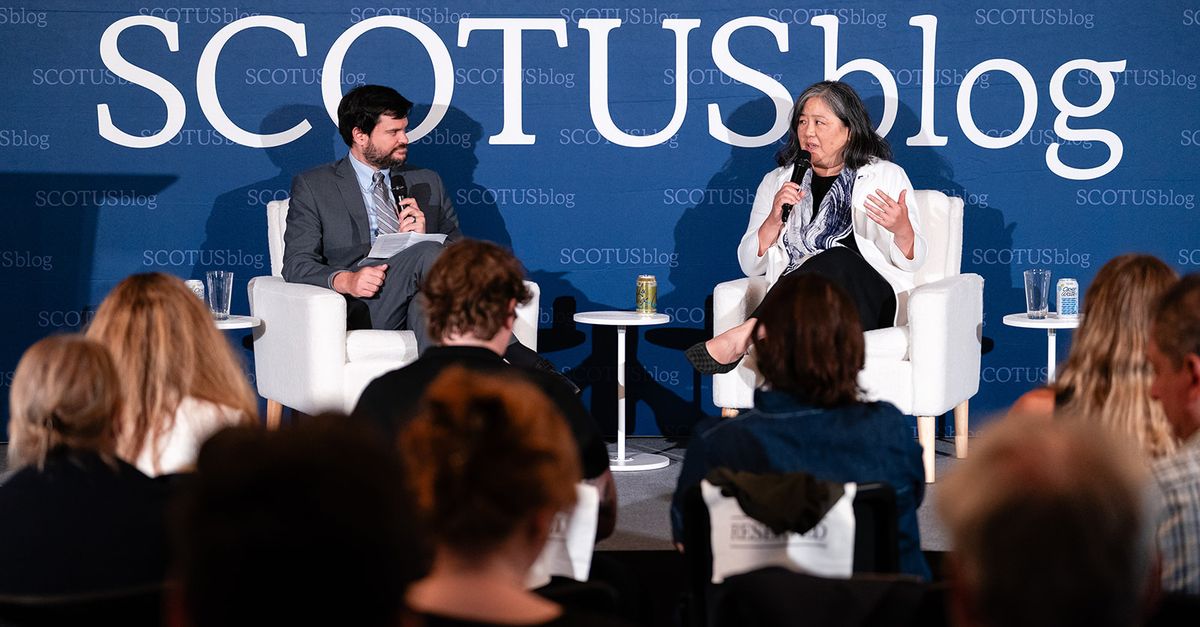
More recently, the limits of presidential power have been tested by executive orders issued by the Trump administration. The excerpt references a case, *Trump v. Barbara*, where Cecillia Wang, now National Legal Director of the ACLU, argued before the Supreme Court. This landmark case challenged an executive order that sought to deny birthright citizenship to children born in the United States to non-citizen parents. The ACLU and its partners contended that this order directly contravened the Fourteenth Amendment's Citizenship Clause, long-standing Supreme Court precedent established in *United States v. Wong Kim Ark*, and federal statute. Federal courts consistently blocked the executive order, and the Supreme Court ultimately ruled to protect birthright citizenship, affirming the constitutional guarantee. This outcome highlights the judiciary's role in safeguarding fundamental constitutional rights against executive attempts to unilaterally redefine citizenship.
However, judicial review of executive power is not always a check. In *Trump v. Hawaii*, 585 U.S. 667 (2018), the Supreme Court upheld the President's travel ban, which restricted entry into the U.S. from several Muslim-majority countries. The Court, in a 5-4 decision, found that the President had broad authority under Section 212(f) of the Immigration and Nationality Act to suspend the entry of non-citizens deemed detrimental to U.S. interests. While the decision acknowledged concerns about discriminatory intent, it ultimately deferred to the executive's national security justifications, demonstrating that the judiciary's willingness to intervene can vary significantly depending on the context and the specific powers invoked. This case illustrates the complexities and nuances in defining the boundaries of executive power, particularly in areas touching upon national security and foreign affairs, where judicial deference is often greater.
Conclusion
The ongoing legal battles over executive power underscore the dynamic and often contentious relationship between the branches of government in the United States. From local law enforcement officials exceeding their authority to presidential actions impacting fundamental constitutional rights, the judiciary remains a critical arbiter in defining and enforcing the limits of executive action. The work of organizations like the ACLU, through strategic litigation, plays an indispensable role in ensuring accountability and protecting civil liberties against potential governmental overreach.
For legal practitioners, these developments highlight the imperative of a deep understanding of constitutional law, statutory interpretation, and the evolving jurisprudence surrounding executive power. Attorneys must remain vigilant in monitoring executive actions, particularly those implemented through executive orders or administrative directives, and be prepared to challenge them when they infringe upon established legal principles or individual rights. The cases discussed serve as a powerful reminder that the constitutional framework of checks and balances is not self-executing; it requires continuous advocacy and judicial enforcement to preserve its integrity and protect the foundational freedoms it guarantees.
Citations
- 1.U.S. Constitution, Article II, Sections 1, 2, 3
- 2.U.S. Constitution, Fourth Amendment
- 3.U.S. Constitution, Fourteenth Amendment
- 4.Title VI of the Civil Rights Act of 1964
- 5.*Youngstown Sheet & Tube Co. v. Sawyer*, 343 U.S. 579 (1952)
- 6.*Ortega Melendres v. Arpaio*, No. CV-07-0249-PHX-GMS (D. Ariz. May 24, 2013)
- 7.*Ortega Melendres v. Arpaio*, 783 F.3d 1159 (9th Cir. 2015)
- 8.*Trump v. Barbara*
- 9.*Trump v. Hawaii*, 585 U.S. 667 (2018)
- 10.*United States v. Wong Kim Ark*, 169 U.S. 649 (1898)
How does this affect your business?
Get an AI analysis of this article grounded in your jurisdictions, practice areas, and any policy documents you've uploaded to Wansom.