
“Fake Agency Scandal: Embattled “DG” deactivates social media accounts, websites
Abstract
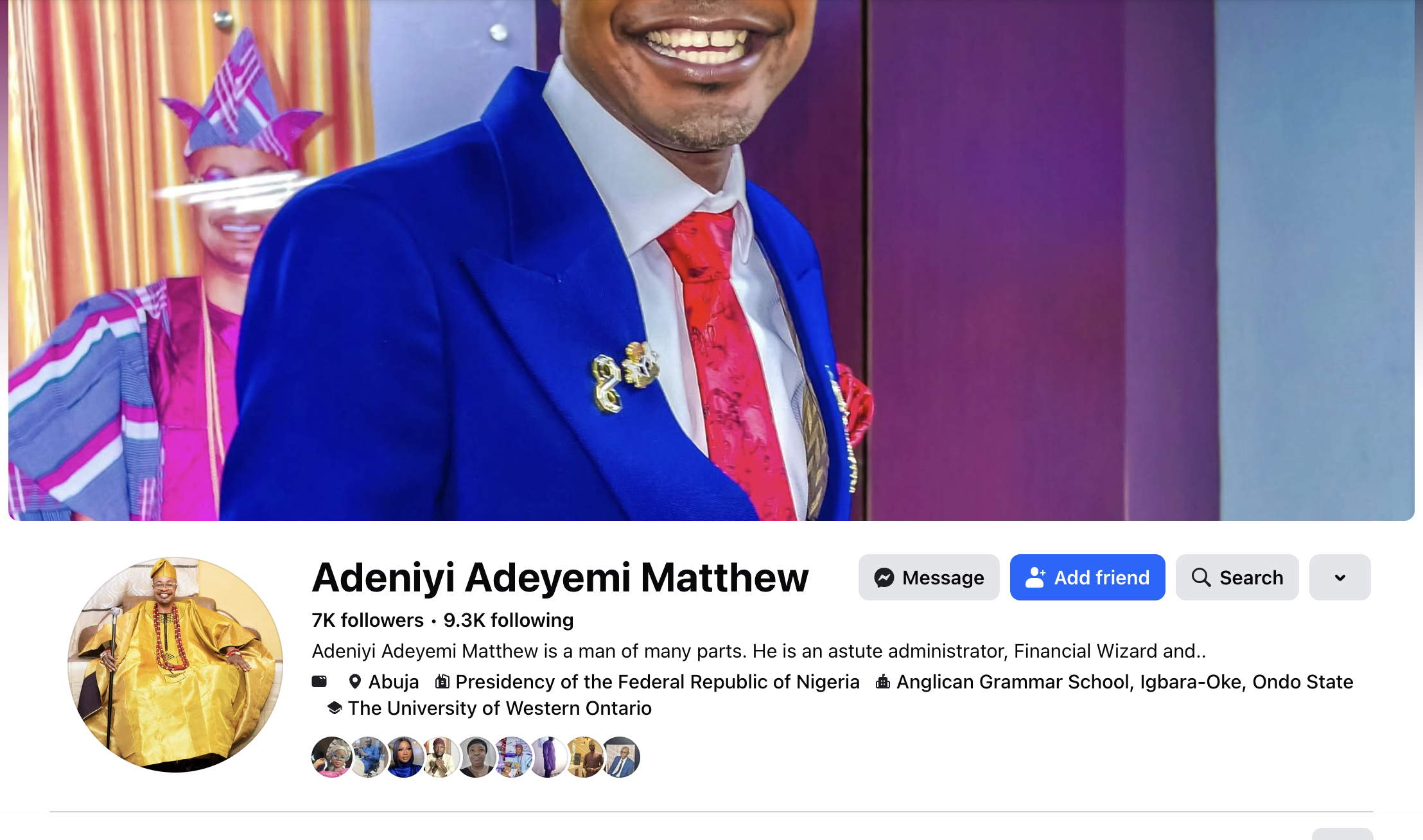
A significant "Fake Agency Scandal" has rocked Nigeria, involving Adeniyi Adeyemi Mathew, who allegedly operated a fictitious entity named the "Presidential Foreign Intervention Promotion Council" (PFIPC) and falsely presented himself as its Director-General. This development has prompted President Bola Tinubu to order a comprehensive investigation by the Independent Corrupt Practices and Other Related Offences Commission (ICPC) into the activities of the purported agency and its collaborators. The scandal highlights critical vulnerabilities in governmental oversight and the pervasive threat of fraud and impersonation, particularly in the digital realm, as the alleged perpetrator deactivated online platforms. Legal professionals must be aware of the robust statutory framework in Nigeria designed to combat such sophisticated economic and cybercrimes.
Introduction
Nigeria is currently grappling with a high-profile "Fake Agency Scandal" involving a purported "Presidential Foreign Intervention Promotion Council" (PFIPC), which was allegedly operated by Adeniyi Adeyemi Mathew, who falsely claimed to be its Director-General and a presidential appointee. The gravity of the situation escalated with reports of Mr. Mathew deactivating the agency's social media accounts and website, raising concerns about potential evidence tampering and evasion. This incident has not only eroded public trust but also exposed significant gaps in institutional safeguards against fraudulent schemes.
The scandal came to light following a directive from President Bola Tinubu, who ordered the Independent Corrupt Practices and Other Related Offences Commission (ICPC) to launch a thorough investigation into the PFIPC, which was confirmed to have no legal basis or official establishment by the Nigerian federal government. The probe is set to examine allegations of forged appointment letters, the use of false claims to secure official recognition and diplomatic support, the operation of multiple bank accounts, and the acquisition of government office space. This article delves into the legal framework applicable to such offenses in Nigeria, analyzing the potential charges and the broader implications for legal practice and regulatory enforcement.
The swift action by the Presidency underscores the seriousness with which the Nigerian government views acts of impersonation and fraud that undermine the integrity of public institutions. For legal practitioners, this case serves as a crucial reminder of the multifaceted legal challenges presented by sophisticated scams, particularly those leveraging digital platforms and exploiting administrative weaknesses. Understanding the interplay of criminal statutes, cybercrime legislation, and the powers of anti-corruption agencies is paramount in advising clients and navigating the complexities of such high-stakes investigations.
Background
The legal landscape in Nigeria provides a comprehensive framework for addressing offenses such as impersonation, fraud, and cybercrime, which are central to the "Fake Agency Scandal." The establishment of any government agency or public body in Nigeria typically requires specific legislative enactment, presidential instrument, or executive approval. The absence of such authorization renders any purported agency illegitimate.
Key statutes governing these offenses include the Criminal Code Act and the Penal Code Act, which criminalize various forms of impersonation and forgery. Specifically, Section 484 of the Criminal Code Act makes it a felony to falsely represent oneself to be another person with intent to defraud, carrying a penalty of imprisonment for three years, or fourteen years if the representation is to obtain specific property. Section 486 addresses impersonation of a person named in a certificate, while Section 108 and 109 deal with impersonating public officers or members of the Armed Forces or Police. Similarly, the Penal Code Act, applicable in Northern Nigeria and the Federal Capital Territory, Abuja, contains provisions against false personation in Sections 179, 321, and 324.
Furthermore, the Advance Fee Fraud and Other Fraud Related Offences Act, 2006 (as amended in 2007), directly targets fraudulent schemes, including obtaining property or benefits by false pretences. Section 1 of this Act prohibits and punishes such conduct, with severe penalties including imprisonment for up to 20 years. The Cybercrime (Prohibition, Prevention, etc.) Act 2015 is also highly relevant, providing a unified legal framework for combating cybercrimes. This Act addresses offenses such as computer-related fraud (Section 14), identity theft and impersonation (Section 22), and computer-related forgery (Section 13), recognizing the digital dimension of modern fraudulent activities.
Analysis
The allegations against Adeniyi Adeyemi Mathew, including operating a non-existent "Presidential Foreign Intervention Promotion Council" (PFIPC), falsely claiming to be its Director-General, forging official documents, and opening bank accounts, expose him to a myriad of criminal charges under Nigerian law. The most prominent charges would likely include impersonation of a public officer under Section 108 of the Criminal Code Act, or general impersonation with intent to defraud under Section 484 of the Criminal Code Act, which carries a significant prison sentence. The act of forging appointment letters and other government documents would fall under forgery offenses, as defined in Section 363 of the Criminal Code Act, with penalties up to 14 years imprisonment under Section 364.
Beyond impersonation and forgery, the alleged scheme to obtain official recognition, diplomatic support, and operate bank accounts, including with the Central Bank of Nigeria, points to offenses under the Advance Fee Fraud and Other Fraud Related Offences Act, 2006. Specifically, obtaining property or benefits by false pretence (Section 1) and fraudulent invitation (Section 4) are directly applicable. The digital aspect of the scam, including the use of social media and websites, brings the Cybercrime (Prohibition, Prevention, etc.) Act 2015 into play. Charges such as computer-related fraud (Section 14) and identity theft and impersonation (Section 22) are highly probable, given the online nature of the purported agency's operations and the alleged false representation.
The deactivation of social media accounts and websites by Mr. Mathew, as reported, could be interpreted as an attempt to destroy or conceal evidence, which could attract additional charges or negatively impact his defense. While not explicitly a standalone offense of 'deactivation,' such actions are often considered in the context of obstruction of justice or as evidence of guilty intent. The Cybercrime Act 2015 provides for the preservation and admissibility of electronic evidence, making it challenging for perpetrators to completely erase their digital footprint.
The investigation, led by the ICPC as directed by President Tinubu, will also examine the broader circumstances that allowed the fictitious body to gain an appearance of official legitimacy, including the role of any public officer, private individual, financial institution, or intermediary that may have facilitated the scheme. This indicates a focus on systemic weaknesses and potential collusion, which could lead to charges of conspiracy or aiding and abetting under the various criminal statutes. The Corporate Affairs Commission (CAC) plays a crucial role in ensuring business legitimacy, and its public search portal allows for verification of registered entities, highlighting a potential failure in due diligence by those who engaged with the fake agency.
The challenges in prosecuting such cases include gathering irrefutable digital evidence, establishing intent to defraud, and potentially navigating cross-jurisdictional issues if the scam involved international elements. However, the comprehensive nature of Nigeria's anti-fraud and cybercrime legislation, coupled with the investigative powers of agencies like the ICPC and EFCC, provides a strong legal basis for robust prosecution. The fact that Mr. Adeyemi has already been charged to court by the police on eight counts of forgery and impersonation demonstrates the initial steps taken in the legal process.
Conclusion
The "Fake Agency Scandal" involving the purported Presidential Foreign Intervention Promotion Council (PFIPC) and its alleged Director-General, Adeniyi Adeyemi Mathew, serves as a stark reminder of the persistent threat of sophisticated fraud and impersonation within Nigeria's public and digital spheres. The comprehensive investigation ordered by President Tinubu, to be conducted by the ICPC, underscores the government's commitment to upholding the integrity of its institutions and prosecuting those who exploit systemic vulnerabilities.
For legal practitioners, this case highlights the critical importance of due diligence in all dealings, especially when engaging with entities claiming official government affiliation. It also emphasizes the need for a thorough understanding of Nigeria's robust legal framework against fraud, impersonation, and cybercrime, including the Criminal Code Act, Penal Code Act, Advance Fee Fraud and Other Fraud Related Offences Act, and the Cybercrime (Prohibition, Prevention, etc.) Act 2015. Practitioners should advise clients on the severe penalties associated with these offenses and the potential for charges related to conspiracy or aiding and abetting. As the investigation unfolds, the legal community should closely monitor developments, particularly concerning the identification of collaborators and any proposed reforms to strengthen institutional safeguards against such elaborate scams.
Citations
- 1.Criminal Code Act, Cap C38, Laws of the Federation of Nigeria 2004, Section 108
- 2.Criminal Code Act, Cap C38, Laws of the Federation of Nigeria 2004, Section 109
- 3.Criminal Code Act, Cap C38, Laws of the Federation of Nigeria 2004, Section 363
- 4.Criminal Code Act, Cap C38, Laws of the Federation of Nigeria 2004, Section 364
- 5.Criminal Code Act, Cap C38, Laws of the Federation of Nigeria 2004, Section 484
- 6.Criminal Code Act, Cap C38, Laws of the Federation of Nigeria 2004, Section 486
- 7.Penal Code Act, Cap P3, Laws of the Federation of Nigeria 2004, Section 179
- 8.Penal Code Act, Cap P3, Laws of the Federation of Nigeria 2004, Section 321
- 9.Penal Code Act, Cap P3, Laws of the Federation of Nigeria 2004, Section 324
- 10.Advance Fee Fraud and Other Fraud Related Offences Act, 2006, Section 1
- 11.Advance Fee Fraud and Other Fraud Related Offences Act, 2006, Section 4
- 12.Cybercrime (Prohibition, Prevention, etc.) Act 2015, Section 13
- 13.Cybercrime (Prohibition, Prevention, etc.) Act 2015, Section 14
- 14.Cybercrime (Prohibition, Prevention, etc.) Act 2015, Section 22
- 15.Premium Times Nigeria, "Fake Agency Scandal: Embattled “DG” deactivates social media accounts, websites" (July 8, 2026)
- 16.Xinhua, "Nigerian president orders probe into fake government agency" (July 7, 2026)
- 17.The Star, "Nigerian president orders probe into fake government agency" (July 7, 2026)
- 18.21st CENTURY CHRONICLE, "UPDATED: Fake Agency Scandal: Tinubu orders ICPC to investigate, gives 30-day deadline" (July 8, 2026)
- 19.Businessday NG, "Fake agency drama: Tinubu directs ICPC to investigate PFIPC, culpable individuals to face the law" (July 7, 2026)
- 20.TheBoss Newspaper, "Probe Alleged Fake Presidential Agency, Tinubu Orders ICPC" (July 7, 2026)
- 21.ICIR Nigeria, "[BREAKING] Tinubu orders probe into 'fake' Investment Promotion Council" (July 7, 2026)
- 22.Voice of Nigeria, "President Tinubu Directs ICPC Probe into Fake Presidential Council" (July 7, 2026)
- 23.Premium Times, "How fake agency 'DG' Adeyemi outsmarted federal officials to secure CBN accounts, office space" (July 5, 2026)
- 24.Newsdrop, "Presidency Orders Probe into Fake Agency Scam, Alleges Insider Collusion" (July 4, 2026)
- 25.YouTube, News Central TV, "PFIPC Scandal: Presidency Orders DSS, EFCC, Police to Probe Alleged Agency" (July 6, 2026)
- 26.TheNigeriaLawyer, "“Alleged Fake Agency”— OSGF, EFCC, CBN, NITDA Among 12 Agencies Linked To Disowned Council" (July 6, 2026)
- 27.LawPàdí, "10 Things To Know About Nigeria's Cybercrime Act 2015"
- 28.Nigerian Financial Intelligence Unit, "Cybercrimes (Prohibition, Prevention, etc.) Act 2015"
- 29.Law Nigeria, "ADVANCE FEE FRAUD AND OTHER RELATED OFFENCES ACT, 2006"
- 30.PolicyVault.Africa, "Advance Fee Fraud and Other Fraud Related Offences Act, 2007"
- 31.BJ Attorneys, "Advance Fee Fraud and other Fraud Related Offences Act, 2006"
- 32.Asabe Waziri Justice Advocacy Initiative, "Forgery, Impersonation, and Lies in Nigeria" (July 12, 2024)
- 33.The Law Press Organisation, University of Ibadan, "BEHIND THE MASK: EXPLORING THE LEGAL IMPLICATIONS OF IMPERSONATION IN NIGERIA" (April 18, 2023)
- 34.Law Nigeria, "CRIMINAL CODE ACT" (January 28, 2025)
- 35.Law Nigeria, "PENAL CODE (NORTHERN STATES) FEDERAL PROVISIONS ACT (1959)"
- 36.Kampala International University Law Journal (KIULJ), "PA Bobai, JO Ajah & M Yahaya: Impersonation of a Legal Practitioner in Nigeria"
- 37.YouTube, Corporate Affairs Commission, "CAC Series 1: Beyond Business Registration | How Nigeria's Corporate Affairs Commission Really Works" (April 16, 2026)
- 38.Prudential Consulting Ltd., "Corporate Affairs Services in Nigeria | Register your company with CAC in Lagos | SCUML Registration Agents"
- 39.Corporate Affairs Commission, "iCRP Home | iCRP"
- 40.Concise Business Notions, "CAC Registrations - Grant Writing Agency Nigeria"
- 41.YouTube, NTA News Now, "Impersonation: a serious offense that deserves stricter punishments & consequences for criminal acts" (November 26, 2024)
- 42.247 Ureports, "NO HOLDS BARRED: Tinubu Orders ICPC to Probe CoS Gbajabiamila Over Fictitious Agency Bribery and Forgery Scandal" (July 7, 2026)
How does this affect your business?
Get an AI analysis of this article grounded in your jurisdictions, practice areas, and any policy documents you've uploaded to Wansom.