
Federal Government of Nigeria: Announce in NG Matter
Abstract
The Federal Government of Nigeria has directed the Nigerian Midstream and Downstream Petroleum Regulatory Authority (NMDPRA) to actively curb profiteering by oil marketers, emphasizing that market deregulation does not equate to an absence of regulatory oversight. This directive, issued by the Minister of State for Petroleum Resources (Oil), Senator Heineken Lokpobiri, underscores the government's commitment to consumer protection amidst concerns that petrol prices have not adequately reflected recent declines in global crude oil prices. The NMDPRA is tasked with leveraging its statutory powers under the Petroleum Industry Act (PIA) 2021 to ensure fair market practices, prevent exploitation, and promote regulatory certainty within the downstream petroleum sector, balancing investor confidence with consumer welfare.
Introduction
The Nigerian downstream petroleum sector, having undergone significant deregulation, is currently at a critical juncture as the Federal Government (FG) moves to address concerns over alleged profiteering by oil marketers. The Minister of State for Petroleum Resources (Oil), Senator Heineken Lokpobiri, recently issued a stern directive to the Nigerian Midstream and Downstream Petroleum Regulatory Authority (NMDPRA), instructing the agency to ensure that marketers do not exploit Nigerians through excessive pricing. This intervention highlights a delicate balance the government seeks to strike between fostering a free market environment and safeguarding consumer interests.
This directive comes in the wake of observations that despite a notable decline in international crude oil prices, the pump price of Premium Motor Spirit (PMS) in Nigeria has not seen a commensurate reduction. The government's stance clarifies that while market forces are expected to drive pricing in a deregulated environment, this freedom does not extend to exploitative practices. This article will delve into the legal framework empowering the NMDPRA, analyze the implications of this directive for petroleum marketers, and discuss the broader challenges of ensuring fair pricing in a deregulated market.
Background
The Nigerian petroleum industry has historically been characterized by extensive government control, particularly in the downstream sector, which included price subsidies for petroleum products. This changed significantly with the enactment of the Petroleum Industry Act (PIA) 2021, a landmark legislation designed to reform the governance, administrative, regulatory, and fiscal framework of the industry. A key outcome of the PIA 2021 was the full deregulation of the downstream petroleum sector, aiming to promote efficiency, attract investment, and ensure product availability through market-driven mechanisms.
Central to this new framework is the Nigerian Midstream and Downstream Petroleum Regulatory Authority (NMDPRA), established by the PIA 2021. The NMDPRA consolidates the functions of previously fragmented regulatory bodies, including the Petroleum Products Pricing Regulatory Agency (PPPRA) and the Midstream and Downstream Divisions of the Department of Petroleum Resources (DPR). Its mandate is comprehensive, covering the technical, operational, and commercial regulation of midstream and downstream petroleum operations. This includes establishing an efficient, safe, and non-discriminatory market, promoting fair competition, and preventing anti-competitive practices. While the PIA 2021 removed direct government price fixing for petrol, it vested the NMDPRA with powers to regulate anti-competitive behavior and ensure market conduct oversight.
Analysis
The recent directive from the Federal Government to the NMDPRA to combat profiteering by oil marketers, even within a deregulated market, is firmly rooted in the statutory mandate of the Authority under the Petroleum Industry Act (PIA) 2021. While deregulation implies that prices are primarily determined by market forces, the Minister of State for Petroleum Resources (Oil) explicitly stated that "deregulation does not mean the absence of regulation" or a "licence for profiteering." This assertion aligns with the NMDPRA's core objectives, which include ensuring fair competition, preventing anti-competitive conduct, and protecting consumers from exploitative business practices.
Specifically, Sections 167, 202, and 203 of the PIA 2021 grant the NMDPRA explicit authority to regulate anti-competitive behavior in the midstream and downstream sectors. Section 202, for instance, empowers the Authority to regulate prices and impose access obligations if it determines that a licensed activity constitutes a monopoly service, that there is insufficient competition in the relevant market, or that a licensee is a dominant provider. This legal backing allows the NMDPRA to intervene when market dynamics fail to deliver fair outcomes, particularly when global price reductions are not passed on to consumers. The Federal Competition and Consumer Protection Commission (FCCPC) also plays a complementary role under the Federal Competition and Consumer Protection Act, 2018 (FCCPA), which applies across all sectors to promote competitive markets and protect consumers from unfair, deceptive, and exploitative practices.
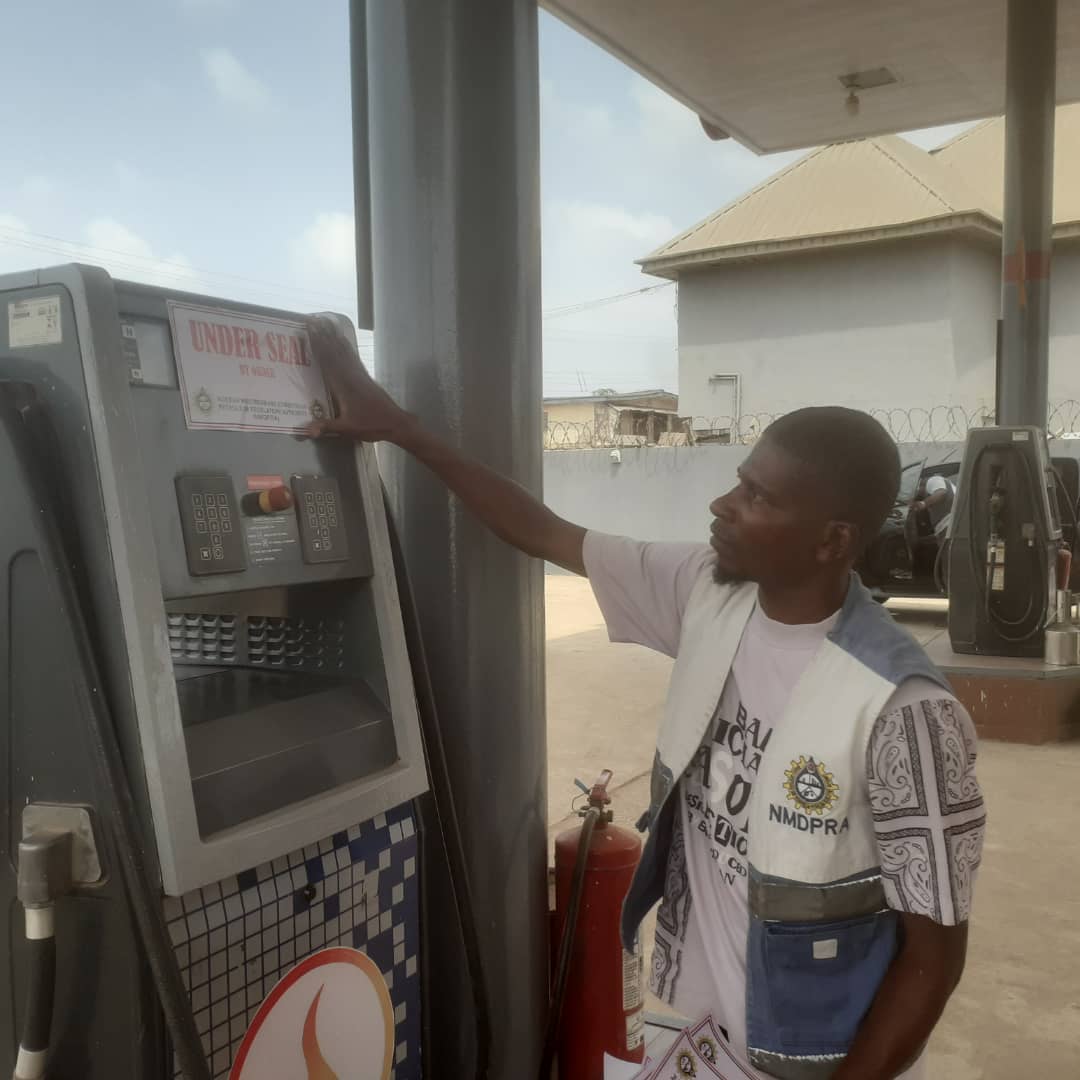
The challenge for the NMDPRA lies in defining and proving "excessive pricing" or "profiteering" in a deregulated environment where market forces are theoretically paramount. Marketers often cite procurement costs, foreign exchange rates, and operational expenses as justifications for their pricing. However, the observed asymmetry, where pump prices quickly rise with crude oil increases but are slow to fall when crude prices drop, suggests potential market inefficiencies or anti-competitive practices. The NMDPRA's enforcement mechanisms could include monitoring market conduct, investigating complaints of price manipulation or anti-competitive agreements, and imposing sanctions where violations of the PIA or competition laws are established. The Minister also specifically directed the NMDPRA to intensify monitoring to ensure consumers receive the correct quantity of fuel purchased at filling stations, addressing another form of consumer exploitation.
This regulatory push is not about re-introducing price controls but rather about ensuring that the deregulated market operates fairly and transparently. It requires the NMDPRA to develop clear benchmarks and methodologies for assessing what constitutes fair pricing, taking into account all legitimate cost components while preventing undue exploitation. The Authority's Chief Executive, Rabiu Umar, has reinforced this, stating that the objective is to create a regulatory environment characterized by certainty, predictability, transparency, and investor confidence, moving "beyond compliance" to ensure the law delivers results for both investors and consumers.
Conclusion
The Federal Government's directive to the NMDPRA marks a significant reinforcement of consumer protection principles within Nigeria's deregulated downstream petroleum sector. For legal practitioners advising oil marketers, the key takeaway is that deregulation does not grant absolute freedom from regulatory scrutiny. Marketers must understand that their pricing strategies and market conduct will be subject to increased oversight, particularly regarding transparency and responsiveness to global price fluctuations. Compliance with the letter and spirit of the Petroleum Industry Act 2021, which empowers the NMDPRA to prevent anti-competitive practices and consumer exploitation, is paramount.
Practitioners should advise clients to review their pricing models to ensure they are justifiable and reflect prevailing market realities, avoiding practices that could be construed as profiteering. Furthermore, robust internal compliance mechanisms, transparent reporting, and proactive engagement with the NMDPRA will be crucial to mitigate regulatory risks. The Authority's commitment to fostering regulatory certainty while protecting consumers means that businesses operating in this sector must demonstrate a clear commitment to fair market practices, as the government signals its intent to actively enforce the provisions of the PIA against any form of market abuse.
Citations
- 1.Petroleum Industry Act 2021
- 2.Federal Competition and Consumer Protection Act 2018
- 3.Advocaat Law Practice - Regulating Nigeria's Midstream and Downstream Sector: The Legal and Operational Mandate of the Nigerian Midstream and Downstream Petroleum Regulatory Authority under the Petroleum Industry Act, 2021
- 4.Mondaq - Regulating Nigeria's Midstream And Downstream Sector: The Legal And Operational Mandate Of The Nigerian Midstream And Downstream Petroleum Regulatory Authority Under The Petroleum Industry Act, 2021
- 5.NMDPRA - Regulations and Updates
- 6.Aluko & Oyebode - Commentary On The Nigerian Midstream And Downstream Petroleum Regulatory Authority (NMDPRA)
- 7.Devex - Midstream and Downstream Petroleum Regulatory Authority (Nigeria)
- 8.Champion Newspaper - Minister warns against profiteering under deregulation, demands exact fuel quantities for consumers
- 9.Olaniwun Ajayi LP - THE PETROLEUM INDUSTRY ACT, 2021
- 10.Lawyard - FCCPC Cracks Down on Petroleum Marketers: Profiteering Amidst Falling Crude Prices Faces Regulatory Scrutiny
- 11.DCSL Intranet Portal - petroleum industry act 2021
- 12.Scientific Research Publishing - Petroleum Industry Act (PIA) (2021)
- 13.Discovery Alert - Nigeria's Petrol Pricing Crackdown: Causes and Consumer Impact
- 14.Legit.ng - FCCPC Sends Strong Warning to Petrol Marketers Over Alleged Consumer Exploitation
- 15.Dentons - PIA 2021 A new dawn for the Nigerian petroleum industry
- 16.Businessday NG - NMDPRA increases gas price for strategic sectors
- 17.Reliance Infosystems - NMDPRA
- 18.Punch Newspapers - FG vows crackdown on fuel profiteering despite deregulation
- 19.allAfrica.com - Nigeria: Govt Orders Marketers to Reduce Fuel Price
- 20.Kemi Filani News - Nigerian govt orders marketers to reduce fuel price
- 21.Nigeria orders crackdown on petrol pricing as crude oil drops from $120 to $72/barrel
- 22.Legit.ng - FG Sends Strong Message to Marketers, Demand Immediate Petrol Price Reduction
- 23.LEADERSHIP Newspapers - Lokpobiri Orders NMDPRA To Curb Petrol Price Profiteering
- 24.Kemi Filani News - FG warns petrol marketers against profiteering, seeks reduction of prices
- 25.Labour24 - Nigerian Midstream & Downstream Petroleum Regulatory Authority (NMDPRA)
- 26.Aluko & Oyebode - Federal High Court affirms the power of the NMDPRA to impose statutory levies on import of petroleum products in Nigeria
- 27.The Nation Newspaper - FCCPC threatens sanction against petrol price profiteers
- 28.24 Law Chambers - The Refinery War and the Rule of Law: Competition, Monopoly, and the Soul of Nigeria's Downstream Petroleum Market
- 29.The Nation Newspaper - FCCPC threatens sanction against petrol price profiteers
- 30.LEADERSHIP Newspapers - Deregulation Not Licence For Profiteering, Lokpobiri Warns Industry
How does this affect your business?
Get an AI analysis of this article grounded in your jurisdictions, practice areas, and any policy documents you've uploaded to Wansom.