
Federal High Court Rejects NDC's Political Party Status
Abstract
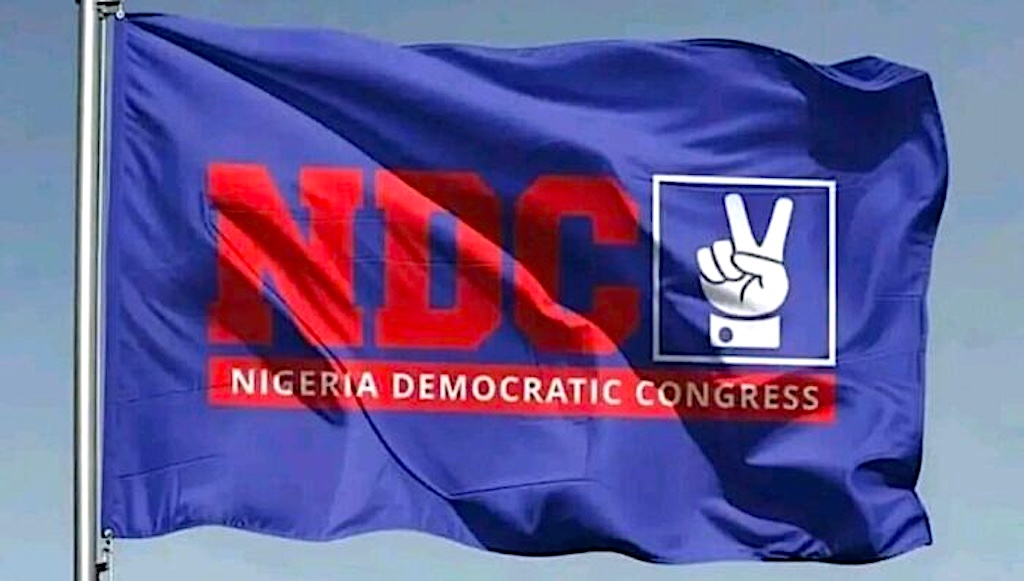
A Federal High Court in Lokoja, Nigeria, recently overturned its earlier judgment that had directed the Independent National Electoral Commission (INEC) to register the Nigeria Democratic Congress (NDC) as a political party. The court, presided over by Justice Isah Dashen, found the initial December 10, 2025, judgment to be "constitutionally defective" due to a lack of fair hearing. The decision stemmed from an application by the Peace Movement Party (PMP), which asserted its interest in the matter, particularly regarding the ownership of the logo used by the NDC. This ruling effectively reverses all actions taken by INEC in compliance with the previous judgment, including the NDC's registration and inclusion in electoral records, and mandates a fresh hearing with all necessary parties joined.
Introduction
In a significant development for Nigeria's political landscape, a Federal High Court sitting in Lokoja, Kogi State, has set aside its December 10, 2025, judgment that had compelled the Independent National Electoral Commission (INEC) to register the Nigeria Democratic Congress (NDC) as a political party. The ruling, delivered by Justice Isah Dashen on June 26, 2026, has far-reaching implications for political party formation and the principle of fair hearing in electoral jurisprudence.
The court's decision was predicated on the argument that the earlier judgment was "constitutionally defective" because it was rendered without affording all interested parties, specifically the Peace Movement Party (PMP), an opportunity to be heard. This omission, the court held, violated fundamental principles of justice and procedural fairness. The overturning of the judgment means that the NDC's registration and all subsequent actions taken by INEC in reliance on the initial order are now nullified, returning the parties to their pre-December 2025 status.
This article delves into the specifics of the court's reasoning, the statutory and constitutional framework governing political party registration in Nigeria, and the broader implications for political associations, INEC, and the integrity of the electoral process, particularly as the nation approaches the 2027 general elections.
Background
The registration of political parties in Nigeria is a process meticulously governed by the 1999 Constitution of the Federal Republic of Nigeria (as amended) and the Electoral Act. Sections 222 to 224 of the Constitution outline the foundational requirements for political associations to be recognised as political parties, including provisions for their constitution, rules, and aims. Complementing these constitutional provisions, the Electoral Act 2026, which updated the 2022 Act, empowers INEC to register political parties and sets out detailed eligibility criteria and application procedures.
Notably, the Electoral Act 2026 introduced stricter regulatory requirements for party registration. These include significantly higher financial thresholds, such as a fixed non-refundable registration fee of ₦50,000,000, and enhanced oversight mechanisms, including the mandatory submission of digital registers with biometric details like National Identification Numbers (NIN) and photographs of members. These amendments aim to improve accuracy and reduce the use of fake or inflated membership lists, thereby strengthening the integrity of the party registration process.
Prior to the current ruling, the Federal High Court in Lokoja had, on December 10, 2025, ordered INEC to register the Nigeria Democratic Congress (NDC). Following this order, the NDC proceeded with various political activities, including digital membership registration, holding congresses, and nominating candidates for the 2027 elections, with prominent figures like Peter Obi and Rabiu Kwankwaso joining its ranks. However, this initial judgment was challenged by the Peace Movement Party (PMP), which claimed its rights were adversely affected, particularly concerning the logo used by the NDC for its registration.
Analysis
Justice Isah Dashen's ruling to set aside the earlier judgment hinged primarily on the violation of the principle of fair hearing, a cornerstone of natural justice. The court found that the Peace Movement Party (PMP) was a necessary party to the original suit and that its interests were directly affected by the judgment compelling INEC to register the NDC. The PMP successfully demonstrated that the NDC's registration was based on a logo that the PMP had previously submitted to INEC, a material fact that was not disclosed or considered during the initial proceedings.
The court explicitly stated that the December 10, 2025, judgment was "constitutionally defective" and a "nullity" because it was delivered without hearing from all interested parties. This underscores the judiciary's commitment to ensuring that all parties whose rights or interests may be affected by a court's decision are given an opportunity to present their case. The ruling effectively mandates a return to the status quo ante, meaning the situation as it existed before the December 2025 judgment.
Consequently, all actions taken by INEC in compliance with the vacated judgment, including the issuance of a certificate of registration to the NDC, its inclusion in INEC's records, and any appearance on ballot papers, must be withdrawn. The substantive case concerning the NDC's registration is now to be heard afresh, with INEC, PMP, and NDC all joined as parties to ensure a comprehensive and fair determination of the issues in dispute.
The NDC, through its National Chairman, Moses Zuwoghe, expressed surprise at the ruling and indicated its intention to challenge the decision at the Court of Appeal. The party argued that the PMP was not a registered political party and therefore unknown to them. This aspect of the case highlights potential complexities surrounding the standing of unregistered associations to challenge the registration of others, a point that may be further litigated on appeal.
This case also brings into focus the evolving regulatory environment for political parties under the Electoral Act 2026. While the Act aims to streamline and strengthen the registration process, judicial review remains a critical safeguard against administrative overreach or procedural irregularities. The emphasis on fair hearing and the proper joinder of parties reinforces the judiciary's role in upholding constitutional principles within the electoral framework.
Conclusion
The Federal High Court's decision to overturn the judgment recognising the Nigeria Democratic Congress as a political party serves as a crucial reminder of the inviolability of the fair hearing principle in Nigerian jurisprudence. For practising attorneys, this case underscores the critical importance of conducting thorough due diligence to identify and join all necessary parties in any legal action, particularly those with potential implications for public institutions like INEC or the rights of other associations. Failure to do so, as demonstrated here, can lead to the nullification of judgments, regardless of their initial pronouncements.
Looking ahead, legal professionals should closely monitor the fresh hearing of the substantive suit, as its outcome will further clarify the parameters for political party registration and the interpretation of relevant constitutional and electoral provisions. The NDC's stated intention to appeal the decision also suggests that higher courts may soon weigh in on these complex issues, potentially shaping future electoral practices and the landscape of political party formation in Nigeria. This case reinforces the need for meticulous adherence to procedural rules and a comprehensive understanding of the legal framework governing political activities in the country.
Citations
- 1.Constitution of the Federal Republic of Nigeria 1999 (as amended)
- 2.Electoral Act 2026
- 3.Federal High Court, Lokoja Division, Judgment of June 26, 2026, per Justice Isah Dashen (Nigeria Democratic Congress v. Independent National Electoral Commission & Peace Movement Party)
- 4.ICIR Nigeria, "Court overturns judgment recognising NDC as political party," June 26, 2026.
- 5.NaijaTrend, "Court Overturns Judgment Recognising NDC As Political Party," June 26, 2026.
- 6.Premium Times Nigeria, "Court overturns judgment recognising NDC as political party," June 26, 2026.
- 7.Premium Times Nigeria, "NDC reacts to court ruling nullifying its registration," June 26, 2026.
- 8.TraceNews, "BREAKING: Court overturns judgment recognising NDC as political party," June 26, 2026.
- 9.The ICIR, "Court overturns judgment recognising Nigeria Democratic Congress (NDC) as political party," June 26, 2026.
- 10.Situation Room, "WHAT CITIZENS NEED TO KNOW ABOUT THE ELECTORAL ACT 2026,"
- 11.Policy and Legal Advocacy Centre, "Electoral Act Series - Part 5 REGISTRATION OF POLITICAL PARTIES AND JUDICIAL SAFEGUARDS," March 1, 2026.
- 12.Businessday NG, "NDC unveils digital membership registration portal," March 18, 2026.
- 13.YouTube, "NDC Registration Row Grows After Obi, Kwankwaso Defection," May 5, 2026.
- 14.Wikipedia, "Nigeria Democratic Congress,"
- 15.Why Court Voided Earlier Judgment Ordering INEC To Register NDC As Political Party, June 27, 2026.
How does this affect your business?
Get an AI analysis of this article grounded in your jurisdictions, practice areas, and any policy documents you've uploaded to Wansom.