
Federal High Court Rejects NDC's Registration Bid
Abstract
A recent judgment by the Federal High Court, Lokoja Judicial Division, has set aside its earlier order that compelled the Independent National Electoral Commission (INEC) to register the Nigeria Democratic Congress (NDC). Delivered by Hon. Justice Isa H. Dashen, the ruling effectively reverts the NDC's status to unregistered, pending a fresh hearing of the substantive suit. The court found that the previous judgment, dated December 10, 2025, was obtained without joining the Peace Movement Party (PMP), which claimed ownership of the logo used by the NDC, thereby violating PMP's right to a fair hearing. This development underscores the judiciary's role in upholding due process in political party regulation and highlights the ongoing legal complexities surrounding party registration and deregistration in Nigeria.
Introduction
The landscape of political party regulation in Nigeria has once again been reshaped by a significant judicial pronouncement. The Federal High Court, Lokoja Judicial Division, presided over by Hon. Justice Isa H. Dashen, recently issued a Certified True Copy of its judgment setting aside an earlier order that mandated the Independent National Electoral Commission (INEC) to register the Nigeria Democratic Congress (NDC). This decision, which effectively places the NDC's registration status in abeyance, has far-reaching implications for the party and the broader framework governing political associations in the country.
The ruling is particularly noteworthy as it stems from a procedural flaw in the initial registration process, specifically the non-joinder of a party whose rights were directly affected. The court's emphasis on the fundamental principle of fair hearing in setting aside its own prior judgment highlights the judiciary's commitment to due process, even in matters of electoral politics. This article will delve into the background of political party regulation in Nigeria, analyze the specifics of this judgment, and discuss its potential ramifications for political parties, INEC, and legal practitioners.
Background
The Independent National Electoral Commission (INEC) is constitutionally empowered to register and regulate political parties in Nigeria. This power is primarily derived from the Constitution of the Federal Republic of Nigeria, 1999 (as amended), particularly Section 225A, which outlines the conditions for the continued existence of political parties. These conditions include specific electoral performance thresholds, such as winning a certain percentage of votes in presidential or governorship elections, or securing elective seats at various levels of government.
The Electoral Act, 2022, further elaborates on the regulatory framework for political parties, reinforcing the constitutional provisions regarding registration and deregistration. Historically, the issue of political party deregistration has been contentious, leading to numerous legal challenges. However, the Supreme Court of Nigeria has consistently affirmed INEC's constitutional authority to deregister parties that fail to meet the prescribed criteria, as seen in cases such as *National Unity Party (NUP) & Anor v. Independent National Electoral Commission (INEC)*. This legal backdrop establishes a clear mandate for INEC to ensure that only viable and compliant political parties participate in the electoral process.
Analysis
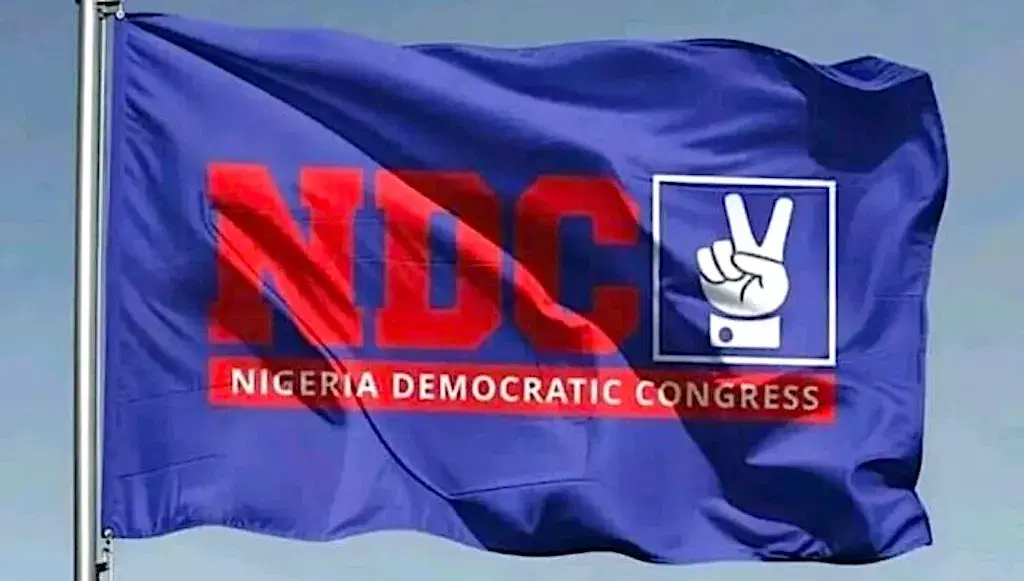
The Federal High Court's decision in Lokoja, delivered by Justice Isa H. Dashen, specifically addressed the registration of the Nigeria Democratic Congress (NDC). The court set aside its earlier judgment of December 10, 2025, which had compelled INEC to register the NDC. The crux of the new ruling was the finding that the Peace Movement Party (PMP), which asserted ownership over the logo adopted by the NDC, was not made a party to the original suit. This omission, according to the court, constituted a breach of PMP's fundamental right to a fair hearing, rendering the initial judgment null and void.
The court's decision to restore all parties to the status quo ante bellum, meaning their positions before the December 10, 2025 judgment, signifies a procedural reset. It mandates a fresh hearing of the substantive suit, with INEC, the NDC, and the PMP all joined as necessary parties. This highlights the judiciary's role in ensuring that all interested parties are afforded an opportunity to be heard, particularly when their legal rights or interests are directly impacted by a court's decision. The NDC, while acknowledging the setting aside of the registration order, has indicated its intention to appeal, arguing that the ruling did not amount to a formal deregistration but rather a procedural rectification.
This case, while distinct in its procedural grounds, resonates with other recent Federal High Court judgments concerning political party deregistration. For instance, courts have recently ordered the deregistration of several other political parties, including the African Democratic Congress (ADC), Action Alliance (AA), Action Peoples Party (APP), Accord Party, and Zenith Labour Party (ZLP), based on their failure to meet the electoral performance thresholds stipulated in Section 225A of the Constitution. These parallel developments underscore a judicial trend towards enforcing the constitutional and statutory requirements for political party existence, aiming to streamline the electoral process and ensure the viability of registered parties. The NDC case, however, introduces the critical element of procedural fairness and the imperative of joining all necessary parties in litigation affecting their rights.
Conclusion
The Federal High Court's judgment concerning the Nigeria Democratic Congress serves as a crucial reminder to legal practitioners of the paramount importance of procedural regularity and the fair hearing principle in all litigation, particularly in the sensitive realm of electoral law. For political parties, this ruling underscores the need for meticulous adherence to legal requirements, not only in meeting performance thresholds but also in ensuring that their registration processes are free from procedural infirmities that could lead to subsequent nullification.
Practitioners advising political parties must conduct thorough due diligence, especially regarding party symbols and names, to preempt potential conflicts with existing entities. Furthermore, the case signals that INEC, while possessing constitutional powers to regulate parties, operates within a judicial oversight framework that prioritizes fair process. As the NDC prepares its appeal, and the substantive suit awaits a fresh hearing, the outcome will undoubtedly further shape the jurisprudence on political party regulation in Nigeria, making it a development to watch closely for all stakeholders in the nation's democratic process.
Citations
- 1.Constitution of the Federal Republic of Nigeria, 1999 (as amended)
- 2.Electoral Act, 2022
- 3.National Unity Party (NUP) & Anor v. Independent National Electoral Commission (INEC) (Supreme Court decision, 2021)
How does this affect your business?
Get an AI analysis of this article grounded in your jurisdictions, practice areas, and any policy documents you've uploaded to Wansom.