
Federal High Court Rejects NDC's Registration, INEC Mandated Not to Recognise
Abstract
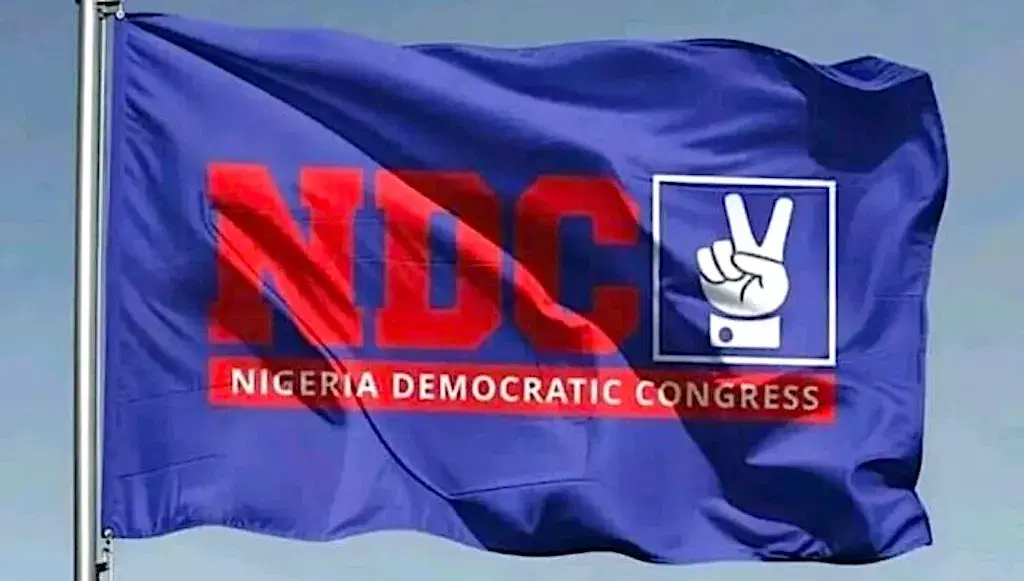
The Nigeria Democratic Congress (NDC) has appealed a recent Federal High Court judgment delivered in Lokoja on June 26, 2026, which set aside an earlier order mandating the Independent National Electoral Commission (INEC) to recognise the NDC as a political party. The court's decision, stemming from an application by the Peace Movement Party (PMP), found the initial registration order constitutionally defective due to a lack of fair hearing for a necessary party and alleged logo infringement. This development reignites critical legal debates surrounding INEC's powers of party registration and deregistration, the constitutional right to fair hearing, and the procedural requirements for pre-election litigation in Nigeria, particularly in light of the recently issued Federal High Court (Pre-Election) Practice Directions, 2026.
Introduction
The landscape of political party recognition in Nigeria has once again been stirred by a significant judicial pronouncement. On June 26, 2026, the Federal High Court sitting in Lokoja delivered a judgment that set aside its earlier order, which had compelled the Independent National Electoral Commission (INEC) to register the Nigeria Democratic Congress (NDC) as a political party. This ruling effectively mandates INEC not to recognise the NDC until all legal issues surrounding its status are definitively resolved. The NDC, asserting its continued legal recognition, has promptly lodged an appeal against this judgment, signaling a protracted legal battle ahead.
This case underscores the intricate interplay between constitutional provisions, electoral statutes, and judicial review in shaping Nigeria's multi-party democracy. The core of the dispute revolves around the powers of INEC to register and deregister political parties, the fundamental right to fair hearing, and the procedural integrity of pre-election matters. For legal practitioners, the judgment and subsequent appeal offer crucial insights into the evolving jurisprudence on electoral law, particularly concerning the requirements for party formation and the implications of procedural lapses in litigation.
The present article will delve into the background of political party regulation in Nigeria, analyse the Federal High Court's decision and its implications, and discuss the potential ramifications of the NDC's appeal. It aims to provide a comprehensive overview for legal professionals navigating the complexities of electoral law and party politics in the country.
Background
The legal framework governing the formation, registration, and continued existence of political parties in Nigeria is primarily enshrined in the 1999 Constitution of the Federal Republic of Nigeria (as amended) and the Electoral Act, 2022. Section 221 of the Constitution prohibits any association, other than a political party, from canvassing for votes or contributing to elections. Sections 222 to 229 detail the restrictions on party formation, requirements for party constitutions and rules, aims and objectives, and finances.
A pivotal amendment, Section 225A, introduced by the Fourth Alteration Act, 2017, empowers INEC to deregister political parties under specific circumstances. These include a breach of any registration requirements, failure to win at least twenty-five percent of votes cast in one state in a Presidential election or one local government area in a Governorship election, or failure to win at least one seat in the National Assembly, State House of Assembly, or a local government council. The Electoral Act, 2022, further elaborates on INEC's powers to register political parties that comply with constitutional and statutory provisions, and outlines the process for application and acknowledgment.
INEC's exercise of its deregistration powers has been consistently challenged in courts, leading to significant judicial pronouncements. Notably, the Supreme Court has, on several occasions, affirmed INEC's constitutional authority to deregister political parties that fail to meet the prescribed conditions. For instance, in May 2021, the Supreme Court upheld the deregistration of the National Unity Party (NUP) and 73 other parties, affirming that INEC acted in line with the Constitution and Electoral Act. Similarly, in March 2022, the apex court upheld the deregistration of 22 political parties, reversing a Court of Appeal decision that had nullified INEC's action. These precedents establish a clear judicial recognition of INEC's mandate in regulating the political party landscape.
Analysis
The recent Federal High Court judgment in Lokoja, delivered by Justice Isah Dashen on June 26, 2026, represents a critical development in the ongoing legal saga surrounding the Nigeria Democratic Congress (NDC). The court set aside its earlier judgment of December 2025, which had directed INEC to register the NDC. The primary grounds for setting aside the earlier judgment were that it was "constitutionally defective" due to the failure to hear from all relevant parties, specifically the Peace Movement Party (PMP), which was deemed a necessary party to the suit. The court also found that material facts were suppressed during the initial proceedings and ordered INEC to deregister the NDC over alleged logo infringement.
This ruling strongly emphasizes the fundamental principle of *audi alteram partem* (hear the other side), a cornerstone of natural justice and fair hearing enshrined in Section 36 of the 1999 Constitution. The Federal High Court's Pre-Election Practice Directions, 2026, which came into effect on June 29, 2026, further underscore the importance of joining all necessary parties in pre-election matters to ensure effective and effectual determination. The court's decision to nullify the previous registration order due to the absence of a necessary party aligns with established judicial practice that a judgment obtained without affording a fair hearing to all interested parties is liable to be set aside as a nullity.
The allegation of logo infringement, leading to the order for deregistration, introduces another layer of complexity. While Section 225A of the Constitution outlines grounds for deregistration based on electoral performance or breach of registration requirements, the specific issue of logo infringement highlights the detailed scrutiny applied to party identity and compliance with regulatory standards. The NDC's immediate appeal, insisting on its continued legal recognition and participation in recent bye-elections, suggests a challenge to both the procedural propriety of the Lokoja judgment and the substantive grounds for its deregistration. This appeal will likely test the appellate courts' interpretation of "necessary party" in the context of party registration disputes and the scope of judicial intervention in INEC's administrative functions, especially when a party's existence is directly impacted by a court order.
Previous Supreme Court decisions, such as those affirming INEC's power to deregister parties for poor electoral performance, have largely focused on substantive compliance with constitutional thresholds. However, the NDC case brings to the fore procedural fairness and the rights of other entities (like the PMP) whose interests might be affected by a party's registration. The outcome of the appeal will provide further clarity on the balance between INEC's regulatory autonomy, the rights of political associations, and the imperative of fair judicial process.
Conclusion
The Federal High Court's judgment in Lokoja, setting aside the NDC's registration, and the subsequent appeal by the NDC, present a crucial juncture for Nigeria's electoral jurisprudence. For legal practitioners, this case underscores the paramount importance of meticulous adherence to procedural rules in pre-election litigation, particularly concerning the identification and joinder of all necessary parties. The emphasis on fair hearing, as highlighted by Justice Dashen, serves as a potent reminder that even seemingly administrative matters like party registration can be vitiated by procedural defects.
Practitioners advising political associations on registration or challenging deregistration must conduct thorough due diligence, not only on substantive compliance with constitutional and electoral act requirements but also on potential third-party interests that could impact the validity of registration. The NDC's appeal will be closely watched for its potential to clarify the scope of judicial review over INEC's powers, the interpretation of "necessary party" in such contexts, and the implications of alleged logo infringement on a party's legal status. The final determination will undoubtedly shape the future landscape of political party formation and regulation in Nigeria, reinforcing the need for robust legal strategies in an increasingly litigious electoral environment.
Citations
- 1.1999 Constitution of the Federal Republic of Nigeria (as amended)
- 2.Electoral Act, 2022
- 3.Constitution of the Federal Republic of Nigeria, 1999 (Fourth Alteration, No. 9) Act, 2017
- 4.Federal High Court (Pre-Election) Practice Directions, 2026
- 5.Supreme Court upholds INEC's deregistration of 74 political parties - Punch Newspapers (May 07 2021)
- 6.INEC's Power To Deregister Political Parties Affirmed By Supreme Court – PLAC Legist (May 11 2021)
- 7.NDC rejects Court ruling, says party remains registered - Realnews Magazine (June 26 2026)
- 8.INEC's Power to Deregister Political Parties: A Constitutional Perspective - Visio Talks (June 17 2026)
- 9.Supreme Court upholds INEC's deregistration of 22 political parties - Premium Times (March 25 2022)
- 10.Nigeria Democratic Congress - Wikipedia
- 11.Deregistration of political parties: Reasons Supreme Court reversed self (May 12 2021)
- 12.An Overview of the Electoral Act, 2022 - RSIS International (June 20 2023)
- 13.(DOC) JURISDICTION OF COURT: THE POSITION OF THE LAW IN PRE- ELECTION MATTERS IN NIGERIA - Academia.edu
- 14.Court Orders INEC to Deregister ADC, Accord, Others for Failing Constitutional Requirements - Nigerian Democratic Report (June 15 2026)
- 15.Section 75 - Electoral Act 2022 - PLAC
- 16.Court overturns judgment recognising NDC as political party - Premium Times Nigeria (June 26 2026)
- 17.FHC Unveils Fresh Guidelines for Faster Resolution of Election Cases - YouTube (July 01 2026)
- 18.Why Court Voided Earlier Judgment Ordering INEC To Register NDC As Political Party (June 27 2026)
- 19.NDC reacts to court ruling nullifying its registration - Premium Times Nigeria (June 26 2026)
How does this affect your business?
Get an AI analysis of this article grounded in your jurisdictions, practice areas, and any policy documents you've uploaded to Wansom.