
Former spy master Maj Gen Birungi remanded over ‘cooking up’ terror intelligence
Abstract
Major General James Birungi, former Director of Uganda's Chieftaincy of Military Intelligence (CMI), now known as the Directorate of Intelligence and Security (DIS), has been remanded by the General Court Martial on charges of treachery and offences relating to security. He is accused of fabricating terror intelligence, including false reports on counterfeit fuel and suspected suicide bombers, allegedly to fraudulently obtain government funds. The high-profile case, heard by a panel chaired by Brigadier General Richard Tukacungurwa, marks a significant development in military justice and intelligence accountability in Uganda, particularly as Maj Gen Birungi was previously listed as a state witness in a prominent treason trial. The charges carry severe penalties, including the possibility of a death sentence upon conviction.
Introduction
A significant legal development has unfolded within Uganda's military justice system, with Major General James Birungi, a former high-ranking intelligence chief, being remanded on serious charges before the General Court Martial. Maj Gen Birungi, who previously served as the Director of the Chieftaincy of Military Intelligence (CMI) – an agency since rebranded as the Directorate of Intelligence and Security (DIS) – faces accusations of treachery and offences relating to security. These charges stem from allegations that he "cooked up" terror intelligence, specifically generating false reports concerning counterfeit fuel and suspected suicide bombers, purportedly to facilitate the fraudulent acquisition of state funds.
The arraignment of such a senior military officer on charges of this nature underscores a critical moment for accountability within Uganda's security apparatus. The proceedings, which saw Maj Gen Birungi appear before a panel chaired by Brigadier General Richard Tukacungurwa, have drawn considerable attention, not least because of the gravity of the offences, which carry potential death sentences. This article will delve into the legal framework underpinning these charges, the jurisdiction of the General Court Martial, and the broader implications for military intelligence operations and justice in Uganda.
Background
The legal framework governing military personnel and their conduct in Uganda is primarily enshrined in the Uganda Peoples' Defence Forces Act, 2005. This Act establishes the military justice system, including the General Court Martial (GCM), which serves as the highest military tribunal within the Uganda Peoples' Defence Forces (UPDF). Established under Section 197 of the Act, the GCM possesses unlimited original jurisdiction to adjudicate serious offences committed by military personnel. Its mandate extends to ensuring discipline and operational effectiveness within the armed forces, with its decisions subject to appeal to the Court Martial Appeal Court.
Maj Gen Birungi's charges of treachery and offences relating to security fall under specific provisions of the Uganda Peoples' Defence Forces Act, 2005. Section 129 of the Act addresses treachery, while Section 130 covers offences relating to security. These are among the most severe offences under military law, reflecting the critical importance of loyalty and integrity within the armed forces, particularly for those in sensitive intelligence roles. The Chieftaincy of Military Intelligence (CMI), which Maj Gen Birungi once headed, was a key intelligence arm of the UPDF, responsible for gathering and disseminating military intelligence. In April 2024, the UPDF rebranded CMI to the Directorate of Intelligence and Security (DIS), as part of a broader force establishment and nomenclature change.
Analysis
The charges against Maj Gen James Birungi — treachery and offences relating to security — are particularly grave under Ugandan military law, attracting penalties that can include the death sentence. While the specific details of the charge sheet have not been publicly disclosed, reports indicate that the allegations center on the fabrication of intelligence reports concerning counterfeit fuel and suspected suicide bombers, purportedly to defraud the state. Such actions, if proven, would constitute a profound breach of trust and a direct threat to national security, undermining the very foundation of intelligence operations.
The jurisdiction of the General Court Martial over Maj Gen Birungi, as a serving military officer, is clear under the Uganda Peoples' Defence Forces Act, 2005. However, the case presents a unique legal paradox: Maj Gen Birungi was previously listed as a state witness in a high-profile treason case involving opposition politician Dr. Kizza Besigye and others. This development raises significant questions regarding witness credibility and the integrity of intelligence-led prosecutions, particularly where the reliability of intelligence itself is now under scrutiny. The prosecution of a former intelligence chief for allegedly manufacturing intelligence could potentially impact the evidentiary weight and public perception of other cases that relied on intelligence gathered during his tenure.
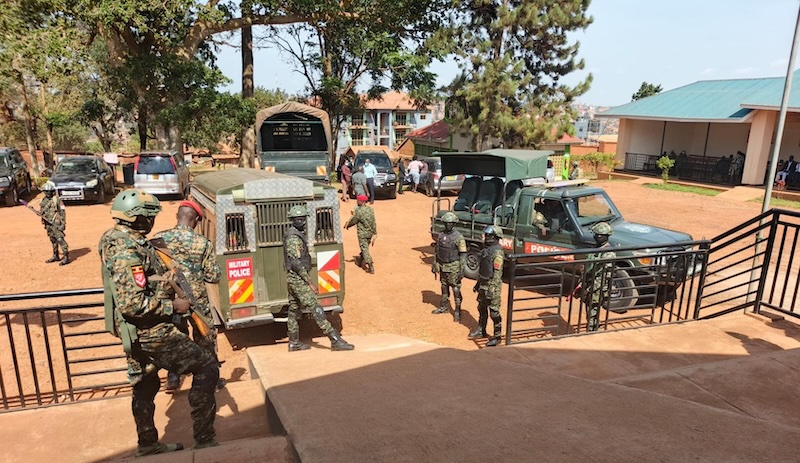
Furthermore, the case highlights the ongoing challenges of accountability within intelligence agencies. Allegations of misuse of intelligence for personal gain or political manipulation are not new in the region, and this prosecution signals a potential effort to address such concerns. The restriction of media access during the proceedings, with journalists barred from photographing or reporting from inside the courtroom, also raises questions about transparency, a common concern in national security cases. The remand of Maj Gen Birungi alongside three other officers facing separate murder charges related to security operations further complicates the narrative, suggesting a broader investigation into alleged misconduct within the UPDF's operational and intelligence wings.
Conclusion
The remand of Maj Gen James Birungi on charges of treachery and offences relating to security marks a pivotal moment for military justice and intelligence oversight in Uganda. For legal practitioners, this case underscores the severe consequences associated with breaches of military law, particularly for high-ranking officers in sensitive national security roles. The allegations of fabricating intelligence to defraud the state highlight the critical need for robust internal controls and accountability mechanisms within intelligence agencies. The intersection of this case with the ongoing treason trial where Maj Gen Birungi was a state witness creates a complex legal landscape, potentially influencing future considerations of witness credibility and the admissibility of intelligence-derived evidence.
Practitioners should closely monitor the proceedings of the General Court Martial, as the outcome could set important precedents regarding the prosecution of senior military officials and the standards of conduct expected within Uganda's intelligence community. This case serves as a stark reminder of the inherent risks and responsibilities associated with intelligence work and the unwavering commitment to national security that military law demands. The continued scrutiny of the military justice system's ability to impartially handle such high-profile cases will be crucial in upholding the rule of law and fostering public confidence in Uganda's security institutions.
Citations
- 1.Uganda Peoples' Defence Forces Act, 2005
- 2.Section 129, Uganda Peoples' Defence Forces Act, 2005
- 3.Section 130, Uganda Peoples' Defence Forces Act, 2005
- 4.Section 197, Uganda Peoples' Defence Forces Act, 2005