
Four Charged with Manslaughter Over Fatal South C Building Collapse
Abstract
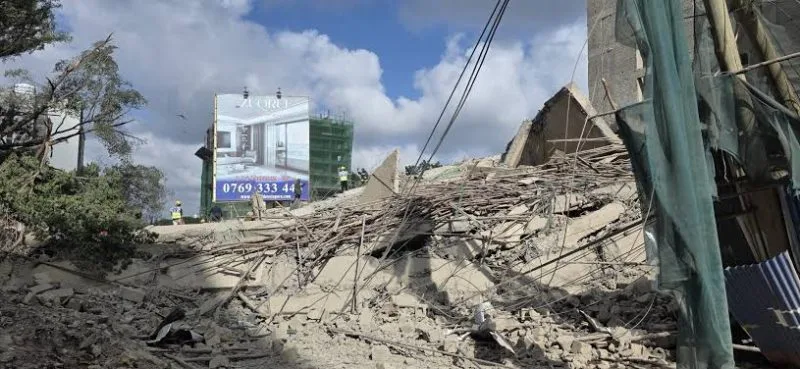
Four individuals have been charged with manslaughter following a fatal building collapse in South C, Nairobi, on November 4, 2023. The prosecution alleges that the accused knowingly uploaded a forged approval document to the National Construction Authority's Online Projects Registration System, directly implicating fraudulent practices in regulatory compliance. This development underscores a heightened focus by Kenyan authorities on criminal accountability for negligence and deceit within the construction sector, signaling severe consequences for professionals and developers who circumvent established safety and approval protocols.
Introduction
The tragic collapse of a building in Nairobi's South C area on November 4, 2023, has led to significant legal repercussions, with four individuals now facing manslaughter charges. Central to the prosecution's case is the allegation that the accused knowingly uploaded a forged approval document to the National Construction Authority's (NCA) Online Projects Registration System. This incident is not merely another building collapse; it represents a critical juncture in Kenya's efforts to enforce construction standards and combat corruption within the industry. The charges highlight the severe criminal liability that can attach to professionals and developers for negligence and fraudulent practices, particularly when they undermine the integrity of regulatory processes. This article will delve into the legal framework governing construction and criminal liability in Kenya, analyze the implications of these charges, and discuss the broader impact on legal practitioners and the construction sector.
Background
The legal landscape governing construction and criminal liability in Kenya is multifaceted, drawing from both criminal statutes and specific regulatory frameworks. Manslaughter, as defined under Sections 202 and 205 of the Penal Code (Cap 63, Laws of Kenya), occurs when a person, by an unlawful act or omission, causes the death of another. An unlawful omission, in this context, is one amounting to culpable negligence in discharging a duty tending to the preservation of life or health. The punishment for manslaughter can be imprisonment for life.
Overlaying this criminal statute is the regulatory architecture of the construction industry. The National Construction Authority (NCA), established by the National Construction Authority Act, 2011 (Act No. 41 of 2011), plays a pivotal role in overseeing and regulating the sector. Its functions include the registration and accreditation of contractors, promoting quality control, setting construction standards, conducting inspections, and enforcing compliance. Section 15 of the NCA Act mandates that no person shall carry on the business of a contractor without being registered by the Board, and projects must also be registered with the Authority. Concurrently, the Physical and Land Use Planning Act, 2019, which repealed the earlier Physical Planning Act of 1996, governs the planning, use, regulation, and development of land. County governments, under this Act, are responsible for development control and issuing development permissions for building plans, with criminal sanctions for undertaking development without prior permission. These legal and regulatory instruments collectively aim to ensure public safety and structural integrity in a country that has unfortunately witnessed frequent building collapses, often attributed to poor workmanship, substandard materials, and systemic corruption in the approval and inspection processes.
Analysis
The prosecution's decision to charge four individuals with manslaughter in the South C building collapse case hinges on establishing that their actions or omissions constituted an unlawful act or culpable negligence leading to death. Specifically, the allegation of knowingly uploading a forged approval document to the National Construction Authority's (NCA) Online Projects Registration System is central to proving this culpability. This act, if proven, would not only violate the NCA Act, 2011, which mandates proper registration and adherence to standards, but could also constitute offences such as making a false document and uttering a false document under the Penal Code.
The 'unlawful act or omission' element of manslaughter under Section 202 of the Penal Code is likely to be satisfied by the alleged use of forged documents, which directly undermines the regulatory safeguards designed to prevent structural failures. The 'knowingly uploaded' aspect is crucial for establishing the requisite *mens rea* for criminal liability, indicating an awareness of the illegality and potential risks associated with circumventing the legitimate approval process. The NCA's online system, intended to enhance transparency and efficiency in project registration, becomes a critical site for alleged fraudulent activity, highlighting vulnerabilities in digital regulatory platforms.
This case extends beyond the immediate perpetrators of the alleged forgery. Reports indicate that other public officials are also facing charges of abuse of office and neglect of official duty in connection with the project's approval and oversight. This broader scope of charges underscores a systemic approach by the Director of Public Prosecutions (DPP) to hold accountable all parties involved in the construction chain, from developers and professionals to regulatory officers. Previous cases, such as *Justus Mwenda Kathenge v Director of Public Prosecutions* [2014], where a senior planner faced manslaughter charges, and the jailing of a building owner after the 2016 Huruma collapse, demonstrate a precedent for criminal liability in such incidents. However, the prosecution will face the challenge of meticulously demonstrating the causal link between the forged document, the structural deficiencies that led to the collapse, and the resulting deaths, as well as proving the specific culpable negligence of each accused individual. The outcome will undoubtedly influence how regulatory compliance and professional ethics are viewed and enforced within Kenya's rapidly expanding construction sector.
Conclusion
The ongoing prosecution of four individuals for manslaughter over the South C building collapse, particularly the focus on the alleged use of forged approval documents, sends a strong message across Kenya's construction industry. For legal practitioners, this case serves as a stark reminder of the severe personal criminal liability that can arise from non-compliance with regulatory frameworks and engagement in fraudulent practices. Attorneys advising developers, contractors, architects, and engineers must emphasize the critical importance of rigorous due diligence in securing and verifying all necessary regulatory approvals, ensuring the authenticity of all submitted documentation, and adhering strictly to the provisions of the National Construction Authority Act, 2011, and the Physical and Land Use Planning Act, 2019.
The outcome of this case will be closely monitored, as it has the potential to set a significant precedent for criminal accountability in the event of building failures linked to forged documents and regulatory circumvention. It is anticipated that this prosecution will lead to increased scrutiny by the NCA and county governments, potentially resulting in more stringent enforcement measures and a demand for enhanced integrity in the online project registration systems. Legal professionals are therefore urged to proactively guide their clients in establishing robust compliance frameworks and internal controls to mitigate the risks associated with fraudulent documentation and ensure adherence to the highest standards of safety and legality in all construction projects.
Citations
- 1.Penal Code (Cap 63, Laws of Kenya)
- 2.National Construction Authority Act, 2011 (Act No. 41 of 2011)
- 3.Physical and Land Use Planning Act, 2019
- 4.Justus Mwenda Kathenge v Director of Public Prosecutions [2014] eKLR
How does this affect your business?
Get an AI analysis of this article grounded in your jurisdictions, practice areas, and any policy documents you've uploaded to Wansom.