
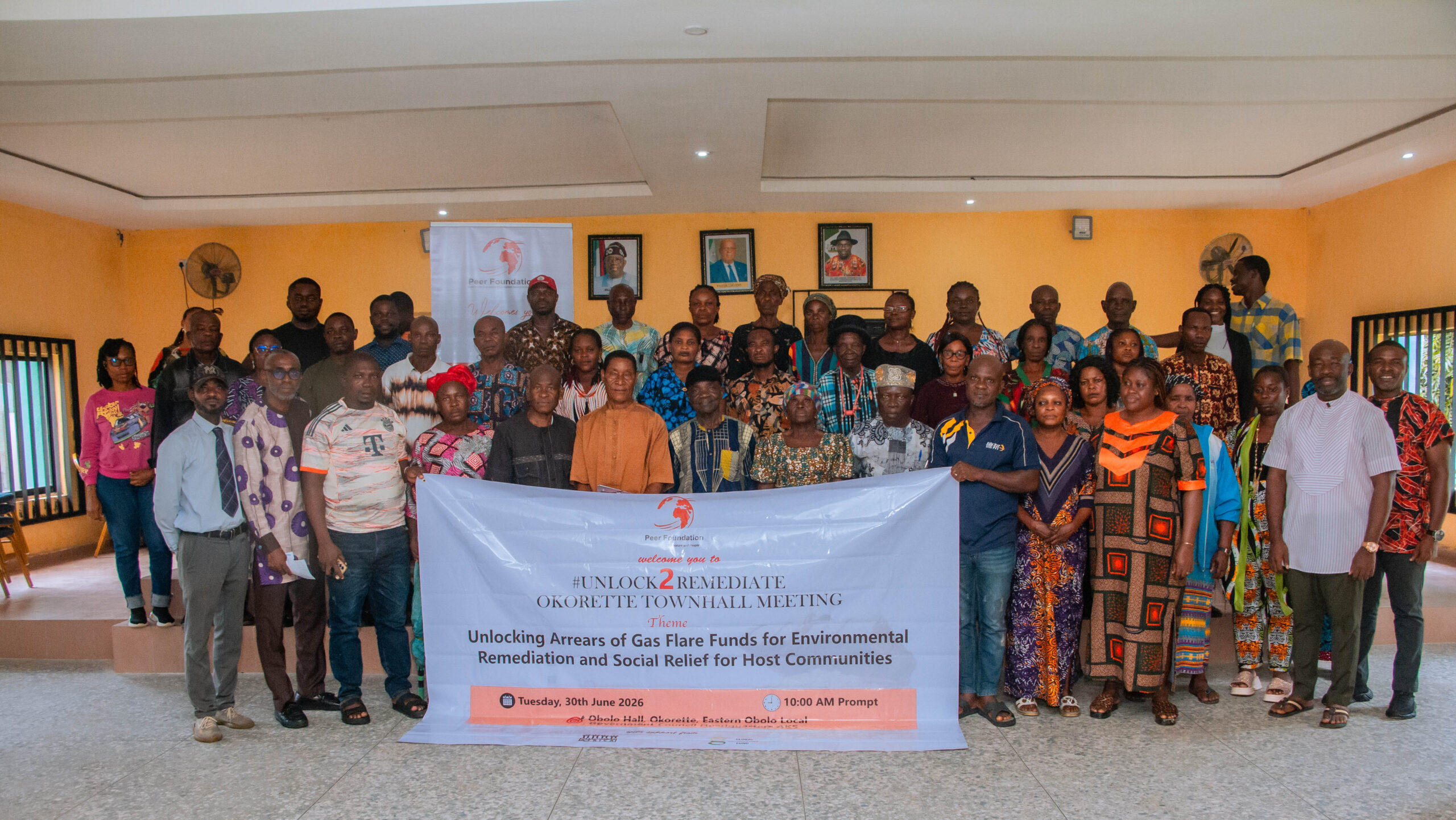
Gas Flare: Foundation trains Akwa Ibom oil community on how to demand environmental remediation
Abstract
Gas flaring, a pervasive issue in Nigeria's oil-rich Niger Delta, continues to inflict severe environmental degradation and health hazards on host communities. Despite a robust legal framework designed to curb this practice and provide for remediation, many communities remain unaware of their legal rights and the mechanisms available to demand environmental restoration and compensation. This article examines the evolving Nigerian legal landscape governing gas flaring, including the Petroleum Industry Act 2021 and relevant environmental regulations, alongside landmark judicial pronouncements that affirm environmental rights as fundamental human rights. It highlights the critical role of legal literacy and community empowerment in enabling affected populations, such as those in Akwa Ibom, to effectively advocate for the enforcement of environmental laws and the proper utilisation of gas flare funds earmarked for their relief.
Introduction
The persistent practice of gas flaring in Nigeria's oil-producing regions, particularly the Niger Delta, represents a significant environmental and human rights challenge. For decades, associated gas, a byproduct of crude oil extraction, has been routinely burned off, releasing harmful pollutants into the atmosphere and severely impacting the health and livelihoods of host communities. The recent initiative by a foundation to train an Akwa Ibom oil community on how to demand environmental remediation underscores a critical gap: despite existing legal provisions and dedicated funds, many affected populations remain largely unaware of their entitlements and the legal avenues available to seek redress.
This article delves into the intricate legal framework governing gas flaring and environmental remediation in Nigeria, exploring the statutory obligations of oil and gas operators and the rights of impacted communities. It aims to provide legal professionals with a comprehensive understanding of the tools available for advocating on behalf of these communities, from constitutional rights to specific regulatory instruments and judicial precedents. The central thesis is that while Nigeria possesses a progressively stronger legal and regulatory regime against gas flaring, its effectiveness hinges significantly on robust enforcement, transparency, and, crucially, the empowerment of host communities through legal education and advocacy.
The implications of this issue extend beyond environmental concerns, touching upon socio-economic justice, corporate accountability, and the effective governance of natural resources. As the nation strives towards its commitment to end routine gas flaring, understanding the legal rights and responsibilities of all stakeholders becomes paramount for achieving sustainable development and ensuring environmental justice for the long-suffering communities of the Niger Delta.
Background
Nigeria's legislative efforts to address gas flaring date back several decades. Early oil and gas legislation, such as the Petroleum Act 1969 and the Associated Gas Re-injection Act 1979, included provisions aimed at preventing atmospheric pollution and conserving resources. The Associated Gas Re-injection Act 1979 notably prohibited gas flaring without the written permission of the Minister in charge of oil and gas after January 1, 1984, though this deadline was repeatedly postponed and exemptions were often granted. This initial framework, however, proved insufficient to deter the widespread practice, largely due to weak enforcement and penalties that were too low to act as a disincentive.
A significant shift occurred with the promulgation of the Flare Gas (Prevention of Waste and Pollution) Regulations 2018. These regulations aimed to reduce the environmental and social impact of flaring, prevent waste, and create economic benefits from gas capture. They introduced a mechanism for the government to take natural gas that would otherwise be flared and bid it out to third parties for commercialisation, alongside a marked increase in flare payment rates. Further strengthening the regulatory landscape, the Petroleum Industry Act (PIA) 2021, an omnibus legislation, reinforced the principles of gas flaring minimization, established the Nigerian Upstream Petroleum Regulatory Commission (NUPRC) and the Nigerian Midstream and Downstream Petroleum Regulatory Authority (NMDPRA) with regulatory authority over gas flaring, and mandated licensees and lessees to submit natural gas flare elimination and monetization plans. Crucially, the PIA and subsequent regulations stipulate that money received from flaring penalties "shall be for the purpose of environmental remediation and relief of the host communities".
Beyond statutory provisions, the right to a clean and healthy environment in Nigeria has been increasingly recognised through judicial interpretation of fundamental human rights. Sections 33 (right to life) and 34 (right to dignity of human person) of the 1999 Constitution of the Federal Republic of Nigeria, as well as Articles 4, 16, and 24 of the African Charter on Human and Peoples' Rights (Ratification and Enforcement) Act, Cap. A9, Laws of the Federation of Nigeria, 2004, have been interpreted by Nigerian courts to implicitly guarantee environmental rights. This judicial activism provides a powerful legal basis for communities to challenge environmental degradation caused by gas flaring and other oil and gas operations.
Analysis
The legal basis for host communities to demand environmental remediation from gas flaring is multifaceted, drawing from constitutional rights, specific environmental statutes, and the Petroleum Industry Act (PIA) 2021. A landmark decision in this regard is *Gbemre v. Shell Petroleum Development Company of Nigeria Ltd & Ors* (2005) FHCLR 172, where the Federal High Court held that gas flaring violates the fundamental rights to life and dignity of the human person, as guaranteed by the Nigerian Constitution and the African Charter on Human and Peoples' Rights. The court ordered the defendants to take immediate steps to stop gas flaring in the affected community, effectively establishing the right to a clean, poison-free, and pollution-free environment as an enforceable fundamental right in Nigeria. This precedent empowers communities to seek judicial intervention against ongoing environmental harm.
Under the Petroleum Industry Act (PIA) 2021, flaring, venting, or wasting gas without authorisation from the Nigerian Upstream Petroleum Regulatory Commission (NUPRC) is an offence. The Act and the Flare Gas (Prevention of Waste and Pollution) Regulations 2018 (now largely replaced by the Gas Flaring, Venting and Methane Emissions (Prevention of Waste and Pollution) Regulations, 2023) impose penalties for flaring, with the explicit directive that funds derived from these penalties "shall be for the purpose of environmental remediation and relief of the host communities". This provision creates a direct link between the environmental damage caused by flaring and the financial resources intended for its restoration, providing a clear legal basis for communities to demand accountability and the proper allocation of these funds. Furthermore, Section 108 of the PIA requires licensees and lessees to submit natural gas flare elimination and monetization plans to the NUPRC, outlining their methodology and timeline for ending flaring.
Despite these legal advancements, significant challenges persist. Historically, gas flaring penalties were too low to act as a genuine deterrent, making it more economical for operators to pay fines than to invest in gas utilization infrastructure. While the 2018 Regulations and PIA increased these penalties, weak enforcement and a lack of transparency in the collection and utilisation of these funds remain critical issues. A 2023 report by the Nigeria Extractive Industries Transparency Initiative (NEITI) highlighted that only a small percentage of Niger Delta communities were consulted in gas flare policy discussions, indicating a significant gap in community participation and decision-making regarding remediation efforts. Moreover, the PIA, while addressing flaring, does not explicitly ban the act but rather outlines penalties for violations, which critics argue undermines the goal of outright elimination.
Communities can pursue various legal avenues. Beyond fundamental rights enforcement, actions for damages due to oil spills and pollution have been successfully brought, as seen in cases like *Shell Petroleum Development Company of Nigeria Ltd v. Edamkue & Ors* (2009) 14 NWLR (Pt 1160) 1, where communities were awarded damages for crude oil spillage. The Federal High Court holds exclusive jurisdiction over matters pertaining to mines and minerals, including oilfields and natural gas, making it the appropriate forum for such claims. However, the high cost of litigation, the burden of proof, and the technical complexities often present formidable barriers for local communities. The recent trend of international oil companies divesting their onshore assets in Nigeria also raises concerns about legacy pollution and whether new indigenous operators will have the capacity or commitment to undertake comprehensive remediation.
Comparative law offers insights, with countries like Norway and Kuwait imposing significantly higher flaring penalties, which serve as a stronger deterrent. Nigeria's commitment to the World Bank's "Zero Routine Flaring by 2030" initiative further underscores the need for more stringent enforcement and a shift from a penalty-based system to one that prioritises elimination and effective remediation.
Conclusion
The training of Akwa Ibom oil communities on their legal rights to demand environmental remediation represents a crucial step towards achieving environmental justice in Nigeria. Practitioners must recognise that the legal framework, while imperfect, provides substantial grounds for action. The constitutional recognition of environmental rights, reinforced by landmark judicial decisions like *Gbemre v. Shell*, empowers communities to challenge gas flaring and other forms of pollution as violations of their fundamental human rights. Furthermore, the Petroleum Industry Act 2021 and the Flare Gas Regulations establish clear obligations for operators and designate gas flare penalties for environmental restoration, creating a direct legal nexus for communities to demand accountability and the proper use of these funds.
Moving forward, legal professionals advising host communities should focus on strategic litigation, engaging with regulatory bodies like NUPRC and NMDPRA, and advocating for greater transparency in the collection and deployment of environmental remediation funds. Emphasis should also be placed on ensuring that divestments by international oil companies include robust provisions for addressing legacy pollution. The ongoing struggle for environmental justice in the Niger Delta highlights the need for continuous legal education and capacity building within affected communities, enabling them to effectively navigate the legal landscape and hold both corporate entities and government agencies accountable for environmental stewardship. The ultimate goal remains the complete cessation of routine gas flaring and the comprehensive restoration of degraded environments, ensuring a healthy and sustainable future for all affected populations.
Citations
- 1.Petroleum Act 1969
- 2.Associated Gas Re-injection Act 1979
- 3.Flare Gas (Prevention of Waste and Pollution) Regulations 2018
- 4.Petroleum Industry Act 2021
- 5.Constitution of the Federal Republic of Nigeria 1999
- 6.African Charter on Human and Peoples' Rights (Ratification and Enforcement) Act, Cap. A9, Laws of the Federation of Nigeria, 2004
- 7.Gbemre v. Shell Petroleum Development Company of Nigeria Ltd & Ors (2005) FHCLR 172
- 8.Shell Petroleum Development Company of Nigeria Ltd v. Edamkue & Ors (2009) 14 NWLR (Pt 1160) 1
- 9.Gas Flaring, Venting and Methane Emissions (Prevention of Waste and Pollution) Regulations, 2023
- 10.Midstream and Downstream Gas Infrastructure Fund Regulations
How does this affect your business?
Get an AI analysis of this article grounded in your jurisdictions, practice areas, and any policy documents you've uploaded to Wansom.