
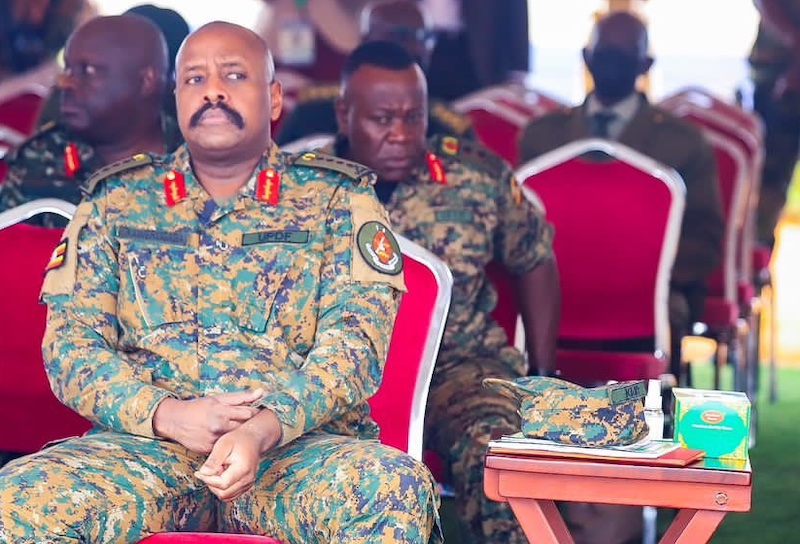
Gen. Muhoozi Kainerugaba Shuts Down NTV, Daily Monitor
Abstract
Uganda's legal landscape for media freedom faces a severe challenge following the recent military-enforced shutdown of prominent independent media outlets, including NTV Uganda and the Daily Monitor. The Chief of Defence Forces (CDF), Gen. Muhoozi Kainerugaba, reportedly ordered the closures, citing a disregard for a free press and advocating for media guidance by "cadres of the revolution." This action has ignited widespread condemnation, raising critical questions about the rule of law, constitutional guarantees of freedom of expression, and the appropriate boundaries of military involvement in civilian affairs. The incident underscores the precarious position of independent journalism in Uganda and highlights the potential for executive and military overreach to undermine fundamental human rights enshrined in both national and international legal instruments.
Introduction
The Ugandan media sector has been plunged into uncertainty following the abrupt and military-enforced closure of several leading independent media houses, including NTV Uganda, the Daily Monitor newspaper, Spark TV, Dembe FM, KFM, and The East African. The operation, which saw armed military personnel seal off the offices of Nation Media Group (NMG) Uganda in Kampala, was reportedly initiated on the direct orders of the Chief of Defence Forces (CDF), Gen. Muhoozi Kainerugaba, on June 28, 2026. This move, publicly announced by Gen. Kainerugaba on social media, where he declared his disbelief in a free press and asserted that media should be guided by "cadres of the revolution," has sent shockwaves through the country's legal and human rights communities.
Background
Freedom of expression, including freedom of the press and other media, is a cornerstone of Uganda's constitutional framework, explicitly guaranteed under Article 29(1)(a) of the Constitution of the Republic of Uganda, 1995. This fundamental right is further reinforced by international instruments to which Uganda is a signatory, such as Article 9 of the African Charter on Human and Peoples' Rights (ACHPR) and Article 19 of the International Covenant on Civil and Political Rights (ICCPR). However, these rights are not absolute and can be subject to limitations prescribed by law, provided such restrictions are necessary in a democratic society and serve legitimate purposes like national security or public order.
The regulatory landscape for media in Uganda is primarily governed by the Press and Journalist Act, Cap 105, which mandates the registration of journalists and editors and establishes the Media Council. Additionally, the Uganda Communications Act, 2013, created the Uganda Communications Commission (UCC) as the principal regulator for the communications sector, including broadcasting, with powers to ensure compliance with broadcasting standards. The Uganda Peoples' Defence Forces Act, 2005, outlines the powers and responsibilities of the military, but it does not grant the CDF or any military authority the power to unilaterally shut down civilian media houses or interfere with their operations outside of a declared state of emergency or specific statutory authorization for aid to civil power, which typically involves supporting, not supplanting, civilian authority.
Analysis
The recent shutdown by military personnel, reportedly on the direct orders of the CDF, raises profound legal questions regarding its constitutionality and adherence to statutory frameworks. Article 29 of the Constitution guarantees media freedom, and any limitation must be "provided by law" and meet a stringent three-part test: it must be prescribed by law, serve a legitimate aim, and be necessary and proportionate in a democratic society. The unilateral military action, bypassing established civilian regulatory bodies like the Uganda Communications Commission (UCC), appears to fall outside the scope of powers granted to the CDF under the Uganda Peoples' Defence Forces Act, 2005. While the ICT Minister reportedly defended the action as part of a "security investigation ordered by President Yoweri Museveni," the involvement of military personnel in sealing off media premises without a clear legal basis from civilian authorities constitutes a significant departure from due process and the rule of law.
This incident is not isolated, as Uganda has a history of government interference with media, including previous shutdowns and harassment of journalists. However, a direct order from the CDF, publicly stating a rejection of a free press, marks an alarming escalation. Such actions directly contravene Principle 10 of the Declaration of Principles on Freedom of Expression and Access to Information in Africa, which affirms freedom of expression as a fundamental and inalienable human right and an indispensable component of democracy. The African Commission on Human and Peoples' Rights has consistently expressed concern over violations of freedom of expression and access to information in Uganda, particularly in the lead-up to elections.
Legal precedent in Uganda, such as *Charles Onyango-Obbo and Another v the Attorney General* (Constitutional Appeal No. 2 of 2002), has affirmed the importance of media freedom by striking down restrictive provisions in the Penal Code Act. The current military action, however, appears to circumvent judicial oversight and established regulatory mechanisms. The Press and Journalist Act, Cap 105, and the Uganda Communications Act, 2013, provide frameworks for addressing media content concerns, including licensing and broadcasting standards. The military's direct intervention usurps these civilian functions, creating a dangerous precedent where security forces dictate media operations based on subjective interpretations of "revolutionary cadreship" rather than legal standards.
Critics, including the International Federation of Journalists, have unequivocally condemned the shutdown as an "alarming abuse of state power" and a "flagrant violation of freedom of expression," emphasizing that the military has no legitimate role in determining which media organizations are permitted to operate. This direct military interference not only silences dissenting voices but also fosters a climate of fear and self-censorship among journalists, further eroding public access to independent and credible information, which is vital for democratic accountability.
Conclusion
The military shutdown of NTV Uganda, Daily Monitor, and other NMG outlets, allegedly on the orders of the CDF, represents a grave assault on constitutionalism and media freedom in Uganda. For legal practitioners, this incident highlights the urgent need to challenge such executive and military overreach through all available legal avenues, including constitutional petitions and human rights litigation. The actions underscore the vulnerability of media houses and journalists to arbitrary state power, necessitating robust advocacy for the protection of fundamental rights.
Practitioners should closely monitor any legal justifications presented by the government for these actions and prepare to scrutinize their compliance with national and international human rights standards. The international community, human rights organizations, and legal bodies have already voiced strong condemnation, indicating potential for increased international pressure. The long-term implications for Uganda's democratic space, press freedom, and the rule of law are significant, demanding vigilance and concerted efforts to uphold constitutional guarantees against arbitrary state interference.
Citations
- 1.Constitution of the Republic of Uganda, 1995, Article 29(1)(a)
- 2.African Charter on Human and Peoples' Rights, Article 9
- 3.International Covenant on Civil and Political Rights, Article 19
- 4.Press and Journalist Act, Cap 105
- 5.Uganda Communications Act, 2013
- 6.Uganda Peoples' Defence Forces Act, 2005
- 7.Charles Onyango-Obbo and Another v the Attorney General, Constitutional Appeal No. 2 of 2002
- 8.Africanews, 'Press freedom under threat in Uganda as military chief orders closures', June 28, 2026
- 9.International Federation of Journalists (IFJ), 'Uganda: Military storming and forced shutdown of Uganda's leading independent media is illegal', June 29, 2026
- 10.VOA, 'Ugandan Activists Say Future of Media Uncertain', May 23, 2023
- 11.Amnesty International, 'Uganda: Authorities must immediately end the harassment of activists, allow media to operate freely', June 29, 2026
- 12.Amnesty International, 'Uganda: Proposed Ugandan media law threatens the right to freedom of expression', May 11, 2010
- 13.Chapter Four Uganda, 'What you need to know about your expression and assembly freedoms'
- 14.LASPNET, 'A simplified guide to Freedom of Expression and the right to Access to Information in Uganda'
- 15.Juruga, 'Article 29: Your Rights to Speak, Move, and Worship in Uganda'
- 16.Uganda Communications Commission, 'The Uganda Communications Act, 2013'
- 17.Uganda Communications Commission, 'About Us'
- 18.Public Private Partnership, 'Uganda Communications Act, 2013'
- 19.History Commons, 'Uganda Peoples' Defence Forces Act, 2005'
- 20.Child Law Resources, 'The Uganda Peoples' Defence Forces Act, 2005'
- 21.Media Council of Uganda, 'Registration of local Editors and journalists'
- 22.The Communications Blog, 'Requirements under the Press and Journalist Act Cap 105', October 16, 2019
- 23.African Commission on Human and Peoples' Rights, 'Press Statement on the Escalating Restrictions on Freedom of Expression, Media Freedom, and Internet Access in Uganda Ahead of the 2026 General Elections', January 06, 2026
- 24.Article 19, 'Press and Journalist Act and the Press and Journalist (Amendment) Bill, 2010 of Uganda'
- 25.Human Rights Watch, 'Uganda Tightens Clampdown on Media', October 14, 2019
- 26.Laws.Africa, 'Uganda Peoples' Defence Forces Act', September 21, 2023
- 27.OAS.org, 'African Charter on Human and Peoples' Rights (Banjul Charter)'
- 28.Africanews, 'Uganda faces press freedom backlash as military intensifies crackdown on media houses', June 29, 2026
- 29.National Practice, 'The Uganda Peoples' Defence Forces Act. (Application to Civilians) Regulations'
- 30.The Observer Uganda, 'Military shuts down NTV Uganda raising fresh media freedom concerns', June 28, 2026
How does this affect your business?
Get an AI analysis of this article grounded in your jurisdictions, practice areas, and any policy documents you've uploaded to Wansom.