
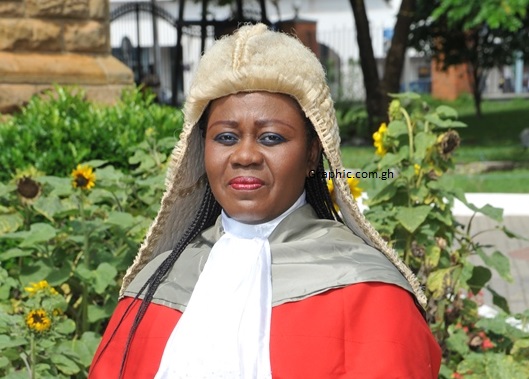
GH Court Rejects Ex-Chief Justice Gertrude Torkornoo's Bid
Abstract
The recent removal of Ghana's Chief Justice, Gertrude Torkornoo, following petitions alleging misbehavior, has ignited a critical debate on the interplay between constitutional accountability mechanisms and political influence. While the process adhered to Article 146 of the 1992 Constitution, a Member of Parliament, John Darko, asserted that the proceedings were inherently political, transcending mere legal interpretation. This article examines the constitutional framework governing the removal of a Chief Justice in Ghana, analyzes the political dimensions highlighted by critics, and explores the profound implications for judicial independence and public trust in the judiciary, particularly in a context where such high-profile removals are rare and contentious.
Introduction
The removal of a Chief Justice from office represents a significant event in any democratic nation, often triggering intense scrutiny of the legal and political underpinnings of such a decision. In Ghana, the recent removal of Chief Justice Gertrude Torkornoo has brought these tensions to the fore. Suame Member of Parliament, John Darko, characterized the entire process as 'inherently political,' arguing that despite being framed in legal terms, the case carried a strong political undertone from its inception. This assertion underscores a critical concern regarding the delicate balance between ensuring judicial accountability and safeguarding the independence of the judiciary from undue political interference.
Background
The framework for the removal of a Chief Justice in Ghana is meticulously outlined in Article 146 of the 1992 Constitution. This provision stipulates that a Justice of a Superior Court, including the Chief Justice, shall not be removed from office except for 'stated misbehavior or incompetence or on ground of inability to perform the functions of his office arising from infirmity of body or mind.' The procedure for removal is initiated by a petition submitted to the President. In the case of the Chief Justice, the President, in consultation with the Council of State, appoints a committee comprising two Supreme Court Justices and three other persons who are neither members of the Council of State, Parliament, nor lawyers, to inquire into the petition. If a prima facie case is established by the Council of State, the President may suspend the Chief Justice and constitute a committee to investigate the merits of the petition. The committee then recommends to the President whether the Chief Justice ought to be removed, and the President is constitutionally bound to act in accordance with these recommendations.
This constitutional architecture is designed to protect judicial independence by imposing institutional, procedural, and substantive checks on presidential power, ensuring that a Chief Justice cannot be capriciously removed. However, the broad interpretations of terms like 'misbehavior' and 'incompetence' have been a point of contention, with some, like former Chief Justice Sophia Akuffo, arguing that such vagueness can weaken the judiciary. The 1992 Constitution generally provides a robust framework for judicial independence, vesting judicial power exclusively in the judiciary and limiting interference from other branches of government. Despite these safeguards, the appointment process, where the President holds significant sway, has been noted to create an impression of potential executive influence on judicial leanings.
Analysis
The removal proceedings against Chief Justice Gertrude Torkornoo commenced with multiple petitions, notably one from Daniel Ofori, alleging financial misappropriation and abuse of power, which were deemed to constitute 'stated misbehavior' under Article 146(1). Following the establishment of a prima facie case by the Council of State, President John Dramani Mahama suspended the Chief Justice in April 2025 and subsequently removed her from office on September 1, 2025, based on the findings and recommendation of a five-member committee. This decision marked the first time a Chief Justice had been removed under the 1992 Constitution.
The assertion by MP John Darko that the process was 'inherently political' resonates with broader concerns about the potential for constitutional mechanisms to be weaponized. While the procedural steps outlined in Article 146 were reportedly followed, the political context — including a change in presidential administration and existing public perceptions of judicial trust and corruption — undoubtedly influenced the narrative surrounding the removal. Former Chief Justice Sophia Akuffo's criticism regarding the vagueness of 'misbehavior' and 'incompetence' as grounds for removal highlights a substantive legal challenge, suggesting that the constitutional provisions, while intended to ensure accountability, might be susceptible to subjective interpretation that could serve political ends.
Chief Justice Torkornoo herself challenged her suspension and removal, filing applications at the Supreme Court of Ghana and the ECOWAS Community Court of Justice, alleging violations of her rights. Both courts, however, dismissed her applications, affirming the legality of the process. This series of legal challenges underscores the contentious nature of the removal, even when constitutional procedures are upheld. The perception of executive influence in judicial appointments and the potential for political motivations to drive petitions against high-ranking judicial officers remain critical issues that can erode public confidence in the judiciary's impartiality, irrespective of the legal correctness of the process. The ongoing debate highlights the constant tension between the need for judicial accountability and the imperative of maintaining robust judicial independence.
Conclusion
The removal of Chief Justice Gertrude Torkornoo, while constitutionally sanctioned, has undeniably sparked a vital conversation about the political dimensions inherent in such high-stakes legal processes. The assertion that the proceedings were 'inherently political' serves as a potent reminder that even meticulously crafted constitutional safeguards can be perceived through a political lens, potentially impacting public trust in the judiciary. For legal practitioners, this case highlights the critical importance of understanding not only the letter of the law, particularly Article 146 of the 1992 Constitution, but also the broader political and social contexts in which it operates.
Going forward, practitioners should closely monitor discussions around potential reforms to Article 146, particularly concerning the clarity of grounds for removal and the composition of investigative committees, to further insulate the judiciary from perceived political interference. The case also underscores the ongoing need for a robust defense of judicial independence, ensuring that accountability mechanisms do not inadvertently become tools for political maneuvering. The long-term implications for Ghana's democratic governance and the integrity of its judicial institutions will depend on how these delicate balances are navigated in future.
Citations
- 1.The Constitution of the Republic of Ghana, 1992
- 2.JURIST - Ghana dispatch: president removes chief justice after petitions alleging misbehavior (September 10 2025)
- 3.Stanford Law School - Ghana Judicial Reform
- 4.JURIST - Ghana dispatch: removal of chief justice sparks concerns over process (May 09 2025)
- 5.YouTube - No Violation of Article 146 in the Dismissal of Gertrude Torkonoo as Chief Justice - Inusah Fuseini (September 02 2025)
- 6.Ghana Web - Read full details of CJ Torkornoo's response to 3 petitions for her removal (April 23 2025)
- 7.Graphic Online - Torkornoo seeks Supreme Court review of ruling (June 26 2026)
- 8.GSDRC - Ghana: Justice Sector and the Rule of Law (December 03 2007)
- 9.CitiNewsroom.com - Chief Justice Getrude Torkornoo removed (September 01 2025)
- 10.Torkornoo filed three High Court cases challenging removal – Srem-Sai (June 27 2026)
- 11.The Presidency, Republic of Ghana - Chief Justice Gertrude Torkonoo removed from office. (September 01 2025)
- 12.GurahSampsonlaw - WHY A CHIEF JUSTICE OR JUSTICE OF A SUPERIOR COURT OF JUDICATURE IS DISABLED FROM RESIGNING OR RETIRING DURING THE PENDENCY OF ARTICLE 146 PROCEEDINGS – LEST WE FORGET! (July 14 2025)
- 13.ResearchGate - Judicial financial independence and effectiveness of the judiciary in Ghana
- 14.UN Special Rapporteur - Ghana Archives (October 20 2023)
- 15.Ghana Center for Democratic Development - The Petition to Remove the Chief Justice (March 28 2025)
- 16.Ghana Fact - EXPLAINER: Removal of Supreme Court judges has nothing to do with having two-thirds Majority in Parliament (December 10 2024)
- 17.GhanaWeb - EXPLAINER: Here are the processes to follow to remove Chief Justice Gertrude Torkornoo (March 26 2025)
- 18.Laws Ghana - Article 146 - Removal Of Justices Of Superior Courts And Chairmen Of Regional Tribunals
How does this affect your business?
Get an AI analysis of this article grounded in your jurisdictions, practice areas, and any policy documents you've uploaded to Wansom.