
Gig Workers Act: Karnataka HC grants interim protection to IAMAI, Swiggy, Zomato, others but orders deposit of welfare fee
Abstract
The Karnataka High Court recently issued a significant interim order concerning the Karnataka Platform-Based Gig Workers (Social Security and Welfare) Act, 2025. While refusing to stay the operation of the pioneering state legislation, the Court granted interim protection from coercive action to several prominent aggregators, including Swiggy and Zomato. This protection is contingent upon the petitioners depositing the mandated welfare contribution for the second quarter of the current year into the court within three weeks. The Court explicitly rejected requests to furnish a bank guarantee instead of a direct deposit, emphasizing that the contribution is a legislative demand, not a charitable request. This interim ruling highlights the judiciary's delicate balancing act between fostering the burgeoning gig economy and ensuring social security for its workers.
Introduction
The rapid expansion of the gig economy in India has brought to the fore complex legal and social challenges, particularly concerning the welfare and social security of its workforce. In a landmark move to address these issues, the State of Karnataka enacted the Karnataka Platform-Based Gig Workers (Social Security and Welfare) Act, 2025 (the “Act”). This legislation, a first of its kind in India alongside Rajasthan's similar law, aims to provide a robust framework for the social security and welfare of gig workers operating within the state.
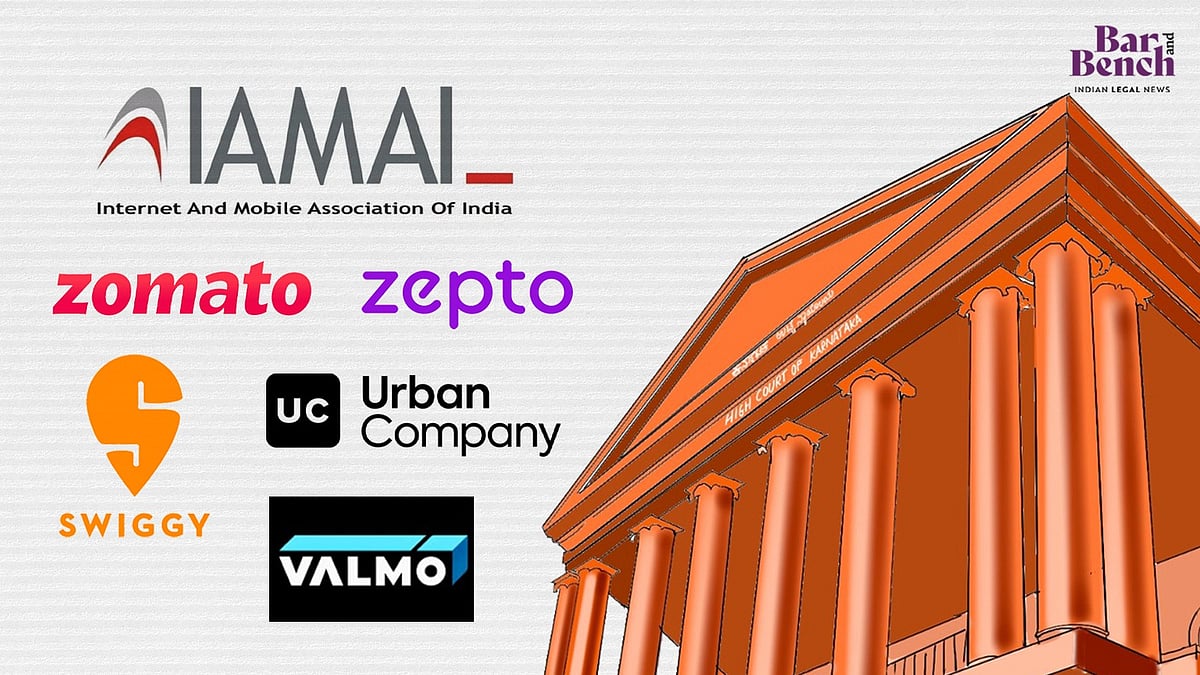
However, the Act's provisions, particularly those mandating a welfare contribution from aggregators, have been met with legal challenges from major industry players. The Internet & Mobile Association of India (IAMAI), along with prominent aggregators such as Swiggy, Zomato, Zepto, Urban Company, and Valmo Transportation, petitioned the Karnataka High Court, seeking to challenge the validity and operation of the Act. The High Court's recent interim order, while not staying the Act, has set a crucial precedent by directing the petitioners to deposit the prescribed welfare fee, thereby balancing the immediate interests of the aggregators with the overarching legislative intent of worker welfare. This article delves into the implications of this interim order, examining the statutory context, the arguments presented, and the broader ramifications for the future of gig worker regulation in India.
Background
The gig economy in India has witnessed exponential growth, with millions of individuals engaged in flexible, task-based work across various digital platforms. Despite its significant contribution to employment and economic activity, gig workers often operate outside the traditional employer-employee relationship, leading to a notable absence of conventional labour law protections such such as minimum wage, paid leave, and comprehensive social security benefits. This precarious employment status has spurred calls for legislative intervention to safeguard the interests of this vulnerable workforce.
Responding to this imperative, the Karnataka government enacted the Karnataka Platform-Based Gig Workers (Social Security and Welfare) Act, 2025. Notified on September 12, 2025, and effective from May 30, 2025, the Act establishes a comprehensive regulatory framework. Key provisions include the establishment of a Karnataka Platform-Based Gig Workers Welfare Board, mandatory registration of both gig workers and aggregators, and the creation of a dedicated Social Security and Welfare Fund. A central feature of the Act is the imposition of a 'welfare fee' on aggregators, requiring them to contribute a percentage (ranging from 1% to 5%, with specific rates notified for different service categories) of each transaction's payout to the gig worker, to fund the welfare initiatives. This state-level initiative complements the Union Government's Code on Social Security, 2020, which also recognizes gig and platform workers but has seen slower implementation of its social security schemes.
Analysis
The challenge brought by the Internet & Mobile Association of India and other aggregators against the Karnataka Platform-Based Gig Workers (Social Security and Welfare) Act, 2025, primarily focused on the mandatory welfare contribution. The petitioners likely argued against the financial burden imposed by the Act, potentially raising concerns about legislative competence, the definition of 'gig worker,' and the impact on their business models and financial statements. Their request to furnish a bank guarantee instead of directly depositing the welfare contribution underscored their apprehension regarding the immediate financial outflow and the potential for irretrievable prejudice should their petition ultimately succeed.
Justice M. Nagaprasanna of the Karnataka High Court, however, adopted a pragmatic approach in the interim order. By refusing to stay the operation of the Act, the Court upheld the legislative intent behind providing social security to gig workers. The directive to deposit the welfare contribution for the second quarter within three weeks, rather than allowing a bank guarantee, is particularly telling. Justice Nagaprasanna's observation that "The amount is not being demanded by the State as a charity. It is demanded in terms of a promulgation of a legislation" highlights the Court's recognition of the statutory nature of the contribution and its importance to the welfare fund. This stance signals a judicial inclination to ensure that the legislative purpose of worker protection is not unduly delayed or diluted during the pendency of the legal challenge.
The interim arrangement, which grants protection from coercive action subject to the deposit, reflects a careful balancing of competing interests. It safeguards the aggregators from immediate punitive measures while simultaneously ensuring that the welfare fund, designed to benefit gig workers, begins to accumulate resources. This approach acknowledges the legitimate concerns of businesses regarding compliance and financial impact, yet prioritizes the social security objectives embedded in the Act. The outcome of this petition will be closely watched, as it could influence similar legislative efforts in other states and shape the regulatory landscape for the gig economy across India. The specific welfare fee rates, which were notified on February 13, 2026, at 1% with category-specific caps, further underscore the concrete financial obligations at stake.
Conclusion
The Karnataka High Court's interim order in the challenge to the Karnataka Platform-Based Gig Workers (Social Security and Welfare) Act, 2025, marks a pivotal moment in the ongoing discourse surrounding gig worker rights in India. By mandating the deposit of the welfare contribution while granting interim protection, the Court has effectively affirmed the state's legislative authority to ensure social security for gig workers, even as the constitutional validity of the Act is being adjudicated. This decision underscores a judicial willingness to support progressive labour legislation aimed at formalizing protections for the rapidly growing gig workforce.
For legal practitioners advising aggregators and platform companies, this ruling necessitates immediate compliance with the welfare fee deposit requirements in Karnataka. It also signals the increasing regulatory scrutiny on the gig economy and the imperative for companies to proactively integrate social security provisions into their operational models. Going forward, all stakeholders will be keenly observing the final judgment in this case, which could set a significant precedent for the interpretation and implementation of gig worker welfare laws across India. The outcome will undoubtedly influence future legislative actions at both state and central levels, shaping the balance between business innovation and worker protection in the digital age.
Citations
- 1.Karnataka Platform-Based Gig Workers (Social Security and Welfare) Act, 2025
- 2.Code on Social Security, 2020
- 3.Internet & Mobile Association of India v. State of Karnataka
- 4.Government Order No. LD 413 LET 2023, dated February 13, 2026 (Karnataka)