
High Court rules cannabis not proven essential to Rastafarian faith, rejects exemption bid
Abstract
The High Court of Kenya has dismissed a petition by the Rastafari Society of Kenya seeking a religious exemption for the use of cannabis, ruling that the petitioners failed to prove its indispensability to their faith. Justice Bahati Mwamuye found that while cannabis is used as a sacrament, the evidence did not establish it as an essential, mandatory practice, with some Rastafarians not using it at all. The court also held the petition to be premature, citing a failure to exhaust existing licensing and exemption mechanisms under the Narcotic Drugs and Psychotropic Substances (Control) Act, 1994. Despite upholding the ban, the judge urged a national dialogue on Kenya’s cannabis policy, acknowledging its widespread use and the potential harshness of current laws. This decision reinforces the high evidentiary bar for religious freedom claims seeking exemptions from general laws, particularly concerning public health and safety regulations.
Introduction
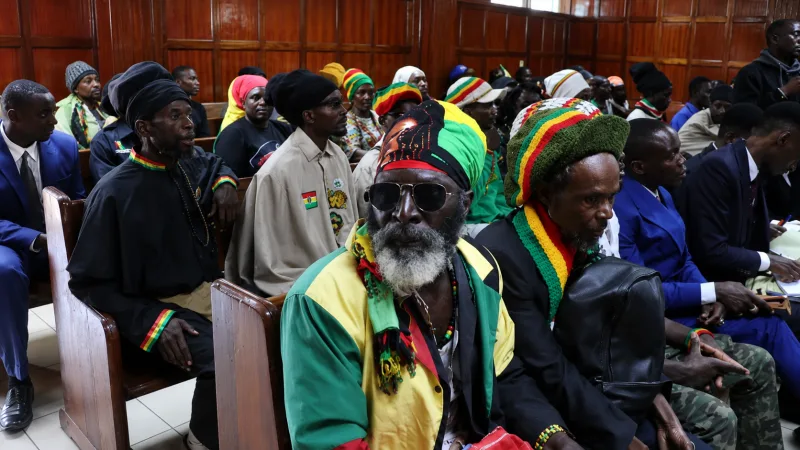
In a significant ruling delivered on July 15, 2026, the High Court of Kenya dismissed a constitutional petition by the Rastafari Society of Kenya that sought to decriminalize the use of cannabis for religious purposes. The decision, handed down by Justice Bahati Mwamuye, marks a critical moment in the ongoing debate surrounding religious freedom, drug policy, and public health in Kenya. The Rastafarian community had argued that the prohibition of cannabis, known locally as bhang, infringed upon their constitutional rights, particularly the freedom of religion, as the substance is considered a sacred sacrament central to their worship and spiritual practices.
This ruling underscores the judiciary's cautious approach to carving out religious exemptions from laws of general application, especially those designed to protect public health and safety. While acknowledging the petitioners' deeply held beliefs, the court ultimately found the evidence presented insufficient to establish that cannabis use was an indispensable or mandatory tenet of the Rastafari faith. The judgment not only maintains the current legal status of cannabis in Kenya but also sets a precedent for future religious freedom claims, emphasizing the stringent evidentiary requirements for such exemptions.
The article will delve into the background of Kenya's drug laws and constitutional provisions on religious freedom, analyze the High Court's reasoning, and discuss the implications for legal practitioners and the broader societal discourse on cannabis policy in Kenya.
Background
The legal landscape governing cannabis in Kenya is primarily defined by the Narcotic Drugs and Psychotropic Substances (Control) Act, 1994 (Cap. 245). This Act comprehensively criminalizes the cultivation, possession, use, and trafficking of cannabis, imposing severe penalties including imprisonment for up to 10 years and substantial fines for simple possession, with even harsher sentences for trafficking. These prohibitions are rooted in colonial-era legislation, specifically Britain's 1922 Dangerous Drugs Ordinance, which was later entrenched in Kenyan law.
Conversely, the Constitution of Kenya, 2010, enshrines fundamental rights and freedoms, including the right to freedom of conscience, religion, thought, belief, and opinion under Article 32. This article guarantees every person the right, individually or in community, in public or private, to manifest any religion or belief through worship, practice, teaching, or observance. The Rastafari Society of Kenya, in its petition, contended that the criminalization of cannabis directly violated these constitutional protections, as the "holy herb" is considered integral to their spiritual practices, meditation, and reasoning.
The petition, filed in 2021 as High Court Petition No. 2 of 2019, challenged various provisions of the Narcotic Drugs and Psychotropic Substances (Control) Act, arguing that they were unconstitutional to the extent that they prohibited the sacramental use of cannabis by Rastafarians during private worship and at designated places of worship. The petitioners also cited violations of rights to privacy, dignity, equality, and freedom of association. The Attorney General and the National Authority for the Campaign Against Alcohol and Drug Abuse (NACADA) were named as respondents, with NACADA later joined as an interested party due to its statutory mandate in national drug policy.
Analysis
Justice Bahati Mwamuye's judgment hinged on two primary findings. Firstly, the court determined that the petitioners failed to discharge the burden of proving that cannabis use was an "essential tenet" or "indispensable" to the practice of the Rastafari religion. The judge noted that even the petitioners' own witnesses conceded that the use of cannabis was not mandatory, and some Rastafarians do not use it at all, suggesting it was a "preferred mode of worship, not a requirement of the faith." This highlights a critical distinction in religious freedom jurisprudence: while a practice may be deeply valued, it must be shown to be fundamental to the religion's core tenets to warrant an exemption from generally applicable laws.
Secondly, the court found the petition to be premature, as the applicants had not exhausted the available licensing and exemption mechanisms provided under the Narcotic Drugs and Psychotropic Substances (Control) Act before seeking constitutional relief. This procedural aspect is crucial, as courts often prefer that statutory remedies be pursued first, reserving constitutional challenges as a last resort. The court further held that any limitation of the petitioners' rights was reasonable and justifiable under Article 24 of the Constitution, given that the impugned provisions of the narcotics law pursue the legitimate and pressing objective of protecting public health and safety.
This approach contrasts with developments in other jurisdictions, such as South Africa. In the 2002 case of *Prince v President of the Law Society*, the South African Constitutional Court similarly denied a religious exemption for Rastafarian cannabis use, emphasizing the state's interest in combating drug abuse. However, a subsequent 2018 Constitutional Court ruling in South Africa, *Minister of Justice and Constitutional Development & Others v Prince; National Director of Public Prosecutions & Others v Rubin; National Director of Public Prosecutions & Others v Acton & Others*, legalized the private cultivation, possession, and use of cannabis by adults, but crucially, this was based on the right to privacy, not religious freedom. The Kenyan High Court's decision, by focusing on the "essentiality" of the practice and the failure to exhaust administrative remedies, maintains a stricter stance on religious exemptions.
Despite dismissing the petition, Justice Mwamuye made notable remarks regarding Kenya's broader cannabis policy. He acknowledged the ubiquitous use of cannabis in the country and suggested that the current legal framework might be too harsh, calling for a "full and frank conversation" or a "national debate" on the issue. The judge observed a growing disconnect between the law and evolving public attitudes, noting that cannabis-derived products are openly sold and references to the drug are common in popular culture. While clarifying that these comments were not an endorsement of legalization, they signal a judicial recognition of the need for policy review, potentially paving the way for legislative reform rather than judicial exemptions.
Conclusion
The High Court's ruling in the Rastafarian cannabis petition sends a clear message to legal practitioners: the bar for establishing religious exemptions from general laws, particularly those concerning public health and safety, remains exceptionally high in Kenya. Attorneys advising clients on religious freedom claims must be prepared to demonstrate not merely that a practice is part of a faith, but that it is an indispensable and mandatory tenet, supported by consistent and compelling evidence. Furthermore, the judgment reinforces the importance of exhausting all available statutory and administrative remedies before resorting to constitutional litigation.
Looking ahead, the petitioners have indicated their intention to appeal the decision, which means the legal battle over cannabis and religious freedom in Kenya is far from over. Practitioners should closely monitor developments in the Court of Appeal, as a higher court's interpretation could further shape this area of law. Beyond the courts, Justice Mwamuye's call for a national dialogue on cannabis policy is a significant development. This judicial encouragement for legislative review suggests that while judicial exemptions may be difficult to obtain, there is a growing recognition within the legal system of the need for a re-evaluation of Kenya's drug laws in light of contemporary social realities. Attorneys should therefore also watch for potential legislative initiatives that could emerge from such a national conversation, which might offer alternative avenues for reform.
Citations
- 1.Constitution of Kenya, 2010, Article 24
- 2.Constitution of Kenya, 2010, Article 32
- 3.Narcotic Drugs and Psychotropic Substances (Control) Act, 1994 (Cap. 245)
- 4.Rastafari Society of Kenya, its spokesperson Mwendwa Wambua alias Ras Prophet, and another petitioner v Attorney General and National Authority for the Campaign Against Alcohol and Drug Abuse (NACADA), High Court Petition No. 2 of 2019
- 5.Prince v President of the Law Society, 2002 (3) BCLR 231 (CC); 2002 (2) SA 794 (CC)
- 6.Minister of Justice and Constitutional Development & Others v Prince; National Director of Public Prosecutions & Others v Rubin; National Director of Public Prosecutions & Others v Acton & Others [2018] ZACC 30
How does this affect your business?
Get an AI analysis of this article grounded in your jurisdictions, practice areas, and any policy documents you've uploaded to Wansom.