
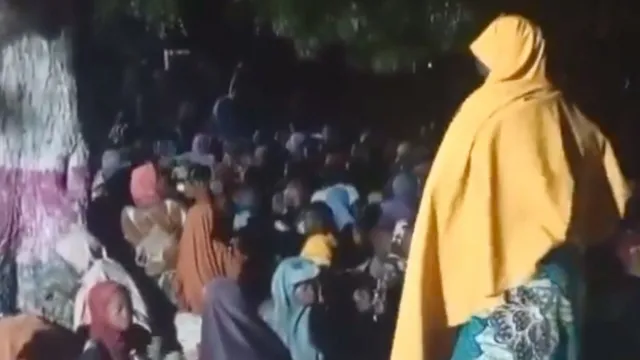
Hundreds of captives freed from Boko Haram mountain hideout
Abstract
The recent liberation of 360 captives from a Boko Haram mountain hideout in Nigeria underscores the persistent legal and humanitarian challenges posed by the insurgency. This event highlights the complex interplay between international humanitarian law, Nigeria's domestic counter-terrorism framework, and the imperative for robust victim support and accountability. While Boko Haram's actions, including mass abductions, constitute grave crimes under both Nigerian law and international criminal law, the circumstances surrounding rescue operations and subsequent justice processes raise critical questions for legal practitioners. The article examines the legal classification of Boko Haram's atrocities, the evolving Nigerian legislative response, and the ongoing efforts and shortcomings in ensuring justice, rehabilitation, and non-recurrence for victims of terrorism.
Introduction
The recent news of 360 individuals being freed from a Boko Haram mountain hideout in Nigeria's north-eastern Borno state brings into sharp focus the enduring humanitarian crisis and complex legal landscape surrounding the decade-long insurgency. While the exact circumstances of their liberation remain disputed, with the army claiming an intelligence-led operation, the sheer scale of the abduction and subsequent release necessitates a thorough examination of the legal frameworks governing such events. This incident is not isolated; mass kidnappings have been a hallmark of Boko Haram's campaign, inflicting profound trauma and disrupting societal order.
For legal professionals, this development prompts critical inquiries into the nature of the crimes committed by non-state armed groups like Boko Haram, the legal obligations of the Nigerian state in counter-terrorism operations, and the rights and remedies available to victims. The liberation, while a cause for relief, marks only the beginning of a long and arduous journey towards justice, rehabilitation, and reintegration for the freed captives. This article will delve into the legal ramifications of Boko Haram's actions, analyze the adequacy and application of Nigeria's domestic and international legal instruments, and consider the practical implications for practitioners navigating the complexities of post-conflict justice and victim support.
Background
Boko Haram, officially known as Jamā'atu Ahlis Sunnah Lidda'awati wal-Jihad, launched an armed rebellion against the Nigerian government in July 2009, seeking to impose its interpretation of Sharia law. Its campaign has been characterized by widespread violence, including killings, bombings, and mass abductions, particularly in Nigeria's North-East. These actions have been widely recognized as constituting war crimes and crimes against humanity under international law.
Nigeria is a State Party to the Rome Statute of the International Criminal Court (ICC), having ratified it on September 27, 2001. This theoretically subjects individuals responsible for international crimes committed within Nigeria's territory or by its nationals to the ICC's jurisdiction, under the principle of complementarity. However, Nigeria has not yet domesticated the Rome Statute into its national law, which is a constitutional prerequisite for its enforceability domestically. Domestically, Nigeria has enacted robust counter-terrorism legislation, notably the Terrorism (Prevention) Act, 2011, which was amended in 2013 and subsequently replaced by the comprehensive Terrorism (Prevention and Prohibition) Act, 2022. This Act criminalizes various terrorist acts, including kidnapping and hostage-taking, and prescribes severe penalties, including the death penalty for offences resulting in death.
Analysis
The mass abduction of 360 people by Boko Haram unequivocally constitutes grave offenses under both Nigerian domestic law and international criminal law. Under the Nigerian Criminal Code Act, kidnapping is a felony, punishable by imprisonment. More significantly, the Terrorism (Prevention and Prohibition) Act, 2022, specifically addresses hostage-taking and kidnapping linked to coercion, classifying them as acts of terrorism and imposing penalties up to death where a victim dies. From an international perspective, such widespread or systematic attacks against a civilian population, including abduction, forced displacement, and other inhumane acts, fall within the definition of crimes against humanity under Article 7 of the Rome Statute.
The Nigerian military's operations against Boko Haram, including rescue missions, are conducted within the context of a non-international armed conflict (NIAC). Consequently, both the Nigerian armed forces and Boko Haram are bound by International Humanitarian Law (IHL), particularly Common Article 3 to the Geneva Conventions. This mandates humane treatment for all persons not taking an active part in hostilities and prohibits acts such as murder, mutilation, torture, and hostage-taking. The disputed circumstances of the captives' release raise questions about adherence to IHL principles, particularly regarding the use of force and protection of civilians during military operations. Reports from organizations like Amnesty International have highlighted alleged human rights violations by both Boko Haram and Nigerian security forces, including extrajudicial killings and deaths in military custody, underscoring the need for accountability on all sides.
Prosecuting Boko Haram members and ensuring justice for victims present significant challenges. Nigeria has undertaken mass trials of suspected terrorists, but these have been criticized for procedural shortcomings, including arbitrary arrests, prolonged detention without charge, lack of legal aid, and insufficient evidence, often leading to convictions for minor offenses rather than international crimes. The failure to domesticate the Rome Statute further complicates the prosecution of crimes against humanity and war crimes within national courts, potentially triggering the ICC's complementary jurisdiction. Moreover, the focus on prosecuting low-level combatants rather than senior commanders raises concerns about achieving comprehensive justice.
For the freed captives, the legal implications extend to their rights as victims of terrorism. The Nigerian government established the Victims Support Fund (VSF) in 2014 to aid victims of Boko Haram activities, providing humanitarian assistance and support for recovery. Proposed legislation for domesticating the Rome Statute also includes provisions for a Special Victims' Trust Fund, offering compensation, restitution, and recovery for economic and psychological damages. However, the practical implementation of these support mechanisms, particularly for a large group of traumatized individuals, remains a formidable task, requiring sustained legal, psychological, and social interventions to facilitate their reintegration into society. The debate around reintegration programs for 'repentant' terrorists, such as Operation Safe Corridor, also highlights the tension between rehabilitation and the victims' desire for justice and safety.
Conclusion
The liberation of hundreds of captives from Boko Haram is a welcome development but underscores the profound and multifaceted legal challenges confronting Nigeria in its fight against terrorism. Legal practitioners must grapple with the classification of atrocities as international crimes, the application of international humanitarian law during counter-insurgency operations, and the complexities of domestic prosecution within a system often strained by capacity and due process concerns. The absence of a domesticated Rome Statute remains a critical gap, hindering Nigeria's ability to fully exercise its primary jurisdiction over international crimes and potentially prolonging the ICC's preliminary examination.
Moving forward, a concerted effort is required to strengthen Nigeria's criminal justice system, ensuring that investigations and prosecutions of Boko Haram members, including senior commanders, adhere to international fair trial standards. Equally vital is the enhancement of victim support mechanisms, providing comprehensive legal, psychological, and socio-economic assistance to survivors. Practitioners should advocate for the domestication of the Rome Statute, robust accountability for all parties to the conflict, and the development of victim-centric approaches that prioritize the rights and needs of those who have suffered immensely. The journey to lasting peace and justice in Nigeria's North-East depends on a steadfast commitment to the rule of law and human rights.
Citations
- 1.Criminal Code Act, Cap C38 Laws of the Federation of Nigeria 2004, Section 364.
- 2.Rome Statute of the International Criminal Court, adopted 17 July 1998, entered into force 1 July 2002.
- 3.Terrorism (Prevention and Prohibition) Act, 2022, Laws of the Federation of Nigeria.
- 4.Amnesty International. (2015). Nigeria: Boko Haram and Nigerian military committing crimes under international law.
- 5.Amnesty International. (2015). 'OUR JOB IS TO SHOOT, SLAUGHTER AND KILL'.
- 6.Coalition for the International Criminal Court. (n.d.). Nigeria. Retrieved from https://www.iccnow.org/country-information/nigeria
- 7.Human Rights Watch. (2018). Nigeria: Flawed Trials of Boko Haram Suspects.
- 8.Jurist.ng. (n.d.). Section 364 of the Criminal Code Act in Nigeria. Kidnapping. Retrieved from https://jurist.ng/laws/section-364-of-the-criminal-code-act-in-nigeria-kidnapping/
- 9.Nuremberg Academy. (n.d.). Acceptance of International Criminal Justice in Nigeria. Retrieved from https://www.nurembergacademy.org/fileadmin/media/pdf/publications/Acceptance_of_International_Criminal_Justice_in_Nigeria.pdf
- 10.Pambazuka News. (2001, October 4). Nigeria Ratifies International Criminal Court Statute. Retrieved from https://www.pambazuka.org/governance/nigeria-ratifies-international-criminal-court-statute
- 11.Parliamentarians for Global Action. (n.d.). Nigeria and the Rome Statute. Retrieved from https://www.pgaction.org/areas-of-work/icc/rome-statute/nigeria.html
- 12.Sryahwa Publications. (n.d.). Policy Flaws and Kidnapping for Ransom in Nigeria.
- 13.The Nation Newspaper. (2026, June 16). Can tougher laws end kidnapping? Retrieved from https://thenationonlineng.net/can-tougher-laws-end-kidnapping/
- 14.UNODC. (n.d.). User's Guide to the Terrorism (Prevention) Act, 2011 (TPA) as amended by the Terrorism (Prevention) (Amendment) Act, 2013 (TPAA).
- 15.UNODC. (n.d.). UNODC Promotes Nigeria's Victims Support Fund on this International Day of Remembrance of and Tribute to the Victims of Terrorism. Retrieved from https://www.unodc.org/nigeria/en/stories/2023/unodc-promotes-nigerias-victims-support-fund-on-this-international-day-of-remembrance-of-and-tribute-to-the-victims-of-terrorism.html
- 16.UNODC. (n.d.). Strengthening the Capacity of Nigeria to Collect Evidence and More Effectively Prosecute Terrorism and Other Serious Crimes with Respect for the Rule of Law. Retrieved from https://www.unodc.org/nigeria/en/stories/2023/strengthening-the-capacity-of-nigeria-to-collect-evidence-and-more-effectively-prosecute-terrorism-and-other-serious-crimes-with-respect-for-the-rule-of-law.html
- 17.UNODC. (n.d.). Giving Voice to the Survivors of Terrorist Violence. Retrieved from https://www.unodc.org/nigeria/en/stories/2024/giving-voice-to-the-survivors-of-terrorist-violence.html
- 18.UNIZIK Research Repository. (n.d.). CRIMES AGAINST HUMANITY: A CASE STUDY OF BOKO HARAM INSURGENCY AND THE COUNTER-INSURGENCY MEASURES IN NIGERIA. Retrieved from https://repository.unizik.edu.ng/bitstream/handle/123456789/10103/CRIMES%20AGAINST%20HUMANITY.pdf?sequence=1
- 19.United Nations. (n.d.). Nigeria statement -- International Terrorism -- Sixth Committee (Legal) — 79th session. Retrieved from https://legal.un.org/docs/?path=../sixth/79/statements/nigeria.pdf&lang=E
- 20.United Nations. (n.d.). Nigeria statement -- Universal Jurisdiction -- Sixth Committee (Legal) — 78th session. Retrieved from https://legal.un.org/docs/?path=../sixth/78/statements/nigeria.pdf&lang=E
- 21.Wikipedia. (n.d.). Boko Haram insurgency. Retrieved from https://en.wikipedia.org/wiki/Boko_Haram_insurgency
- 22.DevelopmentAid. (n.d.). Victims Support Fund (VSF). Retrieved from https://www.developmentaid.org/donors/view/638965/victims-support-fund-vsf
- 23.Al Jazeera. (2022, April 27). Nigeria outlaws ransom payments, kidnap now punishable by death. Retrieved from https://www.aljazeera.com/news/2022/4/27/nigeria-outlaws-ransom-payments-kidnap-now-punishable-by-death
- 24.Ba Law LLP. (2021, November 11). THE OFFENCE OF KIDNAPPING IN NIGERIA VIS A VIS THE RECENT BILL FOR THE AMENDMENT OF THE CRIMINAL CODE ACT. Retrieved from https://balawllp.com/the-offence-of-kidnapping-in-nigeria-vis-a-vis-the-recent-bill-for-the-amendment-of-the-criminal-code-act/
- 25.ISS Africa. (2020, May 21). Mass terror trials test Nigeria's criminal justice system. Retrieved from https://issafrica.org/iss-today/mass-terror-trials-test-nigerias-criminal-justice-system
- 26.The Obafemi Awolowo University Law Journal. (2025, August 18). PROSECUTING INTERNATIONAL CRIMES IN NIGERIA: SHARED RESPONSIBILITIES BETWEEN THE ICC AND NIGERIAN COURTS. Retrieved from https://oaulj.oauife.edu.ng/index.php/oaulj/article/view/18
- 27.NGF Digital Repository. (n.d.). TERRORISM (PREVENTION) ACT 2011 (AS AMENDED). Retrieved from https://ngf.org.ng/ngf/wp-content/uploads/2020/07/TERRORISM-PREVENTION-ACT-2011-AS-AMENDED.pdf
- 28.The Straits Times. (2026, June 16). Nigeria puts hundreds more people on trial in crackdown on militancy. Retrieved from https://www.straitstimes.com/world/africa/nigeria-puts-hundreds-more-people-on-trial-in-crackdown-on-militancy
- 29.Scholarly Journal of Advanced Legal Research. (2023, November 30). Nigerian Military Operations Under Counter-Terrorism and its Breach of Human Right. Retrieved from https://sjar.sryahwapublications.com/wp-content/uploads/2023/11/SJALR-V2I3-12-19.pdf
- 30.Brookings. (2021, September 3). "In Nigeria, we don't want them back". Retrieved from https://www.brookings.edu/regions/africa/nigeria/in-nigeria-we-dont-want-them-back/
- 31.Geneva Academy. (2018, December 18). Nigeria: A Non-International Armed Conflict involving Boko Haram and Troops from Benin, Cameroon, Chad, Niger and Nigeria. Retrieved from https://www.geneva-academy.ch/joomlatools-files/docman-files/RULAC/Nigeria-NIAC-Boko-Haram-MNJTF.pdf
- 32.YouTube. (2026, April 18). Nigeria to Reintegrate 744 Ex-Terrorists. Retrieved from https://www.youtube.com/watch?v=0_2m7u4l300
- 33.ResearchGate. (n.d.). Application of International Humanitarian Law Standards in Nigeria's Counterinsurgency Efforts. Retrieved from https://www.researchgate.net/publication/377309257_Application_of_International_Humanitarian_Law_Standards_in_Nigeria%27s_Counterinsurgency_Efforts
How does this affect your business?
Get an AI analysis of this article grounded in your jurisdictions, practice areas, and any policy documents you've uploaded to Wansom.