
INEC, Parties Clash Over Access Codes for Candidates' Upload
Abstract
The Independent National Electoral Commission (INEC) and political parties in Nigeria are currently at odds over the issuance of access codes necessary for uploading candidate particulars onto the commission's portal for the 2027 general elections. This dispute highlights critical issues surrounding electoral timelines, party autonomy, and INEC's regulatory powers under the Electoral Act 2026. The timely and transparent resolution of this disagreement is crucial for ensuring the integrity of the candidate nomination process and mitigating the risk of extensive pre-election litigation, which could undermine public confidence in the forthcoming elections.
Introduction
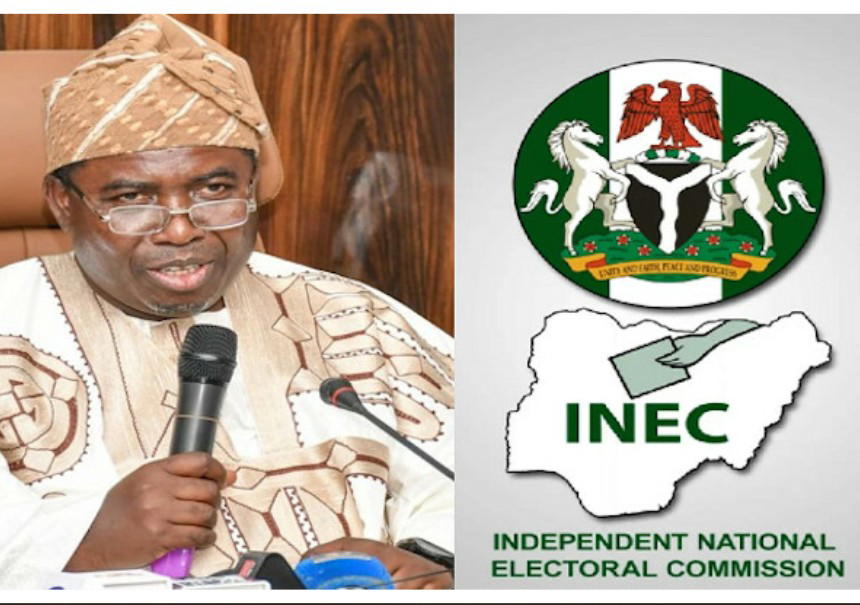
The Independent National Electoral Commission (INEC) and various political parties in Nigeria have recently found themselves in a contentious disagreement regarding the issuance of access codes for the electronic submission of candidate particulars for the 2027 general elections. This clash, as reported, centres on the administrative and operational aspects of candidate nomination, a foundational stage in the electoral cycle. The ability of political parties to access and utilise INEC's dedicated portal for uploading their candidates' details is a critical step, directly impacting their participation in the upcoming polls.
This development is not merely an administrative hiccup but a significant legal and political flashpoint, with profound implications for electoral transparency, internal party democracy, and the overall credibility of the 2027 elections. The timely resolution of such disputes is paramount to avoid a cascade of pre-election litigation that could destabilise the electoral timetable and process. This article will delve into the legal framework governing candidate nomination in Nigeria, analyse the points of contention between INEC and political parties, and explore the potential legal ramifications for practitioners and the broader electoral landscape.
Background
The legal framework for candidate nomination in Nigeria is primarily enshrined in the Constitution of the Federal Republic of Nigeria, 1999 (as amended), and more specifically, the Electoral Act 2026. This Act empowers INEC to regulate the conduct of elections, including the processes for political party primaries and the submission of candidate lists. Historically, candidate nomination has been a fertile ground for intra-party disputes and legal challenges, often stemming from issues of internal party democracy and adherence to guidelines.
Under the Electoral Act 2026, political parties are mandated to conduct primaries for aspirants to all elective positions, which must be monitored by INEC. Following the primaries, parties are required to submit the names of their nominated candidates to INEC within specified timelines, typically not later than 120 or 180 days before the general election. In recent electoral cycles, INEC has increasingly leveraged technology to enhance the transparency and efficiency of the nomination process, notably through the introduction of the INEC Candidate Nomination Portal (ICNP). This portal necessitates the issuance of unique access codes to political parties, enabling them to electronically upload the particulars of their candidates. The current dispute revolves around the timely and equitable provision of these crucial access codes, which are essential for parties to meet INEC's submission deadlines.
Analysis
The core of the current disagreement lies in the interplay between INEC's regulatory authority and the political parties' operational autonomy in candidate nomination. Sections 29, 84, and 85 of the Electoral Act 2026 outline the procedures for candidate nomination and submission. Section 84(1) mandates political parties to hold primaries monitored by INEC, and Section 29(1) requires parties to submit the list of candidates who emerged from valid primaries. INEC's role, therefore, extends beyond mere observation to ensuring compliance with the Act and its own regulations. The issuance of access codes for the ICNP is an administrative mechanism designed to facilitate this compliance, promoting data integrity and efficiency in the submission process.
Political parties, however, often view INEC's stringent controls, including the timing and conditions for access code issuance, as impinging on their internal affairs. The search results indicate that while some parties have confirmed receiving and commencing the upload of candidate details, others, particularly those grappling with internal factionalism, have expressed concerns or reported not having received the codes. This disparity can lead to accusations of bias or unfair advantage, especially when rival factions within a party are vying for control over the official candidate list. INEC maintains that its actions are guided by the need for adherence to the electoral timetable and guidelines, and it reserves the right to reject candidates not validly nominated.
Recent judicial pronouncements have added another layer of complexity. The Federal High Court, in some instances, has questioned INEC's power to impose certain timelines that appear to shorten those stipulated in the Electoral Act 2026, with INEC appealing such judgments. This ongoing legal tussle over the scope of INEC's powers to prescribe timelines creates uncertainty and provides grounds for parties to challenge the commission's directives, including those related to access codes. While courts generally show reluctance to interfere in the internal affairs of political parties, a clear violation of the Electoral Act or the party's constitution in the nomination process can trigger judicial intervention. The deadline for uploading candidates for presidential and National Assembly elections is July 11, 2026, and for governorship and State Houses of Assembly is July 17, 2026, making the timely resolution of the access code issue critical.
Conclusion
The ongoing disagreement between INEC and political parties over access codes for candidate uploads for the 2027 elections underscores the perennial tension between regulatory oversight and party autonomy in Nigeria's electoral system. For legal practitioners, this situation necessitates a meticulous understanding of the Electoral Act 2026, INEC's regulations, and the evolving judicial interpretations of these instruments. Advising political parties requires a proactive approach to ensure strict compliance with all nomination procedures and deadlines, thereby mitigating the risk of disqualification or costly pre-election litigation.
Looking ahead, stakeholders must closely monitor the outcome of appeals concerning INEC's powers to set electoral timelines, as these decisions will significantly shape the commission's future regulatory capacity. The imperative for internal party democracy and transparent candidate selection processes remains paramount. Failure to address these issues decisively and transparently could lead to a fragmented electoral landscape, characterised by legal battles that distract from substantive political discourse and potentially erode public trust in the 2027 general elections. Both INEC and political parties bear a heavy responsibility to ensure that the nomination process is conducted with utmost adherence to the rule of law and principles of fairness.
Citations
- 1.Electoral Act 2026
- 2.Constitution of the Federal Republic of Nigeria, 1999 (as amended)
- 3.Section 29(1) of the Electoral Act 2026
- 4.Section 84(1) of the Electoral Act 2026
- 5.Section 85 of the Electoral Act 2026
How does this affect your business?
Get an AI analysis of this article grounded in your jurisdictions, practice areas, and any policy documents you've uploaded to Wansom.