
Insecurity: Halt rehabilitations, try B-Haram members, Senate tells FG
Abstract
The Nigerian Senate has recently called for an immediate cessation of the Federal Government's policy of rehabilitating and reintegrating former Boko Haram members, advocating instead for their arrest and prosecution. This resolution, though not legally binding, reflects growing public and legislative discontent with the current counter-terrorism strategy, particularly Operation Safe Corridor. The Senate's stance highlights a critical tension between restorative justice approaches and the imperative for accountability for heinous crimes, challenging the existing legal and policy frameworks designed to address the complex insurgency in Nigeria. This article examines the legal underpinnings of both prosecution and rehabilitation, the practical challenges faced by each, and the implications of the Senate's demand for Nigeria's broader counter-terrorism efforts and the rule of law.
Introduction
Nigeria's ongoing struggle with terrorism and banditry has reached a critical juncture, prompting the Senate to issue a strong directive to the Federal Government. In a recent resolution, the upper legislative chamber urged an immediate halt to the policy of rehabilitating and reintegrating former Boko Haram members into society. Instead, the Senate insisted that all perpetrators of terrorism and banditry must be arrested and subjected to the full wrath of the law. This move signals a significant shift in legislative sentiment, reflecting widespread public concern over the efficacy and perceived fairness of current counter-terrorism strategies, particularly in the face of escalating insecurity across the nation.
The Senate's position emerged during an emotional debate on a motion concerning the escalating attacks, abductions, and killings of military personnel and civilians. Senators argued that granting rehabilitation to individuals responsible for mass atrocities amounted to rewarding criminality while victims continued to suffer, questioning the common sense behind such programmes. This legislative intervention brings to the fore a fundamental legal and ethical dilemma: how to balance the strategic benefits of deradicalisation and reintegration with the demands for justice, accountability, and victim redress in a protracted conflict. The resolution, while not legally binding on the executive, represents a powerful expression of legislative opinion that could significantly influence future policy direction and potentially lead to legislative amendments.
This article will delve into the existing legal and policy frameworks governing counter-terrorism in Nigeria, specifically examining the Terrorism (Prevention and Prohibition) Act and the Operation Safe Corridor initiative. It will analyse the legal and practical challenges associated with both prosecution and rehabilitation, considering the implications of the Senate's call for a re-evaluation of Nigeria's approach to former insurgents. Ultimately, it seeks to highlight the complex interplay between national security, human rights, and the pursuit of justice in a society grappling with the devastating impact of terrorism.
Background
Nigeria's legal response to terrorism is primarily anchored in the Terrorism (Prevention and Prohibition) Act 2022, which superseded earlier versions from 2011 and 2013. This comprehensive legislation criminalises a wide array of terrorist acts, including financing, and provides a framework for the prevention, detection, and prosecution of terrorism-related offences. The 2022 Act notably introduced capital punishment for certain severe terrorist offences, underscoring the state's intent to impose stringent penalties on perpetrators. Furthermore, the Act formally established the National Counter Terrorism Centre (NCTC) to coordinate national counter-terrorism policies and strategies, reflecting a multi-faceted approach to national security.
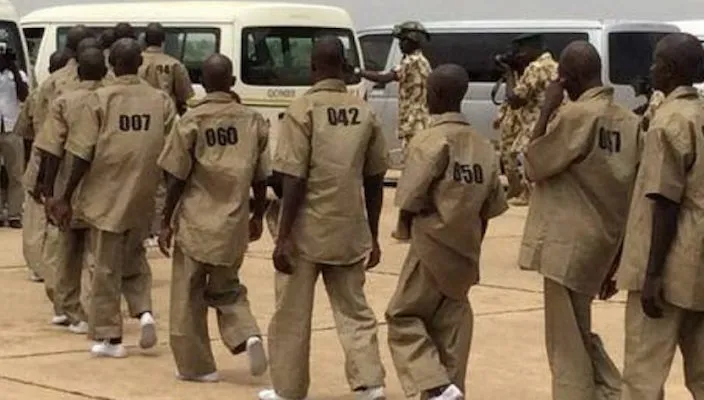
In parallel with its kinetic military operations, the Federal Government institutionalised a non-kinetic approach through Operation Safe Corridor (OSC) in 2016. Conceived as a Disengagement, Deradicalisation, Rehabilitation, and Reintegration (DDRR) programme, OSC aims to provide a structured exit from violence for eligible, willing, and repentant insurgents. The programme operates within the ambit of International Humanitarian Law and the Rule of Law, with eligibility for admission strictly determined by the Federal Ministry of Justice after legal and administrative review, categorising individuals based on risk profiles and prosecutable offences. The rationale behind OSC is to reduce the ranks of insurgents, strengthen community trust, and complement broader counter-insurgency and peacebuilding efforts, particularly for low-risk individuals who may have been forcibly conscripted or are disenchanted with the group.
Analysis
The Senate's recent resolution directly challenges the foundational principles of Operation Safe Corridor, highlighting a deep-seated tension between punitive justice and rehabilitative justice in Nigeria's counter-terrorism strategy. While the Terrorism (Prevention and Prohibition) Act 2022 provides a robust legal basis for prosecuting terrorists, with severe penalties including the death penalty for certain offences, the implementation of these provisions has faced significant hurdles. Mass trials of Boko Haram suspects, which commenced in 2017, have been criticised for serious legal shortcomings, including prolonged detention, lack of fair trial, due process concerns, and secrecy. Human Rights Watch noted that many suspects were charged with providing material and non-violent support, rather than direct atrocities, and proceedings were often short, raising fair trial concerns.
The challenges in prosecuting terrorism cases are manifold. Weak investigations, arbitrary arrests, unlawful detention, and the absence of adequate legal aid have marred past trials. Furthermore, a heavy reliance on confessional statements, often obtained under questionable circumstances, has been a significant concern. The sheer volume of cases also strains the judicial system's technical capacity, leading to misplaced files and difficulties in tracing arresting security personnel. These systemic flaws undermine the credibility of the legal system and can inadvertently fuel narratives of injustice, potentially hindering long-term peace efforts. The issue of impunity for serious crimes, including sexual and gender-based violence (SGBV) perpetrated by terrorist groups, remains a critical challenge, with jurisdictional complexities often preventing federal prosecutors from addressing these state-level offences.
Conversely, Operation Safe Corridor, despite its alignment with international best practices for disarmament, demobilisation, and reintegration (DDRR), faces its own set of challenges, particularly concerning public perception and community acceptance. Critics argue that the programme amounts to an amnesty for terrorists, a sentiment echoed by senators who believe it rewards criminality while victims continue to suffer. This trust deficit complicates reintegration efforts, as host communities often express reluctance to accept former combatants, fearing for their safety and demanding justice for atrocities committed. While OSC is designed to process low-risk individuals, with the Ministry of Justice determining eligibility based on prosecutable offences, the perception that dangerous individuals are being released without adequate accountability persists. The ongoing conflict also makes reconciliation and reintegration more difficult, as victims and local actors often view the cessation of hostilities as a precondition for such processes.
The Senate's call for an end to rehabilitation and a focus on prosecution reflects a desire for a more retributive justice approach, prioritising accountability and deterrence. However, a complete abandonment of rehabilitation programmes could have strategic drawbacks. DDRR initiatives are often seen as crucial non-kinetic tools to reduce the fighting force of insurgent groups, encourage defections, and prevent re-recruitment, thereby contributing to long-term stability. The challenge lies in refining these programmes to ensure robust vetting, transparent processes, and genuine community engagement that addresses victim concerns and ensures accountability for serious crimes, rather than a blanket cessation. A new DDR framework is reportedly being developed with a focus on victims and communities, aiming to restore dignity and ensure safety and fairness.
Conclusion
The Nigerian Senate's unequivocal demand to halt the rehabilitation of former Boko Haram members and instead pursue their rigorous prosecution marks a significant moment in Nigeria's counter-terrorism discourse. This legislative stance underscores the profound public frustration with persistent insecurity and the perceived inadequacy of current strategies that blend kinetic military action with non-kinetic rehabilitation. While the Senate's resolution is advisory, its strong articulation of public sentiment cannot be ignored by the executive, potentially necessitating a re-evaluation of the delicate balance between justice, security, and reconciliation.
For legal practitioners, this development signals a potential shift towards a more punitive legal landscape for individuals associated with terrorism. Prosecutors may face increased pressure to pursue charges more aggressively, while defence counsel will need to navigate an environment where rehabilitation pathways may become less accessible. Human rights advocates will need to remain vigilant to ensure that any intensified prosecution efforts adhere strictly to due process and fair trial standards, which have historically been a challenge in terrorism cases. Going forward, all stakeholders must engage in a nuanced discussion to develop a comprehensive strategy that effectively addresses the imperative for justice for victims, ensures accountability for perpetrators, and explores viable, transparent, and community-supported pathways for disengagement from violence, thereby fostering sustainable peace and security in Nigeria.
Citations
- 1.Terrorism (Prevention and Prohibition) Act 2022
- 2.Human Rights Watch. "Nigeria: Flawed Trials of Boko Haram Suspects." September 17, 2018.
- 3.Vanguard Nigeria. "Insecurity: Halt rehabilitations, try B-Haram members, Senate tells FG." July 8, 2026.
- 4.The Guardian. "Dozens of Boko Haram members convicted in mass secret trial in Nigeria." October 13, 2017.
- 5.Anadolu Ajansı. "300 members of Boko Haram on trial in Nigeria." July 25, 2024.
- 6.United Nations. "Nigeria statement -- International Terrorism -- Sixth Committee (Legal) — 79th session."
- 7.Tijani, N. (2023). "The Effective Prosecution of the Crime of Terrorism and Terrorism Related Offences in Nigeria: Challenges and Prospects." Beijing Law Review, 14, 300-323.
- 8.Premium Times. "Senate condemns rehabilitation of repentant Boko Haram terrorists, to meet Tinubu over worsening insecurity." July 7, 2026.
- 9.Vanguard News. "Insecurity: Halt rehabilitations, try B-Haram members, Senate tells FG." July 8, 2026.
- 10.Vanguard News. "Senate to FG: End ex-insurgents' reintegration, bring terrorists to justice." July 7, 2026.
- 11.Laws on Countering Terrorism Worldwide. "Counterterrorism laws in Nigeria."
- 12.Vanguard News. "Stop rehabilitating, reintegrating former insurgents into society - Senate tells FG." July 7, 2026.
- 13.An Assessment of the Nigerian Terrorism Prevention Act and its Impact on National Security. (No specific author/date, but content refers to 2013 Act).
- 14.Operation Safe Corridor. "About Operation Safe Corridor."
- 15.PREORC Open Journals. "Assessing the Efficiency of Judicial Response to Terrorism in Nigeria."
- 16.UNODC. "User's Guide to the Terrorism (Prevention) Act, 2011 (TPA) as amended by the Terrorism (Prevention) (Amendment) Act, 2013 (TPAA)."
- 17.ISS Africa. "Mass terror trials test Nigeria's criminal justice system." May 21, 2020.
- 18.The Tide Turns: the Prosecution of SGBV Crimes as a Terrorist Offence in Nigeria. (No specific author, July 12, 2024).
- 19.State Department. "Country Reports on Terrorism 2021: Nigeria." (Refers to Terrorism Act of 2011, as amended in 2013).
- 20.Britannica. "Boko Haram | History, Meaning, Insurgency, & Facts." June 7, 2026.
- 21.Africa Defense Forum. "DDR Framework in Nigeria Focuses on Victims, Communities." January 20, 2026.
- 22.Amnesty International. "Nigeria: Boko Haram and Nigerian military committing crimes under." (No specific date, but refers to events up to 2014).
- 23.Awotoye, T., & Emmanuella, I. "A CRITICAL ANALYSIS OF COUNTER-TERRORISM LAWS IN NIGERIA." Zenodo.
- 24.Ali, A. "Operation Safe Corridor offers credible exit path for low-risk surrendered combatants." April 12, 2026.
- 25.Taylor & Francis. "The de-radicalization, rehabilitation and reintegration project in Nigeria's counter-terrorism strategy: Operation Safe Corridor in context." September 26, 2022.
- 26.Crisis Group. "An Exit from Boko Haram? Assessing Nigeria's Operation Safe Corridor." March 19, 2021.
- 27.Operation Safe Corridor: The Deradicalisation and Reintegration of ex-combatants. (No specific author/date, but refers to OSC from 2015).
- 28.The Kukah Centre. "Violent extremism in Nigeria." (Refers to OSC established in 2016).
- 29.International Labour Organization. "Socio-Economic Reintegration of Ex-Combatants." July 15, 2010.
- 30.KAIPTC. "Reintegrating Boko Haram Fighters In Nigeria: Challenges And Prospects." (No specific date, but refers to OSC from 2015).