
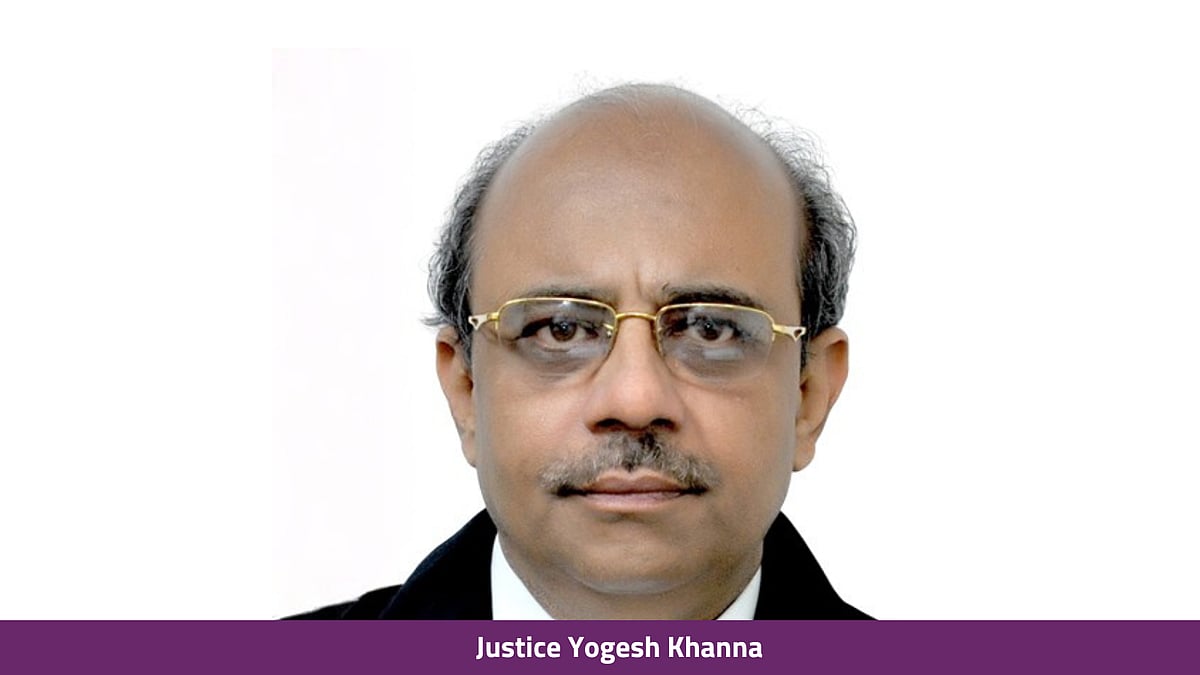
Justice Yogesh Khanna appointed NCLAT officiating chairperson
Abstract
The Central government has appointed Justice Yogesh Khanna as the officiating Chairperson of the National Company Law Appellate Tribunal (NCLAT), following the retirement of Justice Ashok Bhushan. Justice Khanna, who has served as a judicial member since February 2024, will hold the position for three months or until a regular chairperson is appointed, whichever is earlier. This interim appointment underscores the ongoing challenges of ensuring stable and timely leadership in India's critical quasi-judicial bodies, particularly given NCLAT's pivotal role in corporate insolvency and company law matters. The move aims to maintain the tribunal's functioning while a permanent successor is identified.
Introduction
The National Company Law Appellate Tribunal (NCLAT), a cornerstone of India's corporate governance and insolvency framework, recently saw a significant leadership change with the appointment of Justice Yogesh Khanna as its officiating Chairperson. This development follows the retirement of Justice Ashok Bhushan, who demitted office on July 4, 2026, after a distinguished tenure. Justice Khanna, a seasoned judicial member of the NCLAT, will assume the interim role for a period of three months or until a regular chairperson is appointed, or until further orders, whichever is earlier.
Background
The NCLAT was established by the Central Government of India under Section 410 of the Companies Act, 2013, coming into effect on June 1, 2016. It serves as a crucial appellate authority, primarily hearing appeals against orders passed by the National Company Law Tribunal (NCLT) under the Companies Act, 2013, and Section 61 of the Insolvency and Bankruptcy Code, 2016 (IBC). Beyond corporate and insolvency matters, NCLAT's jurisdiction extends to appeals against directions, decisions, or orders issued by the Insolvency and Bankruptcy Board of India (under Sections 202 and 211 of IBC), the Competition Commission of India (CCI), and the National Financial Reporting Authority (NFRA). The tribunal plays a vital role in streamlining corporate dispute resolution, reducing the burden on High Courts, and ensuring consistency in the application of corporate and insolvency laws.
The composition of the NCLAT includes a Chairperson and a maximum of eleven judicial and technical members. The Chairperson, as per Section 411 of the Companies Act, 2013, must be a person who is or has been a Judge of the Supreme Court or a Chief Justice of a High Court. The appointment process for the Chairperson and Judicial Members mandates consultation with the Chief Justice of India, as stipulated by Section 412(1) of the Companies Act, 2013, to ensure judicial independence and competence. Justice Ashok Bhushan, a former Supreme Court Judge, had been leading the NCLAT since November 2021, having been reappointed in 2025, and retired upon reaching the statutorily mandated age of 70 years on July 4, 2026.
Analysis
Justice Yogesh Khanna's appointment as the officiating Chairperson, effective from July 5, 2026, is a temporary measure designed to ensure continuity in the NCLAT's operations following Justice Bhushan's retirement. Justice Khanna brings significant judicial experience, having served as a judge of the Delhi High Court and subsequently as a judicial member of the NCLAT since February 19, 2024. His background, including presiding over high-profile cases during his tenure as an Additional Sessions Judge, underscores his judicial acumen.
The 'officiating' nature of the appointment, limited to three months or until a regular chairperson is appointed, highlights a recurring challenge in the Indian tribunal system: the timely filling of critical vacancies. While Section 412 of the Companies Act, 2013, outlines a structured procedure for the selection and appointment of the Chairperson and members, involving consultation with the Chief Justice of India, delays in permanent appointments can lead to periods of interim leadership. Such temporary arrangements, while necessary to prevent a vacuum, can potentially affect the tribunal's long-term strategic direction, consistency in policy-making, and overall stability. The NCLAT (Salaries, Allowances and other Terms and Conditions of Service of Chairperson and other Members) Rules, 2015, also govern the conditions of service, but the temporary nature of the appointment itself can introduce an element of uncertainty.
The broader context of tribunalization in India has seen debates regarding judicial independence, security of tenure, and the impact of executive control over appointments. The Supreme Court and the Law Commission of India have, on various occasions, emphasized the need for robust appointment mechanisms to maintain the autonomy and efficacy of tribunals. Short tenures, such as the three-month period for an officiating chairperson, can be perceived as undermining the security of tenure deemed essential for judicial independence and may deter highly qualified candidates from seeking such positions. The ongoing movement of judicial members, such as Justice Sharad Kumar Sharma's anticipated transfer from the Chennai bench to the principal bench in New Delhi, further illustrates the dynamic nature of the tribunal's composition and the need for stable leadership to manage these transitions effectively.
Conclusion
Justice Yogesh Khanna's appointment as the officiating Chairperson of the NCLAT is a pragmatic step to ensure the continued functioning of this vital appellate body. His extensive judicial background provides a strong foundation for maintaining the tribunal's efficiency in the interim. However, the temporary nature of this appointment underscores the persistent need for a streamlined and expeditious process for appointing permanent leadership in India's tribunals. A stable and long-term chairperson is crucial for providing consistent judicial guidance, addressing the backlog of cases, and fostering confidence among corporate entities, creditors, and other stakeholders navigating the complexities of company law and insolvency.
For legal practitioners, this interim period calls for continued vigilance regarding the NCLAT's functioning and any procedural or substantive shifts that might occur. The focus will now turn to the Central government's efforts to identify and appoint a permanent chairperson. A swift and transparent appointment process, adhering to the principles of judicial independence and merit, will be essential to reinforce the NCLAT's role as a robust and reliable institution in India's economic and legal landscape. The legal community will be keenly watching for developments that ensure the tribunal's sustained effectiveness and stability.
Citations
- 1.Companies Act, 2013
- 2.Insolvency and Bankruptcy Code, 2016
- 3.NCLAT (Salaries, Allowances and other Terms and Conditions of Service of Chairperson and other Members) Rules, 2015
- 4.Bar and Bench (Source for the excerpt)
- 5.SCC Online (Justice Ashok Bhushan concludes tenure as NCLAT Chairman: Throwback to an illustrious career and key decisions)
- 6.Whalesbook (NCLAT Chairperson Justice Ashok Bhushan Retires July 4)
- 7.LiveLawBiz (Justice Ashok Bhushan Appointed As NCLAT Chairperson For Second Term)
- 8.Wikipedia (National Company Law Appellate Tribunal)
- 9.Shankar IAS Parliament (National Company Law Appellate Tribunal (NCLAT))
- 10.IBC Laws (Section 412 of Companies Act, 2013: Selection of Members of Tribunal and Appellate Tribunal)
- 11.LawBhoomi (Appeals under Insolvency and Bankruptcy Code)
- 12.iPleaders (All about the National Company Law Appellate Tribunal (NCLAT))
- 13.National Company Law Appellate Tribunal (NCLAT) official website (About NCLAT)
- 14.National Company Law Appellate Tribunal (NCLAT) official website (Act & Rules)
- 15.Tranzission (From NCLT to NCLAT and the Supreme Court: IBC Appeals Process Explained)
- 16.Himanshu Soni (MR LAW OFFICER) (NCLT and NCLAT Explained (With Sections))
- 17.Advocate Kapil Chandna (NCLAT: Jurisdiction and IBC Regime)
- 18.KanoonGPT (Section 412 – Selection Of Members Of Tribunal And Appellate Tribunal)
- 19.National Company Law Appellate Tribunal (NCLAT) official website (About Chairperson)
- 20.PRS Team (Understanding tribunal reforms and challenges)
- 21.PMF IAS (Tribunals in India: Significance & Their Challenges)
- 22.Gautam Bhatia (Guest Post: Concerns Around the Tribunals Reform Ordinance)
- 23.iPleaders (Critical analysis of the Tribunals Reforms Ordinance, 2021)