
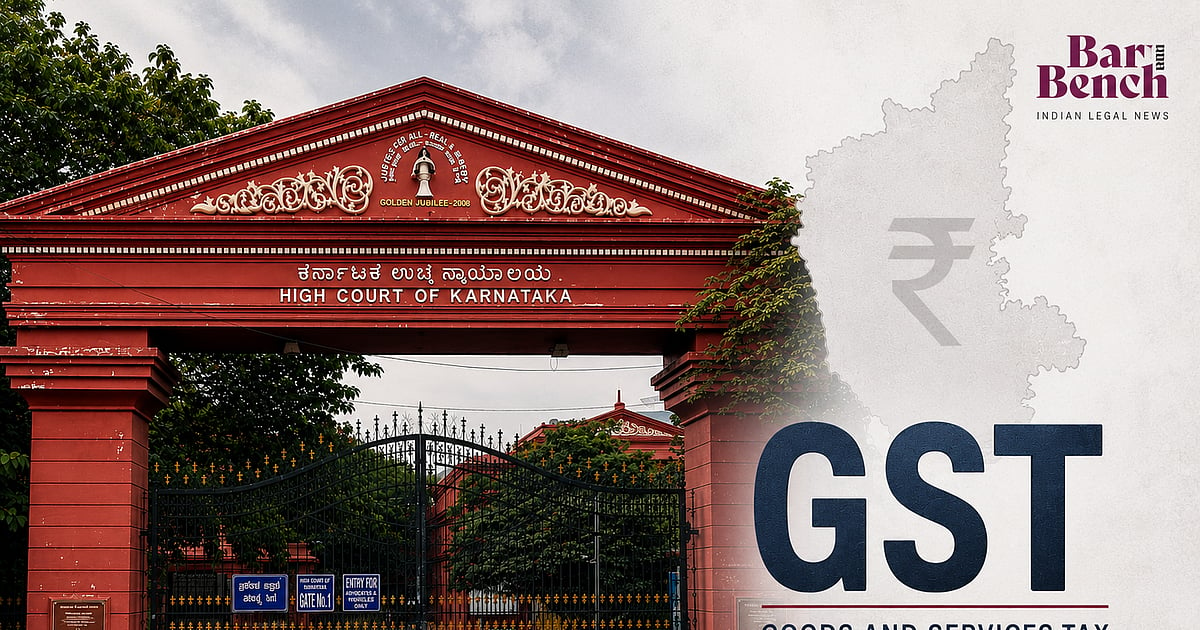
Karnataka HC curtails relief to contractors in GST reimbursement cases, says courts cannot waive statutory dues
Abstract
The Karnataka High Court, in a significant ruling, has curtailed the relief available to contractors seeking reimbursement for additional Goods and Services Tax (GST) burdens incurred during the transition from the Value Added Tax (VAT) regime. While acknowledging that contractors may pursue contractual claims against government departments for such reimbursements, a Division Bench of Chief Justice Vibhu Bakhru and Justice KS Hemalekha clarified that courts cannot issue directions that override the statutory provisions of the GST law. This includes waiving requirements for filing revised GST returns, relaxing limitation periods, or granting relief from statutory interest and penalties. The decision underscores the principle that contractual disputes, while valid, cannot circumvent the strictures of tax legislation.
Introduction
The transition to the Goods and Services Tax (GST) regime in India, effective July 1, 2017, presented a unique set of challenges, particularly for ongoing public works contracts. Many contractors, having entered into agreements based on pre-GST tax structures (like VAT), found themselves burdened with increased tax liabilities under GST, often without explicit contractual provisions for reimbursement. This situation led to a wave of litigation, with contractors seeking judicial intervention to compel government employers to reimburse the differential tax amounts.
In a pivotal development, the Karnataka High Court, through orders passed on June 10 and June 12, 2024, has provided much-needed clarity on the scope of judicial relief in such cases. A Division Bench, comprising Chief Justice Vibhu Bakhru and Justice KS Hemalekha, partly allowed appeals filed by the State and tax authorities, modifying a single-judge's broader directions. The ruling draws a critical distinction between a contractor's contractual right to seek reimbursement from their employer and the statutory obligations imposed by the GST framework, asserting that courts cannot waive statutory dues or procedural requirements.
This article delves into the Karnataka High Court's decision, examining its implications for contractors, government departments, and the broader interpretation of tax statutes in the context of contractual disputes. It highlights the court's emphasis on statutory adherence and the limitations of judicial discretion in matters governed by specific tax legislation.
Background
Prior to July 1, 2017, works contracts in India were subject to various indirect taxes, including Value Added Tax (VAT) and service tax. The introduction of the Central Goods and Services Tax Act, 2017 (CGST Act) and the Karnataka Goods and Services Tax Act, 2017 (KGST Act), along with other allied GST laws, subsumed these erstwhile taxes into a unified GST regime. This shift often resulted in a change in the effective tax rate applicable to works contracts, leading to an increased tax burden for contractors who had entered into agreements based on the previous tax structure.
Many public works contracts, especially those awarded shortly before the GST rollout, did not contain specific clauses addressing tax escalation or reimbursement for changes in the tax law. Consequently, contractors who were subsequently required to pay GST on ongoing projects sought reimbursement of this differential tax from their government employers. When these claims were not met, contractors often approached the courts, seeking directions for reimbursement and relief from GST recovery proceedings, including interest and penalties.
The statutory framework governing GST in India is comprehensive, outlining specific procedures for filing returns (Section 39 of the CGST Act), payment of interest on delayed tax (Section 50 of the CGST Act), and the determination of tax liabilities, including penalties (Sections 73, 74, and 122 of the CGST Act). These provisions include strict timelines for filing returns, limitations on revising returns, and mandatory interest and penalties for non-compliance. The issue before the High Court was whether judicial intervention in contractual disputes could extend to overriding these statutory tax compliance requirements.
Analysis
The Karnataka High Court's Division Bench, in appeals arising from cases such as *The State of Karnataka and others v. M/s. Sri Maruthi Constructions and others* and *The State of Karnataka and others v. M/s. S.R. Constructions and others*, addressed the critical interplay between contractual rights and statutory tax obligations. The appeals challenged a single-judge's order that had granted wide-ranging relief to contractors, including directions for reimbursement of GST, permission to file revised GST returns, relaxation of limitation periods, and waiver of interest and penalties.
The Division Bench, while acknowledging that contractors could pursue claims against government departments for reimbursement of additional tax burdens, firmly held that courts cannot issue directions that contravene the express provisions of the GST statutes. The court emphasized that the obligation to file GST returns, the assessment of tax, and the levy of interest and penalties are matters of strict statutory prescription under the CGST Act and KGST Act. For instance, Section 39 of the CGST Act mandates the furnishing of returns within prescribed timelines, and generally, returns cannot be revised once submitted. Similarly, Section 50 of the CGST Act stipulates that interest is payable on delayed payment of tax, and this liability arises automatically by operation of law.
The Division Bench specifically modified the single-judge's directions that had incorporated reliefs from an earlier judgment in *Sri Chandrashekaraiah and others Vs. The State of Karnataka*, W.P. No. 20006/2017. The single-judge's reliance on *Sri Chandrashekaraiah* to grant waivers of statutory interest, penalties, and limitation periods was deemed unsustainable. The Division Bench clarified that while the question of a contractor's entitlement to reimbursement from the employer is a contractual matter, it does not alter the regulatory scheme for GST. The court underscored that the power to waive statutory dues or extend limitation periods rests with the legislature or specifically empowered authorities, not with the judiciary, thereby upholding the principle of separation of powers and the sanctity of tax legislation.
This ruling highlights a crucial distinction: a contractual dispute between a contractor and a government entity regarding tax reimbursement is separate from the contractor's statutory liability to the tax authorities. While a court may adjudicate the former, it cannot interfere with the latter by granting exemptions not provided for in the tax law. The judgment effectively reinforces that compliance with GST procedures, including timely filing, payment, and adherence to limitation periods, remains paramount, irrespective of any ongoing contractual disputes with employers.
Conclusion
The Karnataka High Court's decision serves as a critical reminder for legal practitioners, particularly those advising contractors and government departments involved in public works. The ruling unequivocally establishes that while contractors may have valid contractual claims for reimbursement of increased tax burdens, these claims must be pursued within the confines of contract law and cannot be used to circumvent statutory GST obligations. Courts, in their adjudicatory role, will not override explicit provisions of tax legislation concerning returns, limitation, interest, or penalties.
Practitioners should advise clients to ensure that public works contracts explicitly address tax escalation clauses and mechanisms for reimbursement in light of changes in tax laws. For existing contracts, timely compliance with GST filing and payment requirements is crucial to avoid statutory interest and penalties, even while pursuing reimbursement claims. The judgment reinforces the need for a clear understanding of the distinct legal frameworks governing contractual relationships and tax liabilities, urging parties to seek statutory remedies for tax-related issues and contractual remedies for breach of contract. This ruling will likely influence future litigation strategies and contractual drafting in the infrastructure sector across India.
Citations
- 1.The State of Karnataka and others v. M/s. Sri Maruthi Constructions and others (Karnataka High Court, June 10 and June 12, 2024)
- 2.The State of Karnataka and others v. M/s. S.R. Constructions and others (Karnataka High Court, June 10 and June 12, 2024)
- 3.Sri Chandrashekaraiah and others Vs. The State of Karnataka, W.P. No. 20006/2017
- 4.Central Goods and Services Tax Act, 2017
- 5.Karnataka Goods and Services Tax Act, 2017
- 6.Section 39 of the Central Goods and Services Tax Act, 2017
- 7.Section 50 of the Central Goods and Services Tax Act, 2017
- 8.Section 73 of the Central Goods and Services Tax Act, 2017
- 9.Section 74 of the Central Goods and Services Tax Act, 2017
- 10.Section 122 of the Central Goods and Services Tax Act, 2017