
Kenya launches the Women, Peace and Security programme
Abstract
Kenya has launched a new three-year initiative, the "Strengthening Policy Frameworks for Women's Participation in Peace and Security Governance in Arid and Semi-Arid Lands (ASAL) and Informal Settlements Programme (2026–2028)". This programme aims to bolster policy frameworks, enhance women's leadership in peace and security governance, strengthen institutional accountability, and foster partnerships for peaceful communities in vulnerable regions. The initiative, aligned with Kenya's Third National Action Plan on Women, Peace and Security (KNAP III 2025–2029) and UN Security Council Resolution 1325, seeks to address persistent insecurity and women's underrepresentation, particularly in the lead-up to the 2027 General Elections.
Introduction
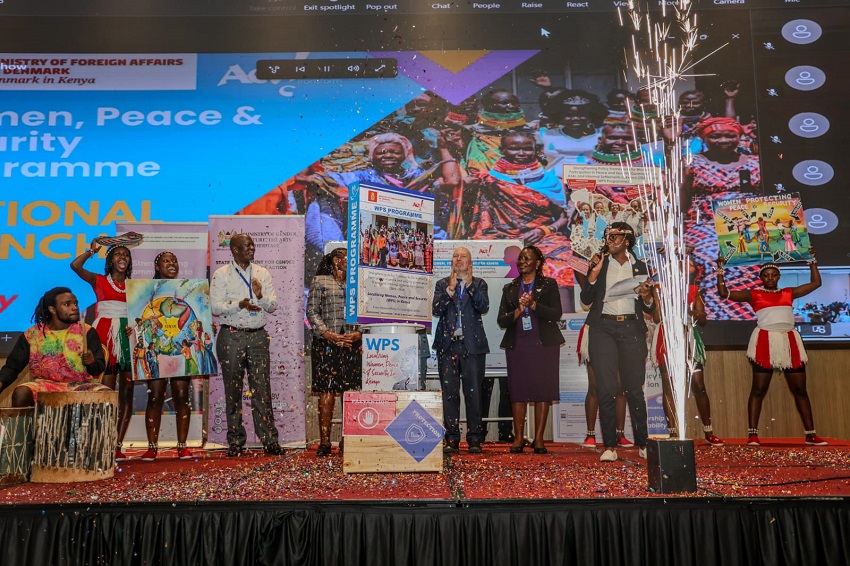
Kenya has taken a significant step towards inclusive peacebuilding and gender equality with the recent launch of the "Strengthening Policy Frameworks for Women's Participation in Peace and Security Governance in Arid and Semi-Arid Lands (ASAL) and Informal Settlements Programme (2026–2028)". This three-year initiative, spearheaded by Act Change Transform (Act!) with support from the Embassy of Denmark and the Government of Kenya's State Department for Gender and Affirmative Action, marks a renewed commitment to integrating women's crucial role in conflict prevention and resolution.
The programme's launch comes at a critical juncture for Kenya, as the nation prepares for the 2027 General Elections amidst ongoing challenges such as resource-based conflicts, climate change impacts, and violent extremism, particularly in ASAL counties and informal settlements. Despite women often bearing the brunt of these conflicts and playing vital roles in community mediation, their participation in formal peace and security processes remains limited. This article will delve into the legal and policy underpinnings of this new programme, examining its objectives, alignment with national and international frameworks, and the implications for legal practitioners working towards gender-responsive peace and security in Kenya.
Background
The foundation for Kenya's Women, Peace and Security (WPS) agenda is firmly rooted in international and national legal instruments. Globally, United Nations Security Council Resolution (UNSCR) 1325, adopted unanimously in 2000, is the cornerstone. It formally recognised the disproportionate impact of armed conflict on women and girls and called for their equal participation in conflict prevention, resolution, peacebuilding, peacekeeping, and post-conflict reconstruction. Subsequent WPS resolutions have reinforced these commitments, linking peace to gender equality and inclusive governance.
Domestically, Kenya has progressively institutionalised the WPS agenda through a series of National Action Plans (NAPs). The first Kenya National Action Plan (KNAP I) was launched in 2016, followed by KNAP II (2020–2024), which emphasised localisation through County Action Plans. The newly launched programme is strategically aligned with Kenya's Third National Action Plan on Women, Peace and Security (KNAP III 2025–2029), which reaffirms the government's commitment to UNSCR 1325 and addresses emerging challenges like climate-related conflict and technology-facilitated gender-based violence. Furthermore, the Constitution of Kenya, 2010, provides a robust framework for gender equality and non-discrimination, notably Article 27, which guarantees equality before the law and prohibits discrimination on various grounds, including sex. Article 27(8) specifically mandates legislative and other measures to ensure that not more than two-thirds of the members of elective or appointive bodies are of the same gender, a principle that continues to drive efforts for women's increased representation. The National Gender and Equality Commission Act, 2011, further establishes the National Gender and Equality Commission (NGEC) with a mandate to promote gender equality and freedom from discrimination, including monitoring compliance with relevant laws and policies.
Analysis
The "Strengthening Policy Frameworks for Women's Participation in Peace and Security Governance in ASALs and Informal Settlements Programme" is designed to translate Kenya's high-level policy commitments into tangible action at the grassroots level. Its core pillars – strengthening policy frameworks, promoting women's leadership, enhancing institutional accountability, and fostering partnerships – directly address identified gaps in the implementation of the WPS agenda. While Kenya has made strides, such as increasing women's participation in peace committees from 14% in 2013 to 34% in 2023 under previous KNAPs, women's representation in formal peace processes and decision-making bodies often remains below the constitutional two-thirds gender rule target.
One critical aspect of the programme is its focus on ASALs and informal settlements, regions disproportionately affected by conflict and where women face significant barriers to participation. This geographical focus aligns with findings that women in these areas, despite their informal mediation efforts and roles in early warning systems, often lack influence in formal peace structures. The programme's emphasis on strengthening policy frameworks aims to ensure that national and county-level policies are gender-responsive and effectively integrate women's perspectives into conflict prevention, resolution, and post-conflict recovery strategies.
From a legal perspective, the programme seeks to operationalise the principles enshrined in the Constitution of Kenya, 2010, particularly Article 27 on equality and non-discrimination. By promoting women's meaningful leadership, it directly supports the spirit of the two-thirds gender rule, which, despite constitutional backing, has faced implementation challenges. The programme's focus on institutional accountability is crucial for ensuring that government agencies and other stakeholders are held responsible for advancing the WPS agenda and addressing gender-based violence, which often escalates during conflicts.
Furthermore, the initiative's alignment with the African Union Continental Results Framework on WPS and various Sustainable Development Goals (SDGs 5, 13, 16, 17) demonstrates a comprehensive approach that integrates national efforts within broader regional and global development agendas. The emphasis on partnerships, involving government, civil society, and international organisations, is vital for overcoming funding gaps and coordination challenges that have historically hindered the full implementation of WPS initiatives in Kenya.
Conclusion
The launch of Kenya's new Women, Peace and Security programme represents a significant and timely intervention in the country's ongoing efforts to foster inclusive and sustainable peace. By focusing on policy frameworks, leadership, accountability, and partnerships within vulnerable communities, the initiative has the potential to translate constitutional and international commitments into tangible improvements for women in peace and security governance.
For legal practitioners, this programme signals increased opportunities for engagement in gender-responsive legal reform, advocacy, and litigation. Attorneys should monitor the development and implementation of strengthened policy frameworks at both national and county levels, particularly those related to women's participation in peace committees, conflict resolution mechanisms, and electoral processes. There will be a continued need for legal expertise to ensure institutional accountability, address discrimination, and champion the full realisation of the two-thirds gender rule. Practitioners should also be prepared to support civil society organisations and women's groups in leveraging these new frameworks to advance women's rights and leadership in peacebuilding, especially as Kenya approaches the 2027 General Elections. The success of this programme will ultimately depend on sustained political will, adequate resource allocation, and robust legal enforcement mechanisms.
Citations
- 1.Constitution of Kenya, 2010
- 2.National Gender and Equality Commission Act, 2011
- 3.United Nations Security Council Resolution 1325 (2000)
- 4.Kenya's National Action Plan on Women, Peace and Security (KNAP III) 2025–2029
How does this affect your business?
Get an AI analysis of this article grounded in your jurisdictions, practice areas, and any policy documents you've uploaded to Wansom.