
Kenya's County Allocation of Revenue Act, 2026: Unlocking Sh428 Billion
Abstract
The Kenyan National Assembly's approval, and subsequent Presidential assent, of the County Allocation of Revenue Bill, 2026, marks a significant milestone in Kenya's fiscal devolution framework. This legislation unlocks KES 428 billion as the equitable share of nationally raised revenue for the 47 county governments for the 2026/27 financial year. The allocation, representing 20.9% of the most recently audited national revenue, surpasses the constitutional minimum of 15% and aims to bolster counties' capacity to deliver essential services and implement development priorities. The Act operationalises the horizontal sharing of revenue among counties based on a multi-factor formula and introduces enhanced fiscal discipline and transparency measures, addressing perennial challenges in intergovernmental fiscal relations.
Introduction
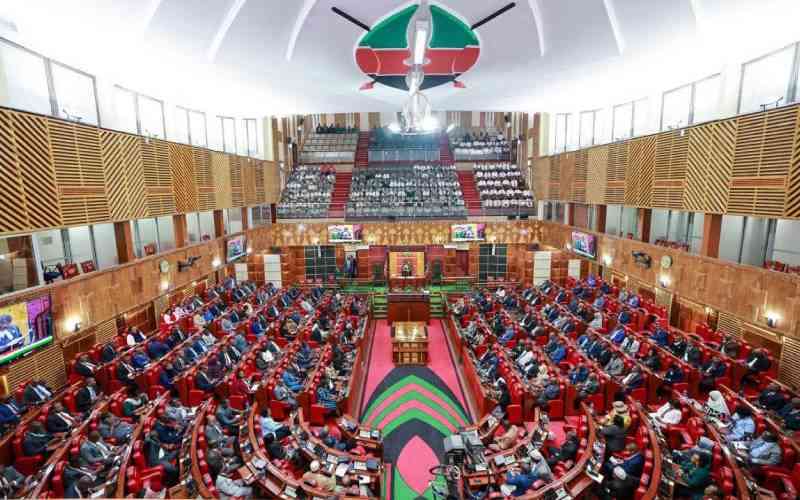
Kenya's devolved system of government, enshrined in the 2010 Constitution, places significant emphasis on fiscal decentralisation to promote equitable development and service delivery across its 47 counties. A critical annual legislative process in this framework is the enactment of the County Allocation of Revenue Act. The recent approval by the National Assembly and subsequent assent by President William Ruto of the County Allocation of Revenue Bill, 2026, now the County Allocation of Revenue Act, 2026, is a pivotal development, allocating a substantial KES 428 billion to county governments for the 2026/27 financial year.
This allocation is not merely a financial transfer; it is the lifeblood of county operations, directly impacting healthcare, agriculture, infrastructure, and early childhood education, among other devolved functions. The passage of this Act, following intense inter-parliamentary negotiations, underscores the ongoing commitment to strengthening devolution while simultaneously introducing stricter fiscal discipline and accountability mechanisms. This article delves into the legal underpinnings of this allocation, examining the constitutional and statutory framework, the intricacies of the revenue-sharing formula, and the implications for legal practitioners and county governance.
Background
The architecture of public finance in Kenya is primarily governed by Chapter Twelve of the Constitution of Kenya, 2010, particularly Articles 202, 203, 204, 215, 216, 217, and 218. Article 202 mandates the equitable sharing of revenue raised nationally between the national and county governments, and among county governments. Article 203 sets out the criteria for this equitable sharing, including national interest, public debt, needs of vulnerable groups, and fiscal capacity and efficiency of counties.
The process of revenue allocation involves two key annual legislative instruments: the Division of Revenue Act and the County Allocation of Revenue Act. The Division of Revenue Act, enacted pursuant to Article 218(1)(a), determines the vertical sharing of revenue between the national and county levels of government. Subsequently, the County Allocation of Revenue Act, enacted under Article 218(1)(b), provides for the horizontal sharing of the county governments' equitable share among the 47 counties, based on a formula approved by Parliament as per Article 217. The Commission on Revenue Allocation (CRA), established under Article 215, plays a crucial advisory role by making recommendations on the basis for equitable sharing of revenue. Further, the Public Finance Management Act, 2012 (PFMA), provides the comprehensive statutory framework for the effective management of public finances by both levels of government, including budgeting, expenditure control, and reporting.
Analysis
The County Allocation of Revenue Act, 2026, is the culmination of a constitutionally mandated process, operationalising the KES 428 billion equitable share for counties. This figure represents 20.9% of the most recently audited national revenue for the 2022/23 financial year, a notable increase above the constitutional minimum of 15%, reflecting a strengthened commitment to devolution. The Act's primary function is to distribute this equitable share among the 47 counties using the fourth revenue-sharing formula approved by Parliament in June 2025, in accordance with Article 217 of the Constitution.
The formula itself is a composite one, designed to balance equity and need across diverse counties. It dictates that 35% of the allocation will be shared equally among all counties, 45% based on population, 12% according to poverty levels, and 8% based on geographical size. To mitigate against sudden budgetary shocks, the Act includes a provision where the first KES 387.425 billion will be distributed using a baseline allocation linked to what each county received in the 2024/25 financial year. This mechanism aims to provide a stable financial foundation for county operations and development projects.
Beyond mere allocation, the new legislation introduces stricter fiscal discipline measures. It places ceilings on recurrent expenditure for county executives and county assemblies, a direct response to concerns over rising wage bills and the need to channel more funds towards development projects. Furthermore, it enhances transparency by requiring the National Treasury to publish monthly reports on disbursements to counties, while county governments are mandated to account for all transfers received in their quarterly and annual financial reports. Section 9 of the Act stipulates that serious or persistent non-compliance with its provisions constitutes an offence under the Public Finance Management Act, 2012, aiming to bolster accountability.
However, the implementation of such legislation is not without its challenges. Historically, disputes over revenue allocation and delays in fund disbursement have been common, often leading to friction between the national and county governments. The Intergovernmental Relations Act, 2012, provides a framework for consultation and dispute resolution, but practical challenges persist. Legal practitioners frequently encounter issues related to adherence to budget ceilings, timely reporting, and the legal implications of financial misconduct at the county level. The vagueness of terms like "serious or persistent non-compliance" in previous iterations of the Act has also been a point of contention regarding accountability.
Conclusion
The enactment of the County Allocation of Revenue Act, 2026, is a critical step in ensuring the continued functioning and development of Kenya's devolved units. The KES 428 billion allocation, coupled with a refined sharing formula and enhanced accountability measures, signals a robust commitment to fiscal devolution. For legal practitioners, this Act presents both opportunities and challenges. Advising county governments on compliance with expenditure ceilings, ensuring timely and accurate financial reporting, and navigating potential disputes arising from delayed disbursements or alleged financial misconduct will be paramount.
Practitioners should closely monitor the implementation of the new fiscal discipline and transparency provisions, particularly how "serious or persistent non-compliance" is interpreted and enforced under the Public Finance Management Act. The efficacy of the intergovernmental dispute resolution mechanisms under the Intergovernmental Relations Act, 2012, will also remain a key area of observation. As counties embark on the 2026/27 financial year with this significant financial boost, the legal community will play a crucial role in upholding the principles of public finance and ensuring that the benefits of devolution reach all Kenyans equitably.
Citations
- 1.Constitution of Kenya, 2010, Articles 202, 203, 204, 215, 216, 217, 218.
- 2.Public Finance Management Act, 2012 (No. 18 of 2012).
- 3.Intergovernmental Relations Act, 2012 (No. 2 of 2012).
- 4.County Allocation of Revenue Act, 2026.
- 5.Division of Revenue Act, 2026.
How does this affect your business?
Get an AI analysis of this article grounded in your jurisdictions, practice areas, and any policy documents you've uploaded to Wansom.