
Kenya's Sixfold Duty-Free Threshold Increase: Customs Reform, Diaspora Policy, and the Enforcement Gap That Follows
Abstract
Kenya's Finance Act 2026 raises the passenger duty-free allowance sixfold from Ksh.39,000 to Ksh.260,000 settling a bitter public dispute over JKIA customs enforcement and formally recognising a diaspora community that remitted nearly Ksh.932 billion home in the past year alone. But the headline relief conceals a harder question: without clear enforcement guidelines on the line between personal and commercial importation, the new threshold may do less to protect returning travellers than it does to open a structured evasion channel and the businesses, regulators, and legal advisers who need to respond have very little time to act.
Introduction
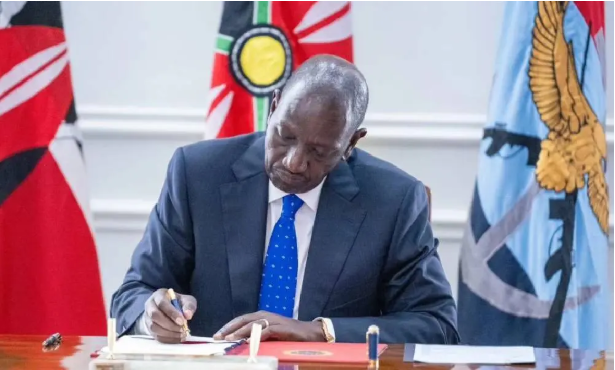
On 24 June 2026, President William Ruto signed the Finance Bill 2026/2027 into law at State House, Nairobi, enacting the Finance Act 2026 alongside the Appropriations Act. Among the measures contained within it is an amendment raising Kenya's duty-free allowance for passengers arriving in the country from Ksh.39,000 to Ksh.260,000 a more than sixfold increase effective immediately.
The announcement was accompanied by language that made the political intent clear. The President specifically referenced "concerns raised by returning travellers, including Kenyans who travel abroad and members of the diaspora," framing the measure as a response to a long-running public grievance rather than purely as a technical customs adjustment.
That grievance has been building for years. It crystallised publicly around incidents of what many travellers described as aggressive and inconsistent customs enforcement at JKIA, where KRA officers inspected luggage and imposed duties on personal items in ways perceived as arbitrary, discriminatory, and disproportionate. The controversy peaked in the period from late 2023 onwards, prompting a government review and the January 2025 Airport Charter a cross-ministerial commitment to reform airport operations that had provisionally raised the threshold to Ksh.250,000 pending statutory entrenchment. The Finance Act 2026 now gives that commitment legislative force at Ksh.260,000.
Background
Kenya's customs regime is governed by the East African Community Customs Management Act 2004 (EACCMA), which exempts passengers' baggage and personal effects from customs duty under conditions set out in its Fifth Schedule. Arriving passengers are categorised into three groups — returning residents, tourists, and persons changing residence — each carrying different entitlements. For the largest group, returning residents, the exemption for new items acquired abroad had been capped at USD 500. In July 2024, the EAC Council of Ministers raised that regional ceiling to USD 2,000 per traveller. The Finance Act 2026 now gives that figure domestic statutory force at Ksh.260,000, bringing Kenya's national threshold into alignment with the already-operative EAC standard. Goods exceeding the threshold attract duties under the EAC Common External Tariff, which applies rates of 0%, 10%, 25%, or 35% depending on product category, plus 16% VAT, an Import Declaration Fee, and a Railway Development Levy.
The backdrop to this reform is a years-long enforcement controversy at JKIA. A November 2023 KRA public notice tightened enforcement of the existing USD 500 threshold, triggering widespread public backlash as travellers returning from Dubai, China, and Gulf states faced systematic baggage inspections, duty assessments on smartphones and clothing, and in some cases confiscation of personal items. The core problem was structural: the Ksh.39,000 threshold was so low that a single laptop or moderate wardrobe could breach it, making enforcement technically justifiable but operationally untenable. The government responded with the January 2025 Airport Charter, which provisionally raised the threshold administratively to Ksh.250,000 and committed to body-worn cameras for customs officers and risk-profiling-based inspection. The Finance Act 2026 converts that administrative commitment into law.
The strategic significance of the reform cannot be separated from the scale of Kenya's diaspora economy. The 2025 Remittances Household Survey — published jointly by KNBS, CBK, and FSD Kenya — found that Kenyan households received Ksh.931.8 billion in remittance inflows in the twelve months to May 2025, of which Ksh.651.2 billion moved through formal channels and Ksh.280.6 billion through informal means including goods physically carried home. In-kind remittances alone — electronics, clothing, and household goods brought by returning diaspora members — were valued at Ksh.83.5 billion. The CBK projects formal remittances to reach USD 5.24 billion in 2026, consistently outperforming tea, coffee, tourism, and horticulture as Kenya's largest source of foreign exchange.
Analysis
The Finance Act 2026 amendment to the duty-free threshold is not a standalone policy innovation — it is a domestic legislative ratification of an existing regional ceiling. The EAC Council of Ministers' July 2024 Gazette Notice had already raised the EAC-wide exemption to USD 2,000 per traveller. The domestic threshold of Ksh.39,000 — far below USD 2,000 — had therefore been in a state of practical inconsistency with the regional framework. Domestic administrative practice was applying a lower standard than the regionally mandated ceiling, creating both legal uncertainty and operational friction.
The Finance Act 2026 resolves this inconsistency. With the Ksh.260,000 threshold, Kenya's domestic allowance now substantially mirrors the USD 2,000 EAC ceiling (at the current approximate exchange rate of Ksh.129–130 per USD), providing a unified standard that can be administered consistently at all ports of entry.
However, the amendment creates a new set of legal questions. The EACCMA framework stipulates that the duty-free exemption applies specifically to personal effects and baggage goods imported for personal or household use, not for commercial purposes. The Finance Act does not fundamentally alter this personal-use requirement. What it does is raise the monetary ceiling below which customs officers are unlikely to scrutinise goods at all. At Ksh.39,000, even modest personal purchases triggered assessment. At Ksh.260,000, a much wider range of goods will fall under the exemption — reducing enforcement intervention but also widening the space in which the personal-use / commercial-use distinction becomes both critical and contestable.
The key legal ambiguity that now emerges is this: the EACCMA explicitly requires that goods brought under the passenger exemption be for personal or household use and not for resale or commercial purposes. There is no bright-line definition of what constitutes commercial use when the goods are physically accompanied by the traveller. KRA officers retain the discretion to challenge claimed personal use, but that discretion becomes harder to exercise as the threshold rises — because a traveller bringing goods worth, say, Ksh.200,000 now falls within the exemption by value even if the goods are destined for resale. The enforcement burden shifts from value-based interception to intent-based assessment, which is a far more complex standard to apply consistently.
From an institutional governance perspective, the reform creates an accountability gap that both the KRA and National Treasury must address urgently. The previous enforcement model — however flawed and publicly contested — had at least a simple value-based trigger. Customs officers could assess whether goods exceeded Ksh.39,000 and act accordingly. The new model requires a more nuanced standard: goods worth up to Ksh.260,000 for personal use are exempt; goods above that, or goods below that threshold but for commercial use, remain taxable.
Implementing this distinction at scale — across thousands of arriving passengers daily at JKIA and other ports of entry — requires meaningful risk-profiling capability. The January 2025 Airport Charter had committed to Advanced Passenger Information Systems and body-worn cameras for customs officers. Whether those systems are fully operational and whether they are capable of supporting intent-based enforcement is a question that the government has not publicly answered. If KRA lacks the tools to distinguish personal from commercial use at scale, the new threshold is likely to result in systematic evasion of commercial import duties through the passenger channel.
Hospitality and Tourism. The reform is not exclusively about goods importation. Diaspora visitors who no longer face aggressive customs scrutiny on arrival are likely to spend more freely during their visits. Hotel, transport, restaurant, entertainment, and event spending by diaspora returnees is a meaningful component of domestic economic activity. A smoother, less contentious arrival experience removes a friction point that may have deterred some diaspora members from making extended visits.
Financial Services and Remittances. The shift in policy also has indirect implications for the financial services sector. If diaspora members feel more confident bringing goods home, some portion of their overseas purchasing may substitute for wire remittances used to fund local purchases. This could marginally reduce formal remittance volumes while increasing in-kind transfer values — a shift that would be captured in goods-based rather than cash-based remittance data. Banks and mobile money providers monitoring the remittance corridor should be alert to potential shifts in the form, if not the volume, of diaspora transfers.
Regulatory Risk — Enforcement Gap. The most immediate regulatory risk is that KRA's enforcement infrastructure is not calibrated for the new threshold. The shift from a value-based to an intent-based enforcement standard creates a grey zone that experienced customs evasion practitioners will identify and exploit quickly. KRA's capacity to implement risk-profiling-based enforcement at scale is unverified.
Compliance Risk — Commercial Importation Disguised as Personal Effects. The higher threshold substantially lowers the cost of using the passenger channel for commercial importation. Organised importers could use a network of returning travellers — each declaring personal-use goods within the Ksh.260,000 limit — to import commercial quantities of goods duty-free. This is both a legal risk for participants and a revenue risk for the state.
Conclusion
The Finance Act 2026's sixfold duty-free threshold increase is a genuine and overdue concession to Kenya's diaspora — but it is not a deregulation. The personal-use condition, the declaration obligation, and the EACCMA penalties all survive intact. What has changed is the monetary ceiling at which they become relevant, and that shift carries enforcement, competitive, and revenue consequences that will define whether this reform delivers its promise or quietly becomes Kenya's most exploitable customs loophole
Citations
- 1.Finance Act 2026 (Kenya), assented to 24 June 2026 — duty-free passenger allowance amendment.
- 2.East African Community Customs Management Act 2004 (EACCMA) — governing framework for Kenya's customs regime, including Section 114 and the Fifth Schedule (Exemptions Regime)..
- 3.East African Community Customs Management Act 2004, Section 203 — offences relating to false declarations and non-declaration, including forfeiture of goods.
- 4.Value Added Tax Act, Cap. 476 (Kenya) — 16% VAT applicable to dutiable imports.
- 5.Excise Duty Act, Cap. 472 (Kenya) — applicable excise duties on specified imported goods and services.
- 6.Miscellaneous Fees and Levies Act, Cap. 469C (Kenya) — Import Declaration Fee (IDF) and Railway Development Levy (RDL).
- 7.KRA Public Notice, 2 November 2023, "Clearance at Passenger Terminal" — guidelines for customs clearance at passenger terminals.
- 8.Kenya National Bureau of Statistics, Central Bank of Kenya, and Financial Sector Deepening Kenya — 2025 Remittances Household Survey Report (published 16 June 2026).
- 9.Central Bank of Kenya — Diaspora Remittances Monthly Statistics, 2025–2026.
- 10.Treaty for the Establishment of the East African Community — Article 30 (referral of EAC institutional decisions to the East African Court of Justice).
- 11.Kenya Citizenship and Immigration Act, 2011 — relevant to passenger categorisation for customs purposes.
- 12.EAC Customs Union Protocol — governing framework for the EAC Customs Union, Common External Tariff, and member state obligations.
- 13.Finance Act 2026 — separate provisions on 5% tax on imported second-hand clothing and footwear, and excise duty amendments affecting EAC-origin goods.