
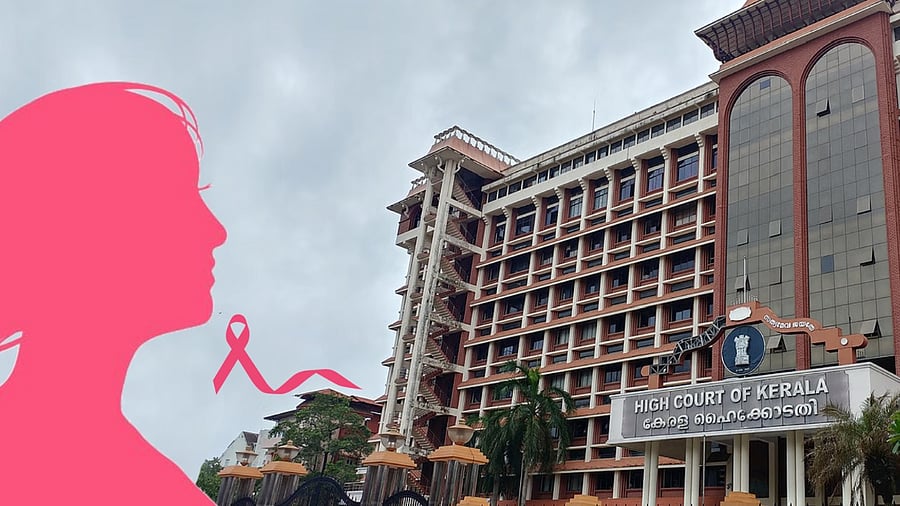
Kerala High Court seeks expert opinion on whether patented breast cancer drug has viable substitute
Abstract
The Kerala High Court has initiated a significant inquiry into the interchangeability of the off-patent breast cancer drug Palbociclib with the patented drug Ribociclib. This judicial directive, issued to four expert medical and regulatory bodies, aims to ascertain whether Palbociclib can serve as a safe and effective substitute for Ribociclib in treating breast cancer. The outcome of this expert evaluation will directly influence the potential invocation of compulsory licensing provisions under Sections 92 or 100 of India's Patents Act, 1970. The case highlights the intricate balance between intellectual property rights, public health, and access to affordable medicines, underscoring the critical role of scientific evidence in judicial determinations concerning pharmaceutical patents and public welfare.
Introduction
In a move poised to significantly impact India's pharmaceutical patent landscape and access to essential medicines, the Kerala High Court has directed four prominent expert bodies to provide their opinion on the therapeutic equivalence of two breast cancer drugs: Palbociclib and Ribociclib. The Court, in the matter of *xxx v Union of India & ors*, seeks to determine whether the off-patent drug Palbociclib can safely and effectively be used as a substitute for the patented drug Ribociclib in breast cancer treatment. This judicial inquiry is not merely a medical assessment; it carries profound legal implications, particularly for the potential exercise of the Central Government's powers under the Patents Act, 1970, to facilitate broader access to costly life-saving drugs.
The core issue at stake is whether the availability of a viable, cheaper, off-patent alternative negates the necessity for invoking compulsory licensing provisions for a patented drug. Justice Harisankar V Menon has enlisted the National Cancer Institute at Jhajjar, the Chittaranjan National Cancer Institute at Kolkata, the Regional Cancer Centre (RCC) at Thiruvananthapuram, and the Drugs Controller General of India (DCGI) as parties to the case, tasking them with submitting their expert views. The Court's observation that if Palbociclib proves interchangeable, there may be no prima facie reason to invoke Sections 92 or 100 of the Patents Act, sets the stage for a landmark decision that will undoubtedly shape future debates on patent rights, public health, and the judicial reliance on scientific expertise in India.
Background
India's patent regime, primarily governed by the Patents Act, 1970, incorporates provisions designed to balance the rights of patent holders with the broader public interest, particularly in critical sectors like public health. Central to this balance are the mechanisms of compulsory licensing and government use of patented inventions. Section 92 of the Patents Act empowers the Central Government to issue compulsory licenses in circumstances of national emergency, extreme urgency, or public non-commercial use. Such a declaration, made by notification in the Official Gazette, allows interested parties to apply for a license to work the patented invention, with the Controller endeavoring to ensure the availability of products at the lowest prices consistent with reasonable advantage for the patentee. Complementing this, Section 100 grants the Central Government the power to use patented inventions for its own purposes, even without the patent holder's consent, subject to payment of royalties.
These provisions are rooted in the flexibilities afforded by the Agreement on Trade-Related Aspects of Intellectual Property Rights (TRIPS Agreement), particularly as reaffirmed by the Doha Declaration on TRIPS and Public Health. The Doha Declaration explicitly states that the TRIPS Agreement does not and should not prevent WTO Members from taking measures to protect public health and promote access to medicines for all. India has historically utilized these flexibilities, most notably in the landmark case of *Bayer Corporation v. Natco Pharma Ltd.*, where India granted its first compulsory license under Section 84 of the Patents Act for Bayer's patented cancer drug Nexavar (Sorafenib tosylate). This decision was based on the grounds that the drug was not available to the public at a reasonably affordable price and its reasonable requirements were not being met.
The expert bodies summoned by the Kerala High Court play crucial roles in India's healthcare and regulatory ecosystem. The Drugs Controller General of India (DCGI), as the head of the Central Drugs Standard Control Organization (CDSCO), is responsible for approving licenses for specified drug categories, setting standards for manufacturing, sales, import, and distribution of drugs, and ensuring quality. Institutions like the National Cancer Institute at Jhajjar, the Chittaranjan National Cancer Institute at Kolkata, and the Regional Cancer Centre at Thiruvananthapuram are apex institutes for cancer research, treatment, and care, providing specialized medical expertise. Their collective opinion will thus provide a comprehensive assessment of the medical and regulatory aspects of drug interchangeability, directly informing the Court's legal determination.
Analysis
The Kerala High Court's directive squarely addresses a critical intersection of patent law and public health: the availability of therapeutic alternatives. The core legal question is whether the existence of an off-patent drug, Palbociclib, that can safely and effectively substitute a patented drug, Ribociclib, impacts the grounds for invoking compulsory licensing under Sections 92 or 100 of the Patents Act, 1970. Both Palbociclib (Ibrance) and Ribociclib (Kisqali) are cyclin-dependent kinase 4/6 (CDK4/6) inhibitors, approved for the treatment of hormone receptor-positive, HER2-negative advanced or metastatic breast cancer, often in combination with endocrine therapy.
Medical literature indicates that while both drugs have significantly improved outcomes for patients, there are nuances in their efficacy and safety profiles. Some studies suggest comparable efficacy in terms of progression-free survival (PFS) and overall survival (OS) for certain patient populations, including real-world data from Indian cohorts. However, differences in toxicity profiles, such as Ribociclib's potential to alter heart rhythms and Palbociclib's common association with neutropenia, necessitate distinct management strategies and highlight that they are not identical in all aspects. The expert bodies, including the DCGI, will need to provide a nuanced opinion on whether these differences preclude their interchangeability for the specific condition involved in the present case, or if they are therapeutically equivalent for a broad patient population.
From a legal standpoint, if the expert opinion confirms that Palbociclib is a safe and effective substitute, it would significantly weaken the argument for invoking compulsory licensing for Ribociclib. Sections 92 and 100 are typically triggered when the patented invention is not available to the public at a reasonably affordable price, or its reasonable requirements are not being met. If an equally efficacious and safe off-patent alternative exists, the 'reasonable requirement of the public' for the patented drug might be considered satisfied by the cheaper generic option, thereby removing a key justification for government intervention. This aligns with the principles established in *Bayer Corporation v. Natco Pharma Ltd.*, where the high price and insufficient availability of the patented drug were central to the grant of the compulsory license.
The Court's reliance on expert bodies underscores the increasing complexity of patent litigation in the pharmaceutical sector, where scientific and medical evidence is paramount. The opinions from the National Cancer Institute, Chittaranjan National Cancer Institute, Regional Cancer Centre, and the DCGI will provide the necessary scientific grounding for the Court to assess the public health need and the availability of alternatives. Any divergence in expert opinions or qualifications regarding the extent of interchangeability (e.g., for all patients versus specific subgroups) could lead to further judicial scrutiny and potentially shape the scope of future compulsory licensing applications. This case highlights a critical gap in the existing framework, where the availability of a therapeutically similar, off-patent drug directly challenges the 'necessity' criterion for compulsory licensing.
Conclusion
The Kerala High Court's decision to seek expert opinions on the interchangeability of Palbociclib and Ribociclib marks a pivotal moment in India's ongoing effort to balance pharmaceutical innovation with public health imperatives. The outcome of this case will not only determine the fate of potential compulsory licensing for Ribociclib but will also establish a significant precedent for how Indian courts assess the 'public need' and 'reasonable affordability' criteria under the Patents Act, 1970, when therapeutically similar off-patent alternatives are available.
For legal practitioners, this case underscores the critical importance of engaging with robust scientific and medical evidence in pharmaceutical patent disputes. Attorneys involved in intellectual property and public health law must be prepared to navigate complex pharmacological data, clinical trial results, and real-world evidence, as expert testimony from leading medical and regulatory bodies will directly inform judicial decisions. The final ruling will offer crucial insights into the evolving interpretation of Sections 92 and 100 of the Patents Act, particularly concerning the threshold for government intervention when an off-patent drug might mitigate the urgency for a patented one. Legal professionals should closely monitor the expert reports and the subsequent judicial pronouncements, as they will undoubtedly influence future strategies for patent enforcement, compulsory licensing applications, and the broader discourse on access to essential medicines in India.
Citations
- 1.Patents Act, 1970 (India)
- 2.Bayer Corporation v. Natco Pharma Ltd., 2012 (India)
- 3.Doha Declaration on the TRIPS Agreement and Public Health, WT/MIN(01)/DEC/2 (2001)
- 4.Drugs and Cosmetics Act, 1940 (India)
- 5.National Cancer Institute at Jhajjar (India)
- 6.Chittaranjan National Cancer Institute at Kolkata (India)
- 7.Regional Cancer Centre at Thiruvananthapuram (India)
How does this affect your business?
Get an AI analysis of this article grounded in your jurisdictions, practice areas, and any policy documents you've uploaded to Wansom.