
Lagos State Government Probes Three-Storey Building Collapse
Abstract
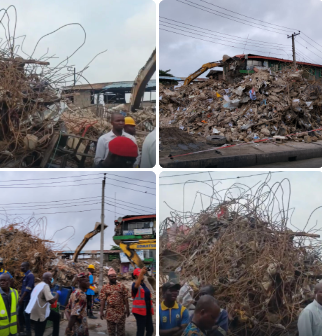
The Lagos State Government has initiated an investigation into the recent collapse of a three-storey shopping complex, underscoring the persistent challenge of building failures in Nigeria's commercial hub. This incident, occurring despite existing regulatory frameworks, highlights critical issues surrounding construction standards, regulatory oversight, and accountability within the built environment. The Lagos State Building Control Agency (LASBCA) is at the forefront of this inquiry, tasked with determining the cause and identifying responsible parties. This article delves into the legal and regulatory landscape governing building construction in Lagos, examining the potential civil and criminal liabilities that may arise from such collapses and the broader implications for legal practitioners and stakeholders in the construction industry.
Introduction
The recent collapse of a three-storey shopping complex in Lagos has once again brought to the fore the critical issue of structural integrity and regulatory compliance in Nigeria's rapidly expanding urban centres. The incident, which prompted an immediate investigation by the Lagos State Building Control Agency (LASBCA), serves as a stark reminder of the devastating human and economic costs associated with building failures. Such occurrences erode public trust and necessitate a rigorous examination of the legal and institutional mechanisms designed to safeguard lives and property in the built environment.
Lagos, as a megacity experiencing rapid development, has unfortunately witnessed a disproportionate share of building collapses over the years. This recurring tragedy points to systemic challenges that extend beyond individual negligence to encompass regulatory enforcement, professional ethics, and legislative adequacy. This article will explore the relevant legal framework in Lagos State, outline the potential civil and criminal liabilities for various stakeholders, and discuss the broader implications for legal practitioners navigating the complexities of construction law and urban planning in Nigeria.
Background
The regulatory landscape for building construction in Lagos State is primarily governed by the Lagos State Urban and Regional Planning and Development Law, 2010, as amended in 2019. This principal legislation established key agencies, including the Lagos State Physical Planning Permit Authority (LASPPPA), responsible for issuing planning permits, and the Lagos State Building Control Agency (LASBCA), mandated to enforce building control regulations, monitor compliance, and prevent structural failures. LASBCA's functions include approving the commencement of construction after a development permit is obtained, inspecting and certifying various stages of building construction, and identifying and removing distressed or non-conforming structures.
Complementing the state laws are the Lagos State Physical Planning Permit Regulations, 2019, which detail the procedures for obtaining planning permits, and the National Building Code 2006, a federal instrument that sets technical standards for the design, construction, and maintenance of buildings across Nigeria. Furthermore, professional practice in the construction industry is regulated by federal statutes such as the Engineers (Registration, etc.) Act, Cap E11 of 2004 (as amended by Act No. 3 of 2018), the Architects (Registration, etc.) Act, 1969, and the Builders (Registration, etc.) Act, 1989. These Acts establish professional councils like COREN, ARCON, and CORBON, which are responsible for registering practitioners, setting standards, and enforcing professional ethics.
Despite this elaborate framework, Nigeria, and particularly Lagos, has a troubling history of building collapses. Reports indicate hundreds of incidents over the past decades, with Lagos State consistently recording the highest number of fatalities. Notable collapses, such as the Synagogue Church of All Nations guesthouse in 2014 and the 21-storey Ikoyi building in 2021, have highlighted recurring issues like the use of substandard materials, faulty designs, poor workmanship, inadequate supervision, and a general disregard for approved plans and building regulations.
Analysis
Investigations into building collapses in Nigeria frequently reveal a confluence of factors, including professional ineptitude, the use of substandard materials, faulty designs, poor workmanship, excessive loading, and a lack of adherence to approved specifications. Crucially, weak enforcement of existing laws and regulatory lapses are often cited as major drivers of these incidents. The legal implications arising from such failures are multifaceted, encompassing both criminal and civil liabilities for various stakeholders.
On the criminal front, individuals found culpable in building collapses may face charges such as negligent act causing harm, contrary to Section 250 of the Criminal Law of Lagos State 2011, or even manslaughter if fatalities occur. Violations of building codes and regulations often carry penal sanctions, including fines or imprisonment. Furthermore, where corruption or bribery is implicated in the approval or construction process, those involved can be prosecuted under anti-corruption laws. The Real Estate Developers Association of Nigeria (REDAN), Lagos Chapter, has consistently called for the criminal prosecution of developers, contractors, consultants, property owners, and public officials responsible for violations leading to collapses, arguing that demolition alone is an insufficient deterrent.
Civil liability primarily arises under the law of torts, particularly negligence, which is the most common ground for claims by victims seeking compensation for damages, injuries, or loss of life. A breach of contract may also be pursued where a contractual relationship exists between parties, such as the property owner and the builder, or the developer and subcontractors, and the collapse results from a failure to adhere to agreed specifications. Beyond individual liability, the Lagos State Urban and Regional Planning Law 2010, specifically Section 74, provides for the forfeiture of a collapsed property to the State Government if negligence on the part of the owner or developer is established after due investigation.
Another critical aspect is insurance. Sections 64 and 65 of the Insurance Act 2003 (and the proposed NIIRA 2025) mandate compulsory insurance for buildings of more than two floors against construction risks and for public buildings against hazards like collapse, covering legal liabilities for loss of life, injury, or property damage. However, compliance with these insurance requirements is often poor, leaving victims without adequate recourse. The ongoing investigation by LASBCA will scrutinize adherence to these provisions, as well as the roles of all professionals involved, including architects, engineers, and builders, whose respective professional bodies (ARCON, COREN, CORBON) also have disciplinary tribunals for unprofessional conduct.
Conclusion
The investigation into the collapse of the three-storey shopping complex in Lagos is a crucial step towards ensuring accountability and preventing future tragedies. For legal practitioners, this incident underscores the heightened scrutiny on construction projects and the increasing likelihood of both civil and criminal litigation following building failures. Attorneys advising developers, contractors, property owners, and built environment professionals must emphasize stringent adherence to the Lagos State Urban and Regional Planning and Development Law, 2010 (as amended), the Lagos State Physical Planning Permit Regulations, 2019, the National Building Code 2006, and relevant professional practice regulations.
Practitioners should prioritize comprehensive due diligence, robust contract drafting that clearly delineates responsibilities and liabilities, and ensuring compliance with mandatory insurance provisions. The call for stronger enforcement and criminal prosecution by industry bodies like REDAN signals a shift towards zero tolerance for negligence and regulatory breaches. Moving forward, a concerted effort from all stakeholders—government agencies, professionals, developers, and the public—is essential to foster a culture of compliance, ethical practice, and robust oversight to stem the tide of building collapses in Nigeria. This will likely involve continued advocacy for legislative reforms, including a comprehensive federal law addressing civil and criminal liability for building collapses, and more effective implementation of existing laws.
Citations
- 1.Builders (Registration, etc.) Act, 1989
- 2.Engineers (Registration, etc.) Act, Cap E11 of 2004
- 3.Architects (Registration, etc.) Act, 1969
- 4.Lagos State Urban and Regional Planning and Development Law, 2010 (as amended 2019)
- 5.Lagos State Physical Planning Permit Regulations, 2019
- 6.National Building Code 2006
- 7.Criminal Law of Lagos State 2011
- 8.Insurance Act 2003
- 9.Vanguard Nigeria (Source of the news item, implying the incident and LASBCA's involvement)
- 10.Lagos State Building Control Agency (LASBCA) official information/mandate
- 11.Council for the Regulation of Engineering in Nigeria (COREN) Act (Engineers (Registration, etc.) Act, Cap E11 of 2004, as amended by Act No. 3 of 2018)
- 12.Architects Registration Council of Nigeria (ARCON) Act (Architects (Registration, etc.) Act, 1969)
- 13.Council of Registered Builders of Nigeria (CORBON) Act (Builders (Registration, etc.) Act, 1989)
- 14.An Appraisal of the Civil and Criminal Liability arising from Building Collapse in Nigeria - Nigerian Journals Online (NJOL)
- 15.Lagos State Building Control Agency (LASBCA) website/official documents
- 16.Understanding the Role of LASBCA - Key Considerations - Balogun Harold
- 17.A Developer's Guide to Securing Building Permits in Lagos State - T & A Legal
- 18.AN APPRAISAL OF THE CIVIL AND CRIMINAL LIABILITY ARISING FROM BUILDING COLLAPSE IN NIGERIA: LESSONS FROM SELECTED MIDDLE EAST COUNTRIES
- 19.collapse of buildings and the application of law in nigeria
- 20.PAPER DELIVERED AT THE BREAKOUT SESSION ON: COLLAPSE OF BUILDINGS AND INFRASTRUCTUR - Nigerian Law Guru
- 21.Do You Require a Planning Permit to Embark on the Renovation of a Property in Lagos State? - Abdu-Salaam Abbas & Co.
- 22.LASBCA reaffirms commitment to enforcing building regulations - Punch Newspapers
- 23.Lagos State Government Offers a 90-Day Amnesty for Planning Permit Compliance - Tope Adebayo LP
- 24.Applicable legislation and governance in Nigeria - DLA Piper REALWORLD
- 25.REDAN Calls for Criminal Prosecution Over Recurring Building Collapses
- 26.REDAN seeks tougher building laws after fresh collapses - Punch Newspapers
- 27.Lack of compliance, weak enforcement fuelling building collapse in Nigeria, experts warn
- 28.IMPERATIVES OF NATIONAL BUILDING CODE IN CURBING BUILDING COLLAPSE IN NIGERIA - The Federal Polytechnic Idah
- 29.THE WAY FORWARD ON BUILDING REGULATION IN LAGOS STATE.
- 30.Nigeria: Need for Compulsory Builders' Insurance Implementation - allAfrica.com
- 31.Building Collapse in Nigeria and its Consequences on the Architect's Role as the Leader of The Building Team
- 32.Building collapse: Nigeria records 23 major cases, 38 deaths in six months
- 33.2021 Lagos high-rise collapse - Wikipedia
- 34.271 building collapse recorded in Nigeria the last 10 years | thestructuralengineer.info
- 35.Legal Implications of Building Collapse in Nigeria - Find The Best Lawyer/Law firm to hire
- 36.URBAN AND REGIONAL PLANNING AND DEVELOPMENT LAW OF LAGOS STATE
- 37.Lagos State Planning Permit Regulations | PDF | Environmental Impact Assessment - Scribd
- 38.Lagos State Planning and Development Laws | PDF | Septic Tank | Water - Scribd
- 39.ARCHITECTS (REGISTRATION, ETC.) ACT - Law Nigeria
- 40.BUILDERS (REGISTRATION, ETC.) ACT - Law Nigeria
- 41.LASBCA-GUIDE.pdf - Lagos State
- 42.Architects Act, 1969 | PolicyVault.Africa
- 43.COREN Act
- 44.Council for the Regulation of Engineering in Nigeria - Grokipedia
- 45.Understanding the Nigerian Builders (Registration, Etc.) Act: An Awareness of Nigeria's Subpar Building Development | Omaplex Law Firm
- 46.Planning Regulations and Implementation Mechanisms in Postcolonial Lagos - Articles from journals
- 47.Lagos State Amends Urban Regional Planning and Development Law | Smart Cities Dive
- 48.Nigeria records 135 building collapse incidents, 26 deaths – Report - Punch Newspapers
- 49.COREN – Council for the Regulation of Engineering in Nigeria
- 50.REDAN seeks criminal prosecution over building collapses, faults regulatory lapses
How does this affect your business?
Get an AI analysis of this article grounded in your jurisdictions, practice areas, and any policy documents you've uploaded to Wansom.