
Law Society condemns Museveni’s comments on Besigye trial
Abstract
The Uganda Law Society (ULS) has strongly condemned President Yoweri Museveni's recent public comments regarding the ongoing treason trial of opposition politician Dr. Kizza Besigye and his renewed criticism of bail. The ULS asserts that these remarks constitute executive interference with the administration of justice, violate the sub judice principle, and undermine the independence of the Judiciary. Such pronouncements are seen as a direct challenge to constitutional guarantees of a fair hearing, personal liberty, and the presumption of innocence, raising significant concerns about the rule of law and public confidence in Uganda's justice system. The ULS has urged the Judiciary to publicly denounce these actions to safeguard its autonomy.
Introduction
The delicate balance of power within a constitutional democracy is often tested when the executive arm of government comments on ongoing judicial proceedings. In Uganda, this tension recently escalated following President Yoweri Museveni's televised national address, during which he publicly criticised the treason trial of Dr. Kizza Besigye and the practice of granting bail. These remarks swiftly drew a strong rebuke from the Uganda Law Society (ULS), which labelled them as an unacceptable interference with the administration of justice.
The ULS's condemnation underscores a critical legal and constitutional debate concerning the separation of powers, judicial independence, and the right to a fair trial in Uganda. The President's comments, particularly on a high-profile political case, have ignited concerns among legal professionals about the potential for executive influence to prejudice judicial outcomes and erode public trust in the impartiality of the courts. This article delves into the legal framework governing judicial independence in Uganda and analyses the implications of the President's statements, as highlighted by the ULS, for the rule of law and the integrity of the justice system.
Background
Uganda's constitutional framework, particularly the 1995 Constitution, enshrines the principle of separation of powers, dividing governmental authority among the Executive, Legislature, and Judiciary. Central to this structure is the independence of the Judiciary, explicitly guaranteed under Article 128 of the Constitution. This Article stipulates that in the exercise of judicial power, courts shall be independent and not subject to the control or direction of any person or authority, and further prohibits any person or authority from interfering with courts or judicial officers in the exercise of their judicial functions. All organs and agencies of the State are mandated to accord the courts such assistance as may be required to ensure their effectiveness.
The ongoing treason trial of Dr. Kizza Besigye, a prominent opposition figure, has been a protracted legal saga. Besigye was charged with treason, an offence that carries the death penalty in Uganda, following allegations that he plotted to remove the country's leader by force. His case was notably transferred from the military justice system to civilian courts after a landmark Supreme Court ruling affirmed that civilians cannot be tried by military tribunals. Since then, the trial has been marked by various legal challenges and perceived delays, which formed the basis of President Museveni's recent public comments.
The Uganda Law Society (ULS), established under the Uganda Law Society Act, Chapter 276, of 1956, serves as the mandatory professional bar association for all practising advocates in Uganda. Its statutory mandate includes maintaining and improving the standards of conduct and learning of the legal profession, protecting and assisting its members, and critically, protecting and assisting the public in all matters touching the law. The ULS also plays a pivotal role in assisting the Government and the courts in matters concerning legislation and the administration and practice of law in Uganda, with a core mission to promote the rule of law and human rights protection.
Analysis
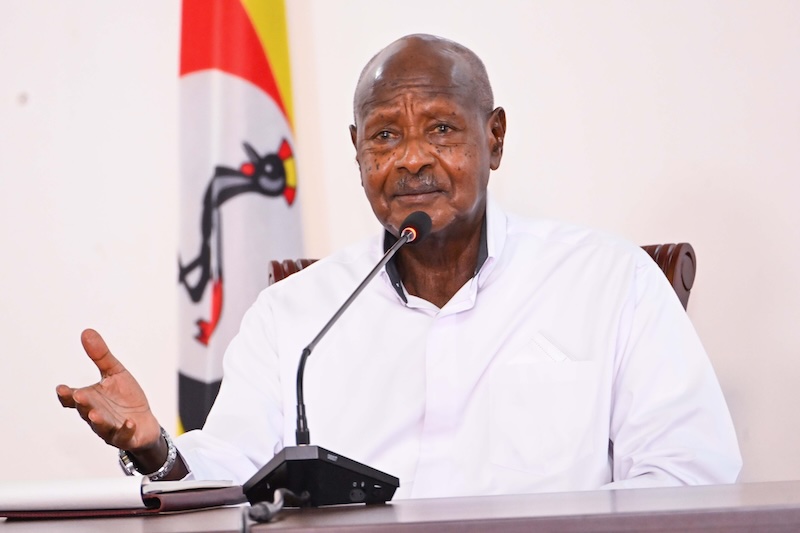
President Museveni's comments, made during a televised national address, specifically accused Dr. Kizza Besigye of frustrating the progress of his treason trial by repeatedly challenging court processes instead of defending himself. The President questioned the protracted nature of the trial and criticised the continued granting of bail in serious criminal cases, suggesting that suspects often intimidate witnesses. These statements, coming from the Head of State, immediately raised red flags for the Uganda Law Society.
The ULS swiftly responded, asserting that the President's remarks constituted a clear violation of the sub judice principle. This principle dictates that public discussion or commentary on matters currently before a court should be avoided to prevent prejudicing the proceedings and ensuring a fair trial. The ULS argued that Museveni's comments publicly speculated on the motives, conduct, and merits of an active criminal case, thereby risking prejudice to Besigye's right to a fair hearing. Such actions, according to the ULS, amount to "clear sub judice contempt of court."
Furthermore, the ULS highlighted that the President's pronouncements directly undermine judicial independence, a cornerstone of Uganda's constitutional order as enshrined in Article 128. By questioning the court's handling of Besigye's trial and criticising bail decisions, the Executive is perceived to be attempting to control or direct judicial functions, contrary to constitutional prohibitions. The criticism of bail, in particular, was viewed as an attack on fundamental constitutional guarantees of personal liberty and the presumption of innocence, protected under Articles 23 and 28 of the Constitution. Decisions on bail are exclusively within the jurisdiction of the courts, and executive interference in such matters erodes the judiciary's autonomy.
The concept of contempt of court in Uganda encompasses conduct that interferes with or subverts the court process, including scandalising or lowering the authority of any court, prejudicing judicial proceedings, or obstructing the administration of justice. The Contempt of Court Act, 2016, aims to uphold the dignity and authority of the court, ensure compliance with court directions, and maintain public confidence in the administration of justice. The ULS's strong stance reflects a concern that the President's comments fall squarely within the ambit of conduct that undermines these objectives. The society has called upon the Chief Justice, the Judiciary's top management, and judicial associations to publicly denounce what it described as executive interference, citing instances where judicial officers have resisted such external pressures.
The ongoing tension between the executive and the judiciary in Uganda, particularly concerning politically sensitive cases, is not new. The ULS's consistent monitoring and reporting on the state of the rule of law in Uganda, often critiquing executive overreach, underscores the persistent challenges to judicial independence. The current situation serves as a stark reminder of the continuous need for vigilance in upholding constitutional principles and safeguarding the integrity of the judicial process against any form of external pressure.
Conclusion
The Uganda Law Society's swift and unequivocal condemnation of President Museveni's comments on Dr. Kizza Besigye's treason trial and the issue of bail is a critical intervention in defence of Uganda's constitutional order. It powerfully reaffirms the indispensable principles of judicial independence, the sub judice rule, and the right to a fair trial, which are foundational to the rule of law. The executive's public pronouncements on active court cases, especially those with significant political implications, create a chilling effect on the judiciary and can severely compromise public confidence in the impartiality of justice.
For practising attorneys and legal professionals in Uganda, this episode highlights the ongoing imperative to remain vigilant against any encroachment on judicial autonomy. It underscores the vital role of the bar association in advocating for constitutionalism and protecting the integrity of the legal system. Practitioners should continue to champion these principles, challenge executive overreach through appropriate legal channels, and support the Judiciary in asserting its independence. The legal community must closely monitor the Judiciary's response to this call for public denunciation and the subsequent conduct of all state organs to ensure that the constitutional separation of powers is respected, and that justice is administered without fear or favour.
Citations
- 1.The Constitution of the Republic of Uganda, 1995
- 2.Uganda Law Society Act, Chapter 276
- 3.Contempt of Court Act, 2016
- 4.Florence Dawaru v Angumale Albino & Anor HCMA No. 0096 of 2016