
Lawyer Ndegwa Njiru freed after DPP rejects traffic charges
Abstract
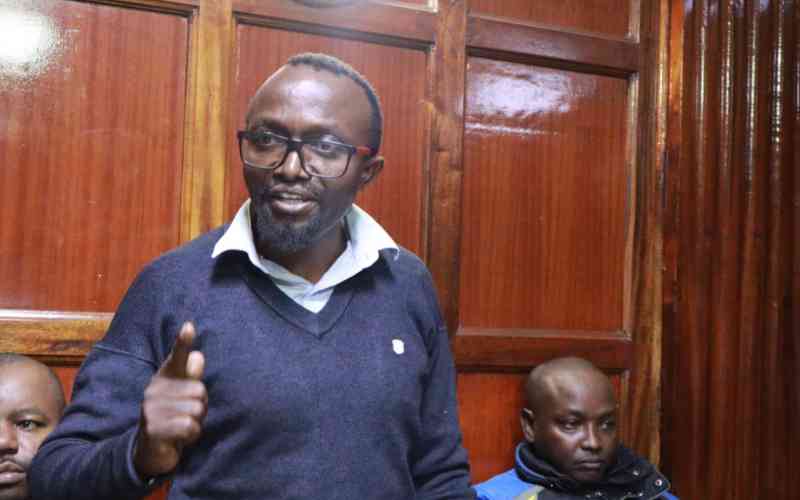
Lawyer Ndegwa Njiru was recently freed after the Office of the Director of Public Prosecutions (ODPP) in Kenya declined to approve traffic-related charges against him. Njiru had been arrested and detained, initially for obstruction due to a vehicle breakdown, with subsequent allegations of driving under the influence, which he vehemently denied. His release underscores the critical role of the ODPP's prosecutorial discretion, particularly the requirement for charges to meet both an evidential and public interest test before formal arraignment. The incident highlights potential issues regarding police procedures, the rights of arrested persons, and the independent exercise of prosecutorial powers under Kenya's constitutional framework, prompting discussions on accountability for alleged unlawful arrests and detention.
Introduction
The recent release of prominent Kenyan lawyer Ndegwa Njiru, following the Office of the Director of Public Prosecutions' (ODPP) rejection of traffic charges, has brought into sharp focus the intricate balance between law enforcement actions and prosecutorial discretion. Njiru's arrest on July 8, 2026, and subsequent detention, initially on grounds of obstruction and later alleged drunk driving, culminated in his freedom after the ODPP found insufficient grounds to proceed with the prosecution.
This development is significant for legal practitioners, as it reaffirms the constitutional independence and critical oversight function of the ODPP in the criminal justice system. It underscores that an arrest by law enforcement does not automatically translate into a viable prosecution, emphasizing the rigorous standards that charges must meet before an accused person can be formally arraigned. The case also raises pertinent questions about police conduct, the rights of arrested individuals, and the potential for legal redress in instances of alleged unlawful detention.
Background
The legal framework governing traffic offences in Kenya is primarily encapsulated in the Traffic Act (Chapter 403 of the Laws of Kenya). This comprehensive statute outlines various regulations concerning road use, vehicle registration, driver licensing, and defines a multitude of traffic violations, including obstruction and driving under the influence of alcohol. Penalties for these offences range from fines to imprisonment and license suspensions, depending on the nature and severity of the transgression.
Central to the administration of criminal justice in Kenya is the Office of the Director of Public Prosecutions (ODPP), established under Article 157 of the Constitution of Kenya, 2010. The ODPP is mandated to exercise State powers of prosecution, which includes the authority to institute, undertake, take over, continue, or discontinue criminal proceedings against any person before any court, other than a court-martial. Crucially, Article 157(10) of the Constitution stipulates that the Director of Public Prosecutions (DPP) shall not require the consent of any person or authority for the commencement of criminal proceedings and, in the exercise of these powers, shall not be under the direction or control of any person or authority. However, this independence is tempered by Article 157(11), which requires the DPP to have regard to the public interest, the interests of the administration of justice, and the need to prevent and avoid abuse of the legal process.
Analysis
The Ndegwa Njiru case illustrates the practical application of the ODPP's constitutional mandate and the checks and balances inherent in Kenya's criminal justice system. Njiru was arrested by Kasarani police on July 8, 2026, following a vehicle breakdown on the Thika Superhighway, initially facing an obstruction charge. Subsequently, the alleged charge shifted to driving under the influence of alcohol, a claim Njiru vehemently denied, asserting he is a teetotaler. He was held in the Milimani Law Courts' basement cells, awaiting formal arraignment.
The pivotal moment came when the ODPP declined to approve the charge sheet. This decision is a direct exercise of the DPP's discretion, guided by the National Prosecution Policy, which requires prosecutors to apply both an 'evidential test' and a 'public interest test' before preferring charges. The evidential test demands sufficient admissible evidence to provide a realistic prospect of conviction, while the public interest test assesses whether a prosecution is required in the broader public interest, considering factors such as the seriousness of the offence, the harm caused, and the circumstances of the offender. The ODPP's refusal to approve the charges implies that one or both of these tests were not met in Njiru's case, suggesting a lack of sufficient evidence or that a prosecution was not deemed to be in the public interest or the interest of justice.
Njiru's legal team, including Senior Counsel Nelson Havi and Kibe Mungai, argued that his arrest and continued detention were unlawful in the absence of an approved charge, highlighting a potential violation of his constitutional rights and fundamental freedoms. This argument aligns with established principles that detention without a lawful basis, particularly without a sanctioned charge, can amount to an abuse of the legal process. While courts are generally hesitant to interfere with the DPP's prosecutorial discretion, they may intervene in cases where there is clear evidence of abuse of power or a decision arrived at erroneously or on irrelevant considerations.
The shifting nature of the charges initially communicated to Njiru—from obstruction to drunk driving—also raises concerns about police procedure and the proper recording of offences. This ambiguity, coupled with Njiru's strong denial of alcohol consumption and the police's apparent failure to publicly disclose evidence like breathalyzer tests, likely contributed to the ODPP's decision not to proceed. The incident underscores the importance of thorough and transparent investigations by law enforcement before charges are presented to the ODPP for approval.
Furthermore, Njiru's public profile as a vocal critic of the current administration and an ally of former Deputy President Rigathi Gachagua added a political dimension to the arrest. While the ODPP is constitutionally independent, such high-profile cases often invite scrutiny regarding the impartiality of the criminal justice process. The DPP's decision to reject the charges, despite the political undertones, reinforces the principle of independent prosecutorial decision-making, free from external influence, as enshrined in the Constitution.
Conclusion
The release of Lawyer Ndegwa Njiru following the ODPP's rejection of traffic charges serves as a crucial reminder of the constitutional safeguards embedded within Kenya's criminal justice system. It highlights the indispensable role of the ODPP in vetting charges, ensuring that prosecutions are based on sufficient evidence and serve the public interest, thereby preventing potential abuses of power by other state organs. For legal practitioners, this case underscores the importance of challenging arrests and detentions that lack a clear legal basis or approved charges, emphasizing the fundamental rights of individuals to due process and protection from unlawful confinement.
Practitioners should remain vigilant in advocating for their clients' rights, particularly when faced with fluid or unsubstantiated charges. The case also signals that the ODPP remains committed to its independent mandate, even in politically sensitive matters. Moving forward, it will be important to observe whether Ndegwa Njiru pursues legal redress for his alleged unlawful arrest and detention, which could further clarify the legal parameters for accountability of state actors in such circumstances. This incident reinforces the principle that the power to arrest does not equate to the power to prosecute, and the ODPP's gatekeeping function is vital for a fair and just legal system.
Citations
- 1.Constitution of Kenya, 2010, Article 157
- 2.Traffic Act, Chapter 403 of the Laws of Kenya
- 3.Alexander Muteti's Treatise on the Exercise of Prosecutorial Discretion (July 19, 2021)
- 4.Lawyer Ndegwa Njiru freed after DPP rejects traffic charges. Standard Media (July 9, 2026).
- 5.Kenya: Lawyer Ndegwa Njiru Arrested, Faces Drunk Driving Charge. allAfrica.com (July 9, 2026).
- 6.Understanding the Kenya Traffic Act. CarNews KE (August 21, 2024).
- 7.Lawyer Ndegwa Njiru released, hints at challenging his 'unlawful arrest and detention'. (July 9, 2026).
- 8.Lawyer Ndegwa Njiru: I have been arrested, I am being accused of obstruction. (July 8, 2026).
- 9.Decoding Kenya's Traffic Act: A Comprehensive Guide for Road Users. Aqute Media (October 12, 2024).
- 10.TRAFFIC ACT. LAWS OF KENYA. CHAPTER 403. Revised Edition 2019 [1988].
- 11.Traffic Act Cap 403 in Kenya. SheriaPlex LPMS.
- 12.Lawyer Ndegwa Njiru Arrested, Faces Drunk Driving Charge. The Online Kenyan (July 9, 2026).
- 13.Lawyer Ndegwa Njiru Held at Milimani Cells after Arrest over Obstruction. Tuko.co.ke (July 9, 2026).
- 14.Lawyer Ndegwa Njiru denies driving while drunk. The Star (July 9, 2026).
- 15.Kenya's National Prosecution Policy Overview. Scribd.
- 16.Director of Public Prosecutions of Kenya. Wikipedia.
- 17.Fresh Twist In Ndegwa Njiru Case As DPP Rejects Charge Sheet. The Kenya Times (July 9, 2026).
- 18.Mandate & Functions. The Office of the Director of Public Prosecutions (ODPP).
- 19.Lawyer Ndegwa Njiru freed after DPP declines to approve obstruction charge. (July 9, 2026).
- 20.SC Petition No. E045 OF 2024 Benson Khwatenge Wafula Vs Director of Public Prosecution & 3 Others. REPUBLIC OF KENYA (January 23, 2025).
- 21.Testing Alternatives: Private Prosecutions as a Useful Anti-Corruption Tool in Kenya. Kabarak University Journal.
How does this affect your business?
Get an AI analysis of this article grounded in your jurisdictions, practice areas, and any policy documents you've uploaded to Wansom.