
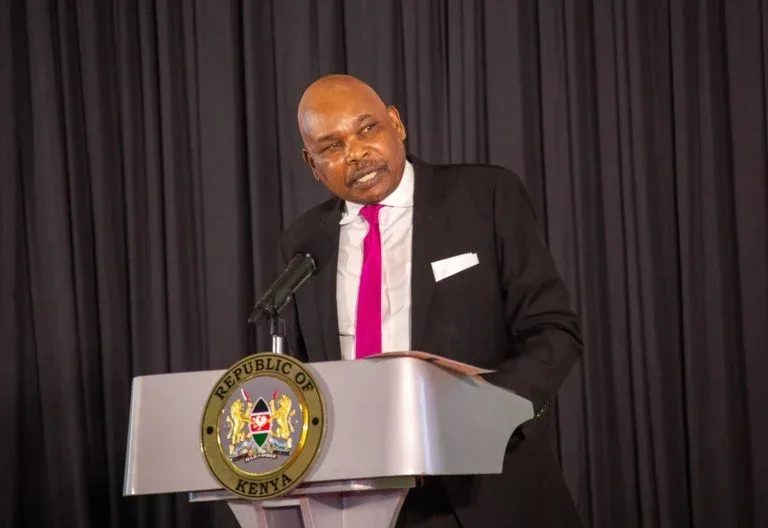
Makau Mutua panel announces Sh448.7mn payout for 348 protest victims
Abstract
The Panel of Experts on Compensation of Victims of Human Rights Violations, chaired by Prof. Makau Mutua, has announced the initial disbursement of KES 448.7 million to 348 victims of protest-related violence in Kenya. This first phase of compensation covers incidents between 2013 and 2025, with families of 115 fatalities receiving KES 3 million each. Other beneficiaries include victims of severe, moderate, and minor injuries, aggravated sexual offences, and economic loss. The initiative, guided by the Kenya National Commission on Human Rights’ Reparations Guidelines, aims to provide restorative justice and acknowledge state-related harm, operating under a "reasonable basis to believe" standard of proof to facilitate claims.
Introduction
Kenya has embarked on a significant step towards addressing historical human rights violations stemming from public protests, with the Panel of Experts on Compensation of Victims of Human Rights Violations, led by Prof. Makau Mutua, announcing the commencement of payouts. This initial phase sees KES 448.7 million disbursed to 348 verified victims, marking a pivotal moment in the government's commitment to restorative justice and national healing. The announcement, made ahead of the second anniversary of the June 25, 2024 anti-Finance Bill protests, underscores a broader effort to acknowledge and redress harm suffered by citizens during various demonstrations between 2013 and 2025.
This development is not merely a financial transaction but represents a formal recognition by the state that harm occurred and that victims matter. It follows years of advocacy by human rights organizations and court directives pushing for a comprehensive reparations framework. For legal practitioners, this signals a critical juncture, demanding a thorough understanding of the compensation mechanism, eligibility criteria, and the ongoing implications for victims and the broader legal landscape in Kenya.
This article will delve into the legal and operational framework underpinning this compensation scheme, examining its background, the specific categories of payouts, the verification process, and the challenges and opportunities it presents. It aims to provide practising attorneys and legal professionals with a comprehensive overview of this landmark initiative, enabling them to better advise and represent affected individuals.
Background
The current compensation initiative is rooted in a series of legal and political developments aimed at addressing a long history of human rights violations in Kenya. The Panel of Experts on Compensation of Victims of Human Rights Violations, chaired by Prof. Makau Mutua, was established following recommendations from the Kenya National Commission on Human Rights (KNCHR) to President William Ruto. This move was in compliance with court directives, notably petitions such as E010 of 2025 (consolidated), which affirmed KNCHR's constitutional mandate under Article 59 of the Constitution and the KNCHR Act, 2011, to design a reparations framework.
The mandate of the Mutua-led panel is to operationalise these recommendations and deliver a structured compensation system for victims of human rights violations arising from demonstrations and public protests across Kenya. The scope of the programme covers incidents that occurred between 2013 and 2025, encompassing various episodes of unrest, including post-election violence and anti-Finance Bill protests. This builds upon previous efforts, such as the Truth, Justice and Reconciliation Commission (TJRC) established after the 2007-2008 post-election violence, which also recommended reparations, though its implementation faced significant challenges. Additionally, landmark cases like Constitutional Petition No. 122 of 2013, which sought accountability and compensation for survivors of post-election sexual violence, have paved the way for state recognition of its responsibility.
The government has allocated KES 2 billion for the overall compensation exercise, signalling a substantial commitment to this reparations programme. The framework developed by KNCHR outlines not only monetary compensation but also other forms of reparations, including restitution, rehabilitation, satisfaction (such as public apologies and truth-telling), and guarantees of non-repetition through institutional reforms. This holistic approach aims to provide comprehensive redress beyond mere financial payouts, addressing the multifaceted impact of human rights abuses.
Analysis
The compensation framework, as unveiled by the Makau Mutua panel, details specific monetary payouts across various categories of harm. In this first phase, a total of KES 448.7 million has been disbursed to 348 verified victims. Families of 115 individuals who lost their lives during protests are receiving KES 3 million each, amounting to KES 345 million. For survivors, the compensation is tiered based on the severity of injury: 24 victims with severe injuries, including aggravated sexual offences, are receiving KES 1 million each; 137 victims with moderate injuries are allocated KES 500,000 each; and 60 victims with minor injuries are receiving KES 50,000 each. Additionally, KES 50,000 has been allocated to four victims who suffered economic loss.
The process for claiming compensation is guided by the Reparations Guidelines developed by the Kenya National Commission on Human Rights. It involves several stages: registration, verification, authentication, categorisation of harm, approval, and finally, disbursement directly into victims' bank accounts. A notable aspect of this framework is the adoption of a “reasonable basis to believe” standard of proof, which is a lower evidentiary threshold than typically required in court cases. This pragmatic approach is intended to expedite the processing of claims and ensure wider access for victims who may lack complete documentation, such as comprehensive medical reports or police records, which are often difficult to obtain in the aftermath of protests and violence.
Crucially, the government has clarified that these payments are *ex gratia* under the 2026 Reparations Guidelines, signifying an acknowledgment of harm rather than an admission of legal liability. This distinction is important as it allows the state to provide redress without necessarily prejudicing ongoing or future criminal investigations and prosecutions against alleged perpetrators. The panel has also committed to transparency, stating that the names of compensated victims will be periodically published in the Kenya Gazette, in adherence to the Data Protection Act, 2019.
Despite the positive reception of the initiative, it has not been without its criticisms. Some, like Siaya Governor James Orengo, have argued that the KES 3 million payout for fatalities is insufficient, highlighting the immeasurable value of a human life. Concerns have also been raised regarding the scope of the framework, particularly the explicit exclusion of individuals whose businesses were looted or vandalised by civilian mobs, focusing instead on harm inflicted by state security agents. Transitional justice experts have also stressed the importance of a truly victim-centered approach, especially for survivors of sexual violence, ensuring that compensation is complemented by comprehensive psychosocial support and that the process does not re-traumatise claimants. The ongoing debate underscores the complex balance between providing timely redress and ensuring that the reparations are perceived as just and adequate by all affected parties.
Conclusion
The commencement of compensation payouts by the Makau Mutua panel represents a significant, albeit initial, stride towards restorative justice for victims of protest-related human rights violations in Kenya. This first phase, disbursing KES 448.7 million to 348 individuals, signals the government's formal acknowledgment of past harms and a commitment to national healing. While the *ex gratia* nature of the payments avoids direct admission of liability, it nonetheless establishes a precedent for state responsibility in addressing the consequences of public unrest.
For legal practitioners, this development necessitates a proactive engagement with the Reparations Guidelines and the ongoing claims process. Attorneys must be prepared to guide victims through the verification stages, ensuring that claims are accurately presented and supported, even under the less stringent "reasonable basis to believe" standard. It is crucial to monitor subsequent phases of compensation and any legislative reforms, such as the proposed Reparations Act and dedicated fund, which aim to institutionalise and ensure the long-term sustainability of victim support. Legal professionals also have a vital role in advocating for a comprehensive reparations framework that extends beyond monetary compensation to include rehabilitation, psychological support, and guarantees against future violations, thereby upholding the dignity and rights of all victims.
Citations
- 1.Kenya National Commission on Human Rights Act, 2011
- 2.Kenya Constitution, Article 59
- 3.Kenya Constitution, Article 254(2)
- 4.Data Protection Act, 2019
- 5.Gazette Notice No. 3114, 6th March 2026
- 6.Gazette Notice 12002 of 2025
- 7.Petition E010 of 2025 (consolidated)
- 8.Constitutional Petition No. 122 of 2013
- 9.Truth, Justice and Reconciliation Act, 2008
- 10.Citizen Digital, "Protest victims to receive up to Ksh.3M under new compensation plan" (June 18, 2026)
- 11.Citizen Digital, "348 protest victims to receive Ksh.448.7M in first compensation phase" (June 23, 2026)
- 12.People Daily, "Govt begins compensation for protest victims as first 348 receive payments" (June 23, 2026)
- 13.The Star, "State pays out Sh448.7m to 348 protest victims" (June 23, 2026)
- 14.Truth FM, "Victims of Protest to Begin Receiving Compensation From Next Week." (June 15, 2026)
- 15.Tuko.co.ke, "Govt Compensates 348 Victims of Protest Violence, Asks More to Come Out" (June 23, 2026)
- 16.Citizen Digital, "Ksh.3M for death, Ksh.4M for SGBV; Inside proposed compensation packages for protest victims" (April 20, 2026)
- 17.The Star, "State urged to include survivors of conflict sexual violence in compensation plan" (June 19, 2026)
- 18.The Eastleigh Voice, "Rights groups split over KNCHR's refusal to publish names of police brutality compensation beneficiaries" (June 22, 2026)
- 19.ICJ Kenya, "Landmark Victory: Government Compensates Post-Election Sexual Violence Survivors After 13 Years" (July 18, 2025)
- 20.Physicians for Human Rights, "Justice for Survivors of Post-Election Sexual Violence in Kenya" (Undated, referencing Constitutional Petition No. 122 of 2013)
- 21.KNCHR, "Update on the Development of a Framework for Compensation and Reparations to Victims of Human Rights Violations" (March 13, 2026)
- 22.KNCHR, "Update on the Development of a Framework for Compensation and Reparations to Victims of Human Rights Violations" (April 01, 2026)
- 23.Citizen Digital, "Panel unveils compensation plan for protest victims" (June 18, 2026)
- 24.People Daily, "How to apply for protest victim compensation with Sh50K to Sh3M payouts [Requirements]" (June 19, 2026)
- 25.Citizen Digital, "KENYA TO COMPENSATE 2,000 PROTEST VICTIMS" (June 16, 2026)
- 26.Citizen Digital, "WHAT MUST THE COMPENSATION PANEL DELIVER FOR PROTEST VICTIMS?" (August 25, 2025)
- 27.Citizen Digital, "KNCHR MUST NOW LEAD COMPENSATION FOR POLICE BRUTALITY VICTIMS" (December 09, 2025)