
Mejn pushes transparent CDF rollout in Mangochi
Abstract
The Malawi Economic Justice Network (MEJN) is actively promoting transparency in the rollout of the reformed K5 billion Constituency Development Fund (CDF) in Mangochi, following Parliament's approval of the K10.978 trillion 2026/27 National Budget. This initiative is critical given the significant increase in CDF allocation to K5 billion per constituency and a history of mismanagement and opaque practices. The recent reforms aim to decentralize CDF management to local councils, moving away from direct parliamentary control, and introduce new guidelines to enhance accountability. MEJN's engagement underscores the ongoing need for robust civil society oversight to ensure public funds are utilized effectively and transparently for community development.
Introduction
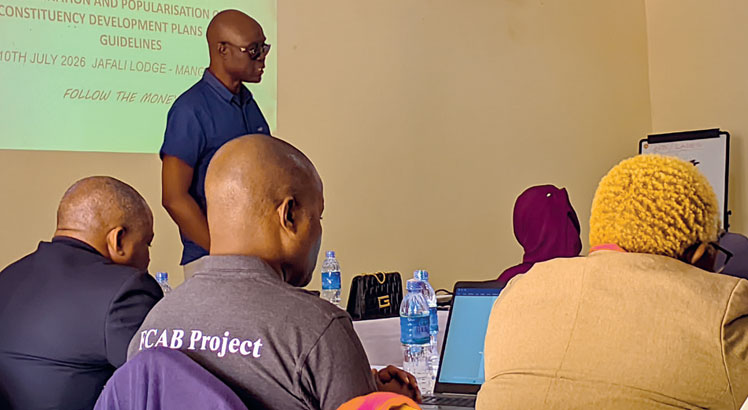
The Malawi Economic Justice Network (MEJN) has intensified its advocacy for transparent implementation of the Constituency Development Fund (CDF) in Mangochi, engaging local district and municipal council officials to validate proposed projects. This proactive step comes in the wake of the Malawian Parliament's approval of the K10.978 trillion National Budget for the 2026/27 fiscal year on March 25, 2026, which includes a substantially reformed CDF now pegged at K5 billion per constituency.
The significant increase in the CDF allocation, from a previous K200 million to K5 billion per constituency, underscores the government's commitment to community-driven development. However, this heightened financial commitment also necessitates rigorous oversight and transparent processes to prevent the historical abuses that have plagued the fund. MEJN's intervention in Mangochi highlights the critical role of civil society in ensuring that these substantial public resources are genuinely channeled towards intended developmental projects and benefit the populace, rather than falling prey to mismanagement or political patronage.
Background
The Constituency Development Fund in Malawi was initially established in the 2006/2007 fiscal year, conceived as a mechanism to finance small-scale, short-term community projects aimed at poverty eradication. Over time, its focus evolved to become a key vehicle for local economic development. The management and utilization of CDF are subject to a broader legal framework governing public funds, including the Public Finance Management Act, 2022, the Public Procurement and Disposal of Assets Act, 2016, the Public Audit Act, 2018, and the Corrupt Practices Act, 1995.
Despite this regulatory framework, the CDF has historically been a source of controversy, frequently marred by allegations of mismanagement, opaque allocations, and political interference, leading to concerns about its effectiveness and accountability. A significant development occurred in May 2025 when a High Court of Malawi ruling, sitting as a Constitutional Court, delinked legislators from the direct administration of the CDF, allowing the fund to continue but without the involvement of Members of Parliament (MPs) as previously prescribed in the guidelines. This ruling was followed by the approval of Constitutional Amendment Bill No. 2 of 2025 in December 2025, which enshrined the CDF into the Constitution, controversially placing its governance under MPs "as prescribed by an Act of Parliament." This created a tension between judicial pronouncements, constitutional amendments, and the practical implementation of the fund, necessitating further clarity and robust operational guidelines.
Analysis
The 2026/27 National Budget, approved by Parliament, allocates a total of K1.145 trillion to the Reformed Constituency Development Fund, translating to K5 billion for each of Malawi's constituencies. This substantial increase represents a nine-fold jump from the previous K200 million per constituency, signaling a significant fiscal devolution aimed at boosting local development activities. The 'reformed' aspect of the CDF is crucial, as it involves a deliberate shift to decentralize the fund's management from parliamentarians to local councils, a move intended to strengthen transparency and accountability.
New guidelines, issued in April 2026, have been instrumental in defining the roles and responsibilities for the implementation of the reformed CDF. These guidelines empower civil society organizations (CSOs) and community members with enhanced oversight functions, promoting greater public participation in the fund's management. Under this new model, funds are no longer transferred to councils in bulk but are released on a project-by-project basis through the National Local Government Finance Committee (NLGFC), contingent upon project approval and adherence to procurement requirements. This project-based disbursement mechanism is designed to ensure that public money is spent on verifiable projects, thereby mitigating opportunities for misuse and improving accountability.
The Malawi Economic Justice Network (MEJN) plays a vital role in this evolving landscape. As a leading civil society coalition, MEJN is dedicated to promoting good economic governance through public policy research, budget monitoring, and advocacy. Their engagement with Mangochi District and municipal council officials to validate proposed CDF projects is a direct manifestation of their mission to ensure that government policies and actions benefit the poor and that citizens receive value for money. This engagement is particularly pertinent given the historical challenges of CDF management, where critics have warned that embedding the fund under MP oversight could entrench patronage politics and weaken local accountability.
However, the implementation of the reformed CDF has not been without challenges. Despite the ambitious allocation, concerns have been raised regarding delayed disbursements, with only a fraction of the promised funds released nationwide for preparatory activities by July 2026. Furthermore, the new guidelines were finalized and tabled in Parliament in April 2026, after the 2026/27 budget had already taken effect on April 1, creating a brief period where the expanded fund operated without a clear operational framework. This highlights the ongoing need for robust institutional capacity, timely regulatory frameworks, and sustained vigilance from civil society to ensure the reformed CDF achieves its intended objectives of transparent and accountable local economic development.
Conclusion
The push by the Malawi Economic Justice Network for transparent CDF rollout in Mangochi is a timely and essential intervention, reflecting the critical need for accountability in the management of public funds. The significant increase in the CDF allocation to K5 billion per constituency, coupled with the new decentralized management guidelines, presents both an opportunity for accelerated local development and a heightened risk of mismanagement if oversight is lax. The tension between the constitutional amendment placing CDF governance under MPs and the practical implementation through decentralized guidelines underscores the dynamic and often contested nature of public finance management in Malawi.
For legal practitioners, this development signals an increased emphasis on adherence to public finance laws, procurement regulations, and good governance principles at the local government level. Local councils, project implementation committees, and all stakeholders involved in CDF projects must be acutely aware of their legal obligations under the Public Finance Management Act, the Public Procurement and Disposal of Assets Act, and the Corrupt Practices Act. The continued engagement of civil society organizations like MEJN will be paramount in monitoring compliance, advocating for accountability, and ensuring that the reformed CDF truly serves its purpose of fostering equitable and sustainable development across Malawi. Vigilance will be key to translating the ambitious financial commitment into tangible benefits for Malawian communities.
Citations
- 1.Public Finance Management Act, 2022
- 2.Public Procurement and Disposal of Assets Act, 2016
- 3.Public Audit Act, 2018
- 4.Corrupt Practices Act, 1995
- 5.Local Government Act, 1998 (as amended in 2010)
- 6.Constitution of Malawi, Chapter XIV
- 7.Constitutional Amendment Bill No. 2 of 2025
- 8.Guidelines for the Constituency Development Fund (Ministry of Local Government and Rural Development, June 2014)
- 9.High Court of Malawi ruling (May 2025)
How does this affect your business?
Get an AI analysis of this article grounded in your jurisdictions, practice areas, and any policy documents you've uploaded to Wansom.