
Mexico Unveils Ambitious AI Robocop Robodog Security Plan Amid US Case Law Concerns
Summary
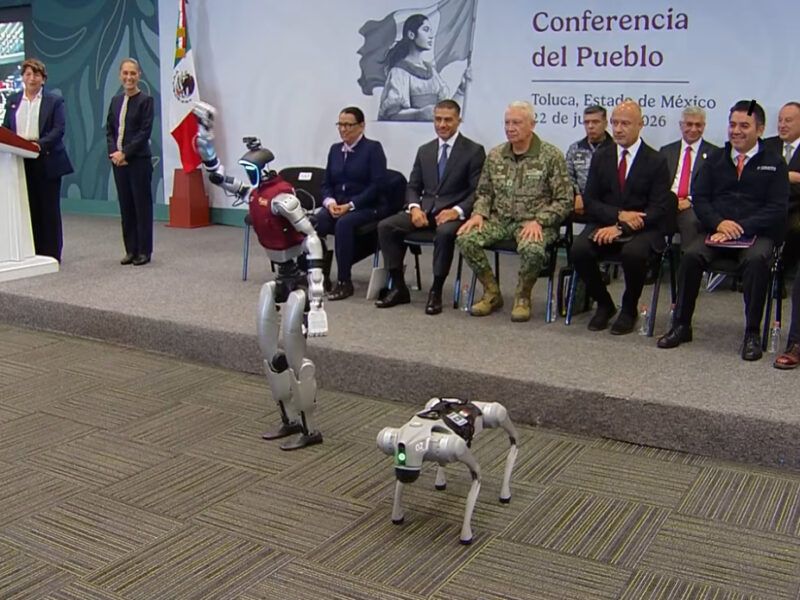
- Mexican President Claudia Sheinbaum unveils plan to deploy AI-powered 'robocop' and 'robodog' units nationwide.
- Robots will be equipped with advanced surveillance technology, enabling real-time monitoring and response to potential threats.
- Introduction of AI-powered surveillance raises concerns about data protection and individual privacy rights.
- US-Mexico relations may be impacted by this development, particularly regarding cross-border cooperation on law enforcement and intelligence sharing.
What Happened
The move is seen as a significant step towards modernizing Mexico's security infrastructure.
Mexican President Claudia Sheinbaum has unveiled an ambitious plan to integrate AI-powered robots into the country's security strategy. The plan, which includes the deployment of 'robocop' and 'robodog' units, aims to enhance public safety and reduce crime rates. According to official sources, these robots will be equipped with advanced surveillance technology, enabling them to monitor and respond to potential threats in real-time. The move is seen as a significant step towards modernizing Mexico's security infrastructure.
Legal Context
The introduction of AI-powered surveillance technology raises important questions about data protection and individual privacy rights. In the context of US-Mexico relations, this development may also have implications for cross-border cooperation on law enforcement and intelligence sharing. As a recent US court ruling highlighted, the use of AI-powered surveillance tools must be carefully balanced against the need to protect citizens' right to privacy. Lawyers and compliance officers should closely monitor developments in this area, particularly as Mexico's reliance on AI technology continues to grow.
Why It Matters
The Mexican government's decision to invest in AI-powered robots reflects a broader trend towards the use of surveillance technology in security strategies worldwide. However, critics argue that such measures can have unintended consequences, including the erosion of civil liberties and increased risks of data breaches. As Mexico continues to expand its AI-powered surveillance network, it is essential to consider the potential long-term implications for public trust and individual freedoms. The international community should also take note of this development, as it may set a precedent for other countries seeking to leverage AI technology in their own security strategies.
Practical Implications
Lawyers and compliance officers should watch for potential privacy implications of Mexico's expanding use of AI-powered surveillance, particularly in the context of US-Mexico relations.
Source
Source: Original reporting via [Source]
How does this affect your business?
Get an AI analysis of this article grounded in your jurisdictions, practice areas, and any policy documents you've uploaded to Wansom.